Fairmount Park

Why it's listed
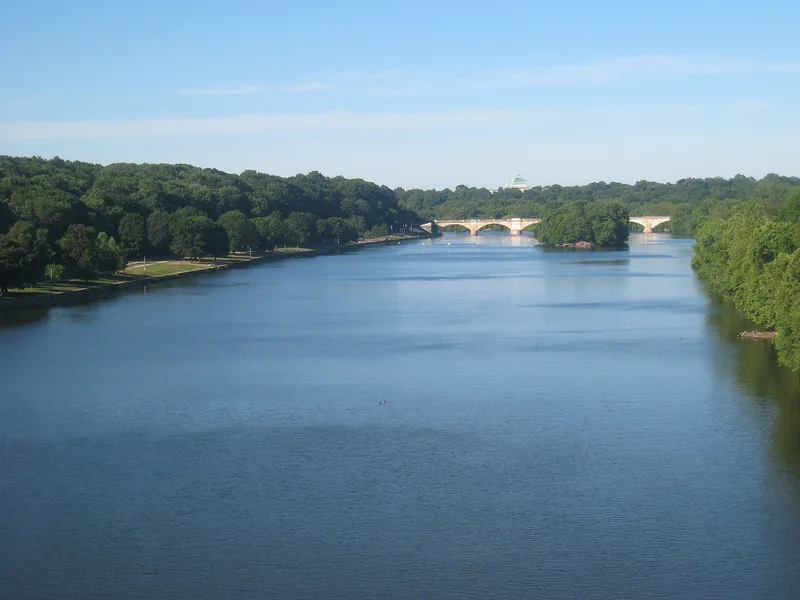
Fairmount Park is a large municipal park in Philadelphia, stretching along both banks of the Schuylkill River and the Wissahickon Creek and covering about 4,100 acres. Its origins lie in five acres reserved around the Schuylkill waterworks, begun in 1812 to protect the city's water supply, and the park was gradually extended by purchases in the 1850s and 1860s. Legislation setting aside the area as an open public place was passed in 1867. The park holds numerous 18th- and early 19th-century houses, including Lemon Hill, Woodford, Belmont, Strawberry Mansion, Solitude, Sweetbrier and Mount Pleasant. It hosted the Centennial Exhibition of 1876, and Memorial Hall and the Ohio House remain from that event. The Zoological Gardens, opened in 1874, retain entrance pavilions by the Furness firm. The park also contains significant public sculpture, including works by Randolph Rogers, Daniel Chester French and Frederic Remington.
Machine-generated summary. This summary was generated by a language model from the official nomination document and has not been reviewed line by line by an editor. It may contain errors. Check the source document before relying on any detail. Source: nomination document (PDF) · catalog entry. Generated October 2026 (model claude-haiku-5-5, prompt v1.1-2026-10-29).
| Period of significance | 1750-1899 |
|---|---|
| Styles | Late Federal; Early Classical Revival; Georgian; Adam manner; Victorian |
| Areas of significance | Landscape Architecture, Conservation, Entertainment/Recreation, Architecture |
| Acreage | 4100 |
| Boundary source | NPS cultural-resource GIS polygon |
| Full listing page | Fairmount Park (property record) |
What listing means for this property
This is a historic district. Buildings within its boundary are either contributing (they add to the district's significance) or non-contributing. Owners of contributing income-producing buildings can claim the 20% federal rehabilitation tax credit; homeowners should look at state credits. National Register districts impose no design review by themselves; a local historic district ordinance, if one exists, does (the difference explained).
General information, not legal or tax advice. Rules change; confirm with your State Historic Preservation Office or a qualified adviser.