Laurel Hill Cemetery

Why it's listed
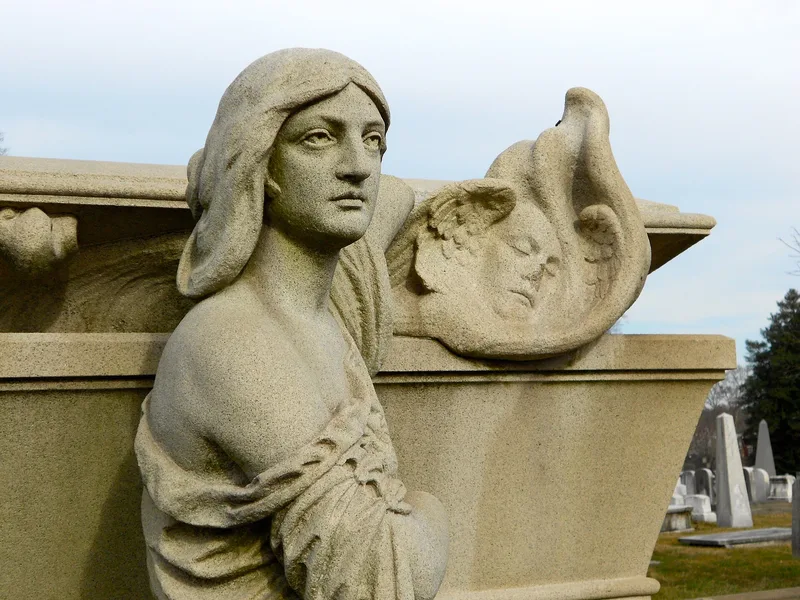
Laurel Hill Cemetery was laid out in 1836 on former estate land on the east bank of the Schuylkill River, about four miles north of central Philadelphia. The Laurel Hill Cemetery Company bought the plot that February, and John Notman designed the grounds in the romantic picturesque manner, with winding paths, terracing, and carefully chosen trees and shrubs. Founded as a non-sectarian public cemetery at a time when most burial grounds were tied to churches, it drew large numbers of visitors for recreation, with more than 30,000 coming between April and December 1846. Its landscape influenced the movement that produced public parks, including Fairmount Park in Philadelphia. The grounds also hold monuments and structures in many revival and eclectic styles, including Egyptian, Greek, Gothic, and Moorish, the work of notable architects and sculptors. Notman's gatehouse, a two-story stone building with an arched entrance and piazzas, is its most prominent architectural feature.
Significance in brief: The nomination argues that Notman's romantic, picturesque plan for the grounds, largely preserved, is historically important. It states that the cemetery's popularity as a non-sectarian public landscape helped lead to the establishment of public parks in the United States. The cemetery also displays a wide range of architectural styles in its monuments and structures, spanning roughly a century.
Machine-generated summary. This summary was generated by a language model from the official nomination document and has not been reviewed line by line by an editor. It may contain errors. Check the source document before relying on any detail. Source: nomination document (PDF) · National Archives catalog entry. NRHP reference 77001185, listed October 28, 1977. Summary generated October 2026 (model claude-haiku-5-5, prompt v1.1-2026-10-29, confidence medium).
Key facts
| Address | 3822 Ridge Ave., Philadelphia |
|---|---|
| County | Philadelphia |
| Listed | October 28, 1977 |
| Reference number | 77001185 |
| Resource type | Structure |
| Period of significance | 1800-1899 |
| Architect / builder | John Notman (architect/landscape designer); Thomas U. Walter and Alexander Calder are named as architects of works on the grounds |
| Areas of significance | Architecture, Art, Landscape Architecture |
| Level of significance | National |
| National Historic Landmark | Yes, designated August 5, 1998 |
| Acreage | 81 |
| Within district | Fairmount Park |
| Coordinates | 40.00413, -75.18764 (NPS GIS) |
What listing means for this property
For a publicly owned building or structure, listing mainly matters when federal funds, permits or licences are involved: projects then go through Section 106 review so effects on the property are considered. Listing also strengthens applications for preservation grants and, for leased income-producing uses, can enable the federal rehabilitation tax credit.
General information, not legal or tax advice. Rules change; confirm with your State Historic Preservation Office or a qualified adviser.
Sources and further reading
- National Park Service, National Register of Historic Places database (snapshot May 2026), reference 77001185.
- Nomination form (PDF, National Archives) — catalog entry
- Wikipedia article (used for cross-checking only; text not reproduced here)
- Wikidata Q6499849
- This listing as JSON
Last updated October 2026. Found an error? See the editorial policy for how to report it.