Wall Street Historic District
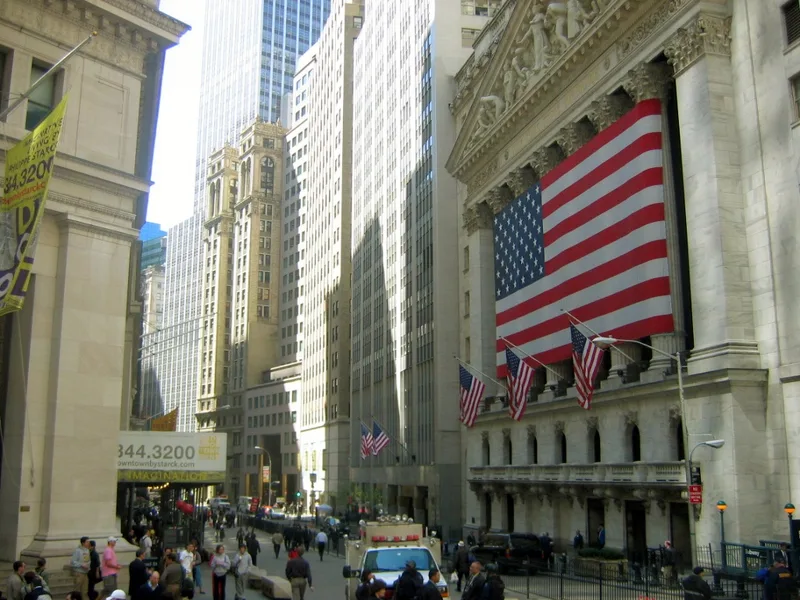

Why it's listed
Occupying 36 blocks at the southern tip of Manhattan, this district forms the core of New York's financial center. Its narrow, curving streets follow the layout of Dutch Nieuw Amsterdam and its English successors, and are the only surviving artifact of that colonial period because the Great Fire of 1835 destroyed nearly everything else. The earliest buildings date from the late 1830s and 1840s, including Federal Hall, the Merchants Exchange and Trinity Church. Most of the 66 contributing buildings are office towers built between 1835 and 1932, many designed by leading firms as headquarters for major businesses. Neo-Classical, Neo-Renaissance, neo-Gothic, Art Deco and later International Style skyscrapers create the "canyons" of the financial district and its well-known skyline. Twenty-two properties within it are individually listed, and 29 buildings are New York City landmarks. Despite additions, new storefronts and residential conversions, the district retains strong historical and architectural integrity.
Machine-generated summary. This summary was generated by a language model from the official nomination document and has not been reviewed line by line by an editor. It may contain errors. Check the source document before relying on any detail. Source: nomination document (PDF) · catalog entry. Generated October 2026 (model claude-sonnet-5-5, prompt v1.0-2026-10-29).
| Styles | Greek Revival, Gothic Revival, Second Empire, Romanesque, Renaissance, Beaux Arts, Classical Revival, Skyscraper, Moderne, Art Deco, International |
|---|---|
| Areas of significance | Architecture, Commerce, Economics, Community Planning and Development, Politics/Government |
| Acreage | 63 |
| Boundary source | NPS cultural-resource GIS polygon |
| Full listing page | Wall Street Historic District (property record) |
What listing means for this property
This is a historic district. Buildings within its boundary are either contributing (they add to the district's significance) or non-contributing. Owners of contributing income-producing buildings can claim the 20% federal rehabilitation tax credit; homeowners should look at state credits. National Register districts impose no design review by themselves; a local historic district ordinance, if one exists, does (the difference explained).
General information, not legal or tax advice. Rules change; confirm with your State Historic Preservation Office or a qualified adviser.