Bowling Green Fence and Park

Why it's listed
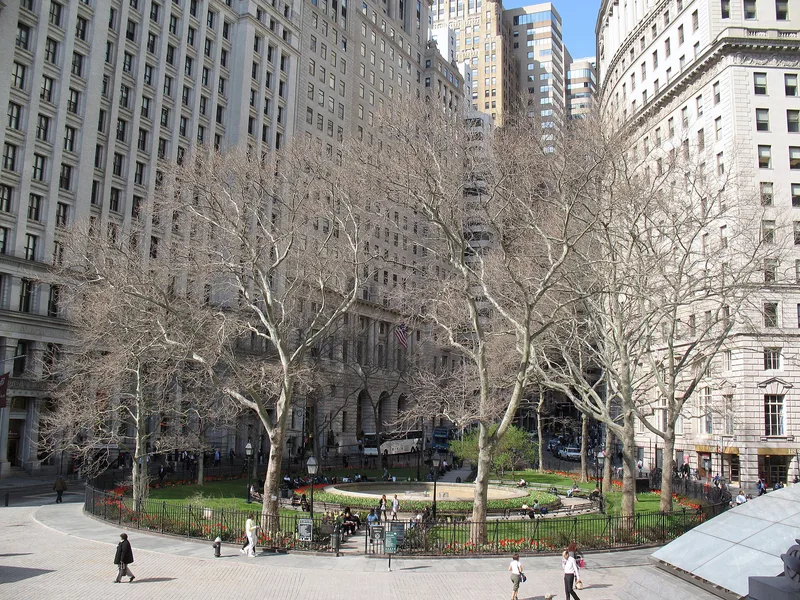
Bowling Green is a small elliptical park of about half an acre at the foot of Broadway in lower Manhattan, now surrounded by tall office buildings and enclosed by an iron spiked fence. The area was fenced and leased to neighbors as a bowling green in 1733. A gilded lead statue of George III was added in 1770, and the existing fence was installed the next year. On July 9, 1776, a crowd pulled the statue down, and parts of it were melted into bullets for the Continental Army. Patriots also broke off the ornaments atop the fence posts for ammunition. Over the years the park gained and lost fountains, statues and paths. The fence was removed in 1914 for subway construction and restored to the park in 1919. A five-year restoration began in 1971. The park is significant because it has kept its name and public use through all these changes, serving as a park and meeting place for nearby residents and workers.
Significance in brief: The nomination presents the park as a rare survivor of the period before the American Revolution, tied to some of New York's earliest settlement. It has served continuously as a park and meeting place for nearly 250 years despite many changes to its features and surroundings. The fence dates from 1771, and the statue of George III that stood in the park was pulled down in 1776.
Machine-generated summary. This summary was generated by a language model from the official nomination document and has not been reviewed line by line by an editor. It may contain errors. Check the source document before relying on any detail. Source: nomination document (PDF) · National Archives catalog entry. NRHP reference 80002673, listed April 9, 1980. Summary generated October 2026 (model claude-sonnet-5-5, prompt v1.0-2026-10-29, confidence high).
Key facts
| Address | Broadway and Beaver Sts., New York |
|---|---|
| County | Manhattan |
| Listed | April 9, 1980 |
| Reference number | 80002673 |
| Resource type | Site |
| Areas of significance | Exploration/Settlement, Politics/Government, Social History |
| Level of significance | National |
| Status (as stated in the nomination) | Publicly owned by the City of New York, in good condition and in use as a park. It was restored from 1971 and the form says the fence has been restored many times, with parts thought to be original. |
| Acreage | 0.5 |
| Within district | Wall Street Historic District |
| Coordinates | 40.70505, -74.01365 (NPS GIS) |
What listing means for this property
Sites (archaeological sites, battlefields, landscapes) are often listed with a restricted address to protect them from looting or disturbance. Listing is honorary for private owners; federal undertakings on or near the site go through Section 106 review, and state laws may protect burials and artefacts regardless of listing.
General information, not legal or tax advice. Rules change; confirm with your State Historic Preservation Office or a qualified adviser.
Sources and further reading
- National Park Service, National Register of Historic Places database (snapshot May 2026), reference 80002673.
- Nomination form (PDF, National Archives) — catalog entry
- Wikipedia article (used for cross-checking only; text not reproduced here)
- Wikidata Q895455
- This listing as JSON
Last updated October 2026. Found an error? See the editorial policy for how to report it.