East Center City Commercial Historic District

Why it's listed
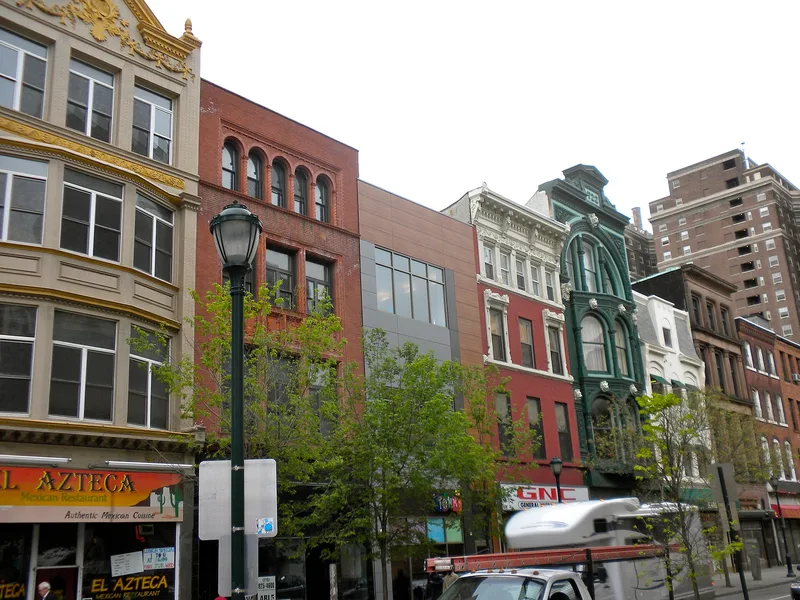
Commercial buildings lining Market, Chestnut, Walnut and Sansom Streets east of Broad Street form this district, which grew from the original commercial core of eighteenth-century Philadelphia. Its largest buildings stand near Independence Square and at the intersection of 8th and Market Streets, where department stores such as Wanamaker, Strawbridge and Clothier, Lit Brothers and Gimbels were established between 1861 and 1894. The Curtis Publishing Company block by Edgar Seeler dates to 1907, and the Public Ledger offices were designed by Horace Trumbauer. Smaller buildings on the 700 blocks of Chestnut and Sansom Streets show the work of architects including Willis G. Hale, Stephen Decatur Button and Paul Cret. Production as well as retail took place in lofts and factories among the shops, which is why the district is valued for its mix of uses and its range of architecture from the 1830s through the 1930s.
Machine-generated summary. This summary was generated by a language model from the official nomination document and has not been reviewed line by line by an editor. It may contain errors. Check the source document before relying on any detail. Source: nomination document (PDF) · catalog entry. Generated October 2026 (model claude-haiku-5-5, prompt v1.1-2026-10-29).
| Period of significance | 1799-1934 |
|---|---|
| Areas of significance | Commerce, Architecture, Communications |
| Acreage | 88 |
| Boundary source | NPS cultural-resource GIS polygon |
| Full listing page | East Center City Commercial Historic District (property record) |
What listing means for this property
This is a historic district. Buildings within its boundary are either contributing (they add to the district's significance) or non-contributing. Owners of contributing income-producing buildings can claim the 20% federal rehabilitation tax credit; homeowners should look at state credits. National Register districts impose no design review by themselves; a local historic district ordinance, if one exists, does (the difference explained).
General information, not legal or tax advice. Rules change; confirm with your State Historic Preservation Office or a qualified adviser.