Oakwood Historic District

Why it's listed
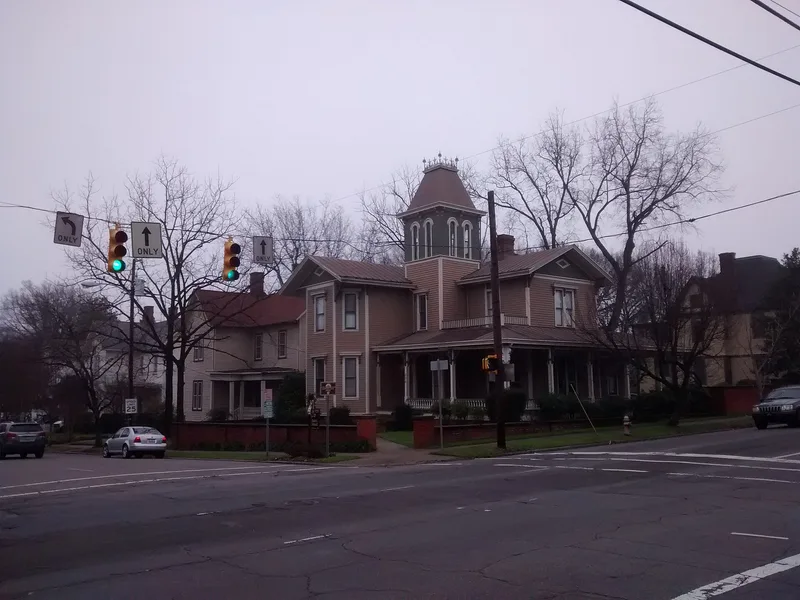
Oakwood is a twenty-block residential neighborhood on the edge of Raleigh's inner city, made up of cottages and larger houses with steep slate roofs, broad verandas and small front yards. Most were built between the Civil War and 1914, and styles range from late Greek Revival and Second Empire to Queen Anne and Neo-Classical Revival. The district is bordered on the east by Oakwood Cemetery, established in 1869 and landscaped in the picturesque park tradition. The area was developed by speculators such as Jonathan McGee Heck and Richard Stanhope Pullen, with contractor Thomas H. Briggs building many of the houses. Residents included railroad builders, merchants, legislators and educators. After World War I, many large homes became boarding or apartment houses, and the area faced possible urban renewal by 1970. Rehabilitation that began in 1970-1971 revived it. It was listed as the only intact nineteenth-century neighborhood left in Raleigh, a record of Southern suburban life in the late 1800s.
Machine-generated summary. This summary was generated by a language model from the official nomination document and has not been reviewed line by line by an editor. It may contain errors. Check the source document before relying on any detail. Source: nomination document (PDF) · catalog entry. Generated October 2026 (model claude-sonnet-5-5, prompt v1.0-2026-10-29).
| Styles | Victorian styles including late Greek Revival, Second Empire, Italianate, Queen Anne, Gothic Revival, Eastlake, sawnwork vernacular and Neo-Classical Revival |
|---|---|
| Areas of significance | Architecture, Social History |
| Acreage | 190 |
| Boundary source | NPS cultural-resource GIS polygon |
| Full listing page | Oakwood Historic District (property record) |
What listing means for this property
This is a historic district. Buildings within its boundary are either contributing (they add to the district's significance) or non-contributing. Owners of contributing income-producing buildings can claim the 20% federal rehabilitation tax credit; homeowners should look at state credits. National Register districts impose no design review by themselves; a local historic district ordinance, if one exists, does (the difference explained).
General information, not legal or tax advice. Rules change; confirm with your State Historic Preservation Office or a qualified adviser.