Fourth Avenue Historic District (Boundary Increase)

Why it's listed
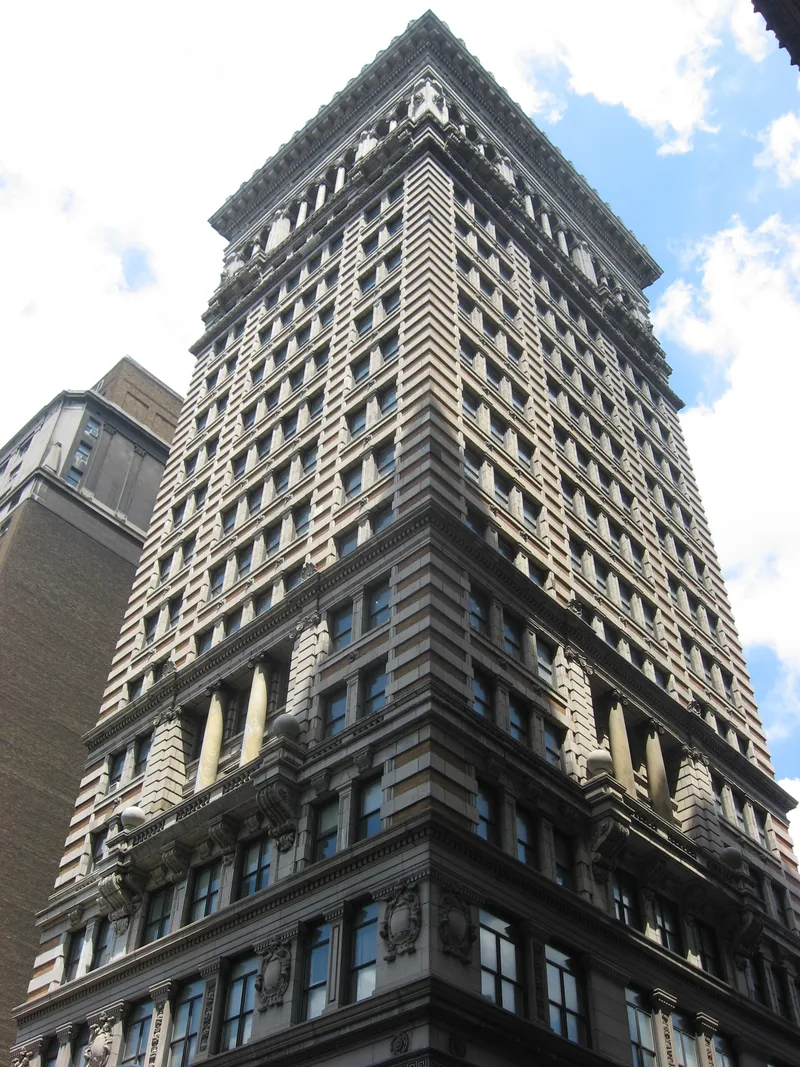
Low-rise banking houses and steel-framed skyscrapers line a dense street grid in downtown Pittsburgh, centred on Fourth Avenue and Wood Street. Dollar Savings Bank, built 1868-1871, is the oldest building in the district and has a brownstone facade with recumbent lions at its entrance. Banking houses typically had a large public banking hall behind a monumental stone facade. The Peoples Savings Bank Building of 1901 was the first of the district's early skyscrapers, with fourteen storeys of offices above banking rooms. The district is regarded as Pittsburgh's principal concentration of banking architecture. Its financial institutions expanded after the 1873 panic and especially between 1890 and 1905, drawing on money from oil and then steel. Several major firms, including Osterling and Alden and Harlow, designed buildings here. Exterior alterations have been limited, and marble-lined lobbies and brass fittings survive.
Significance in brief: The nomination argues the district is the historic core of Pittsburgh's financial district, known as the city's "Wall Street", and holds the city's richest grouping of banking buildings and most important early skyscrapers. It cites the architectural design of banking houses and early tall buildings, and the link between the district's banks and the flow of industrial and oil money into the city.
Machine-generated summary. This summary was generated by a language model from the official nomination document and has not been reviewed line by line by an editor. It may contain errors. Check the source document before relying on any detail. Source: nomination document (PDF). NRHP reference 13000249, listed May 2, 2013. Summary generated October 2026 (model claude-haiku-5-5, prompt v1.1-2026-10-29, confidence medium).
Key facts
| Address | Roughly bounded by Smithfield St., Market Square Pl., 3rd & 5th Aves., Pittsburgh |
|---|---|
| County | Allegheny County |
| Listed | May 2, 2013 |
| Reference number | 13000249 |
| Resource type | District |
| Period of significance | 1868-1930 |
| Architectural style | Italianate; Richardsonian Romanesque; Beaux Arts; Neo-Classical; Renaissance Revival |
| Criteria |
|
| Areas of significance | Commerce, Economics, Architecture |
| Level of significance | Local |
| Status (as stated in the nomination) | Exterior alterations minimal, mainly window replacement; some banking rooms converted to retail or restaurant use; Bank Center retail mall; Industrial Bank interior serves as a bar. |
| Acreage | 1.8 |
| Coordinates | 40.44183, -80.00055 (NPS GIS) |
What listing means for this property
This is a historic district. Buildings within its boundary are either contributing (they add to the district's significance) or non-contributing. Owners of contributing income-producing buildings can claim the 20% federal rehabilitation tax credit; homeowners should look at state credits. National Register districts impose no design review by themselves; a local historic district ordinance, if one exists, does (the difference explained).
General information, not legal or tax advice. Rules change; confirm with your State Historic Preservation Office or a qualified adviser.
Sources and further reading
- National Park Service, National Register of Historic Places database (snapshot May 2026), reference 13000249.
- Nomination form (PDF, National Archives)
- Wikipedia article (used for cross-checking only; text not reproduced here)
- Wikidata Q5476002
- This listing as JSON
Last updated October 2026. Found an error? See the editorial policy for how to report it.