Fourth Avenue Historic District
Also known as: See Also:Dollar Savings Bank

Why it's listed
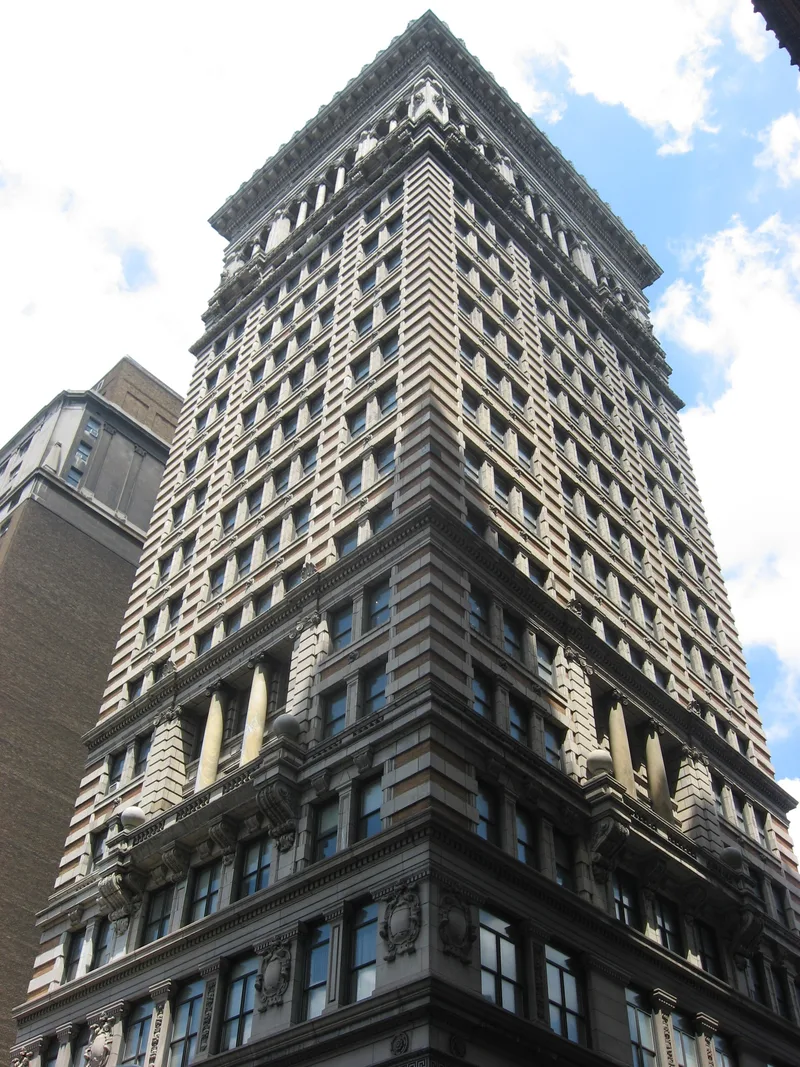
Fourth Avenue in downtown Pittsburgh is lined with banking houses and office towers built between the late nineteenth and early twentieth centuries. Dollar Savings Bank, built 1868-1871, is the oldest building in the district and is Italianate in style. Pittsburgh's first skyscraper of this group, the Peoples Savings Bank Building, rose fourteen stories above its banking rooms in 1901. Union Trust Company and Colonial Trust Company show Beaux Arts and Neo-Classical facades, with Colonial Trust designed by Frederick J. Osterling. Fidelity Trust, Times and Marine National Bank buildings from about 1890 are Richardsonian Romanesque. Oil money from Michael Benedum and Joseph Trees, then steel wealth, drew many banks here, and by 1908 Pittsburgh held more banking money than any city except New York. The district's buildings are largely stone and terra cotta, and their close spacing creates a dense streetscape.
Significance in brief: The nomination argues that the district is the historic core of Pittsburgh's financial district and holds the city's richest grouping of banking buildings and its most important early skyscrapers. It describes the district as reflecting turn-of-the-century commercial architecture and innovations in bank building design, and it cites the concentration of financial institutions that served the region's oil and steel wealth.
Machine-generated summary. This summary was generated by a language model from the official nomination document and has not been reviewed line by line by an editor. It may contain errors. Check the source document before relying on any detail. Source: nomination document (PDF) · National Archives catalog entry. NRHP reference 85001961, listed September 5, 1985. Summary generated October 2026 (model claude-haiku-5-5, prompt v1.1-2026-10-29, confidence high).
Key facts
| Address | Fourth Ave. & Wood St., Pittsburgh |
|---|---|
| County | Allegheny County |
| Listed | September 5, 1985 |
| Reference number | 85001961 |
| Resource type | District |
| Period of significance | 1868-1871 |
| Architectural style | Italianate; Richardsonian Romanesque; Beaux Arts; Neo-Classical; Renaissance Revival |
| Criteria |
|
| Areas of significance | Commerce, Economics, Architecture |
| Level of significance | Local |
| Status (as stated in the nomination) | Exterior alterations have been minimal, mainly window replacement; some interior banking rooms have been lost to retail or restaurant use, while others remain original; the Bank Center is a retail mall and the Industrial Bank interior serves as a bar. |
| Acreage | 6 |
| Within district | Firstside Historic District (Boundary Increase) |
| Coordinates | 40.43887, -80.00014 (NPS GIS) |
What listing means for this property
This is a historic district. Buildings within its boundary are either contributing (they add to the district's significance) or non-contributing. Owners of contributing income-producing buildings can claim the 20% federal rehabilitation tax credit; homeowners should look at state credits. National Register districts impose no design review by themselves; a local historic district ordinance, if one exists, does (the difference explained).
General information, not legal or tax advice. Rules change; confirm with your State Historic Preservation Office or a qualified adviser.
Sources and further reading
- National Park Service, National Register of Historic Places database (snapshot May 2026), reference 85001961.
- Nomination form (PDF, National Archives) — catalog entry
- Wikipedia article (used for cross-checking only; text not reproduced here)
- Wikidata Q5476002
- This listing as JSON
Last updated October 2026. Found an error? See the editorial policy for how to report it.