Firstside Historic District (Boundary Increase)

Why it's listed
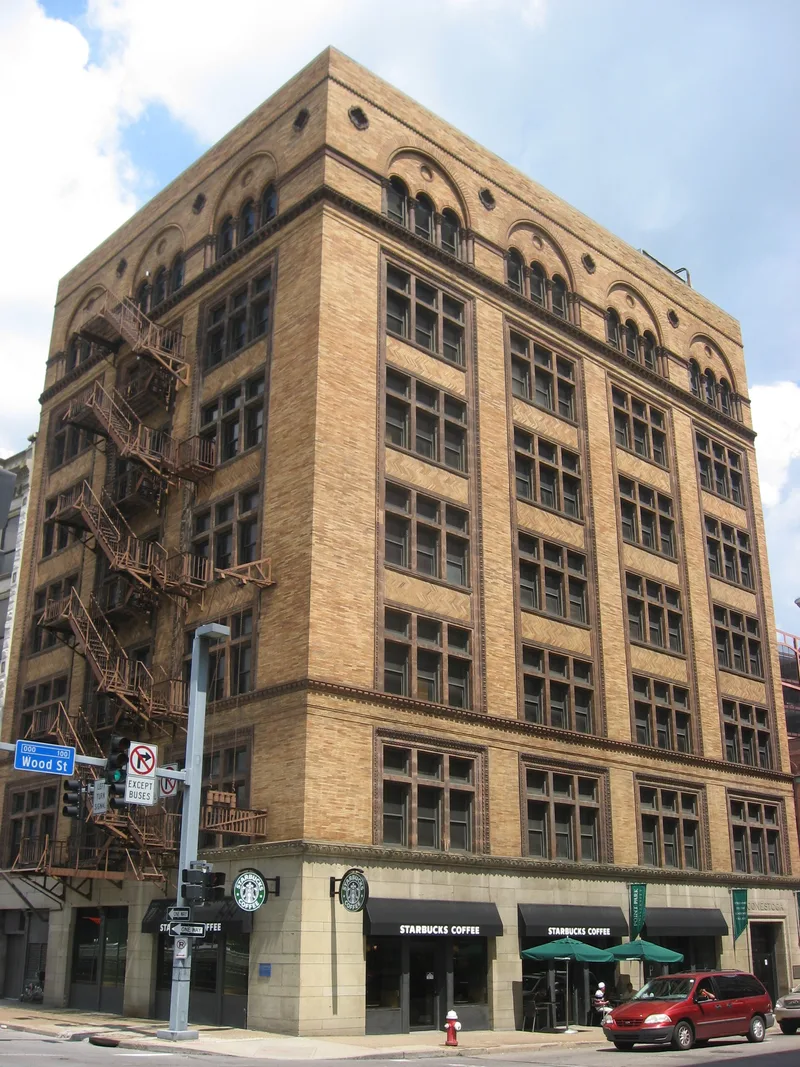
Along the north bank of the Monongahela River in downtown Pittsburgh stands a row of twelve contiguous brick warehouses, mostly three to five stories high, built between 1845 and 1914. They were erected after a fire in 1845 destroyed much of the waterfront and formed part of the Monongahela Wharf, the city's principal commercial wharf from the 1840s through the 1930s. Goods were unloaded at the wharf and stored in these buildings for the river trade. Most early occupants were commission merchants, and the Oil Well Supply Company and glass manufacturer Alexander King were among later tenants. The row includes Greek Revival, Italianate, Queen Anne and Richardsonian Romanesque facades. The seven-story Conestoga Building at 1-7 Wood Street, completed in 1892 by Longfellow, Alden & Harlow, is the largest and most architecturally significant structure. The district's importance rests on its commercial history and on its intact warehouse architecture, which the nomination regards as rare in downtown Pittsburgh. The period of significance runs to 1938, when steamboat freighting declined.
Machine-generated summary. This summary was generated by a language model from the official nomination document and has not been reviewed line by line by an editor. It may contain errors. Check the source document before relying on any detail. Source: nomination document (PDF). Generated October 2026 (model claude-haiku-5-5, prompt v1.1-2026-10-29).
| Period of significance | 1845-1938 |
|---|---|
| Styles | Greek Revival; Italianate; Queen Anne; Richardsonian Romanesque |
| Areas of significance | Industry |
| Acreage | 8.9 |
| Boundary source | NPS cultural-resource GIS polygon |
| Full listing page | Firstside Historic District (Boundary Increase) (property record) |
What listing means for this property
This is a historic district. Buildings within its boundary are either contributing (they add to the district's significance) or non-contributing. Owners of contributing income-producing buildings can claim the 20% federal rehabilitation tax credit; homeowners should look at state credits. National Register districts impose no design review by themselves; a local historic district ordinance, if one exists, does (the difference explained).
General information, not legal or tax advice. Rules change; confirm with your State Historic Preservation Office or a qualified adviser.