Academy of Music
Also known as: American Academy of Music

Why it's listed
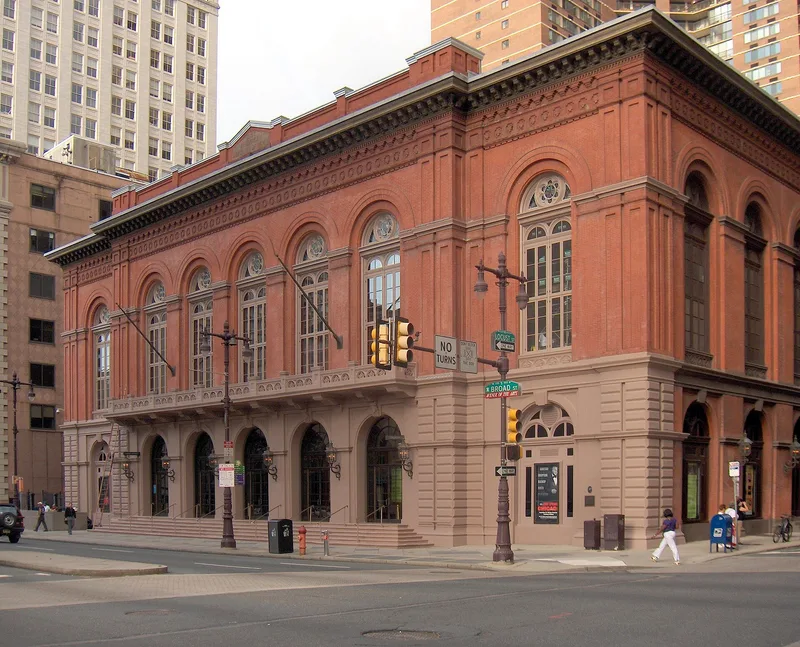
Built on the corner of Broad and Locust Streets in Philadelphia between 1855 and 1857, the Academy of Music is a free-standing brick building in the Renaissance Revival manner, with brownstone trim and a projecting central section on its Broad Street front. The architect was Napoleon Lebrun, a Philadelphia-born son of a French diplomat, who designed the hall after visiting European opera houses, especially Milan's Teatro della Scala. The auditorium has a columned proscenium, tiers of boxes, and gold, cream and red decoration, and it is noted for its acoustics, which were aided by sunken acoustical pits under the floor and stage. The hall opened on January 26, 1857. It hosted early American premieres of standard operas and ballets and performances by many leading musicians. It has been the home of the Philadelphia Orchestra since the turn of the century.
Significance in brief: The nomination argues the building is the country's oldest musical auditorium still retaining its original form and purpose, and a leading center of American music. Its interior acoustics, Neo-Baroque auditorium design, and history of premieres and performances by major musicians and the Philadelphia Orchestra are presented as the main grounds for significance.
Machine-generated summary. This summary was generated by a language model from the official nomination document and has not been reviewed line by line by an editor. It may contain errors. Check the source document before relying on any detail. Source: nomination document (PDF) · National Archives catalog entry. NRHP reference 66000674, listed October 15, 1966. Summary generated October 2026 (model claude-haiku-5-5, prompt v1.1-2026-10-29, confidence high).
Key facts
| Address | Broad and Locust Sts., Philadelphia |
|---|---|
| County | Philadelphia |
| Listed | October 15, 1966 |
| Reference number | 66000674 |
| Resource type | Building |
| Period of significance | 1855-57 |
| Architect / builder | Lebrun and Runge |
| Architectural style | Renaissance Revival |
| Areas of significance | Architecture, Performing Arts |
| Level of significance | National |
| National Historic Landmark | Yes, designated December 29, 1962 |
| Status (as stated in the nomination) | Altered; interior refurbished and restored in its centennial year. |
| Acreage | 0.9 |
| Within district | Broad Street Historic District (Additional Documentation) |
| Coordinates | 39.94802, -75.16520 (NPS GIS) |
What listing means for this property
For a publicly owned building or structure, listing mainly matters when federal funds, permits or licences are involved: projects then go through Section 106 review so effects on the property are considered. Listing also strengthens applications for preservation grants and, for leased income-producing uses, can enable the federal rehabilitation tax credit.
General information, not legal or tax advice. Rules change; confirm with your State Historic Preservation Office or a qualified adviser.
Sources and further reading
- National Park Service, National Register of Historic Places database (snapshot May 2026), reference 66000674.
- Nomination form (PDF, National Archives) — catalog entry
- Wikipedia article (used for cross-checking only; text not reproduced here)
- Wikidata Q337337
- This listing as JSON
Last updated October 2026. Found an error? See the editorial policy for how to report it.