Philadelphia College of Art (Additional Documentation)
Also known as: Asylum for the Deaf and Dumb; See Also:Philadelphia College o
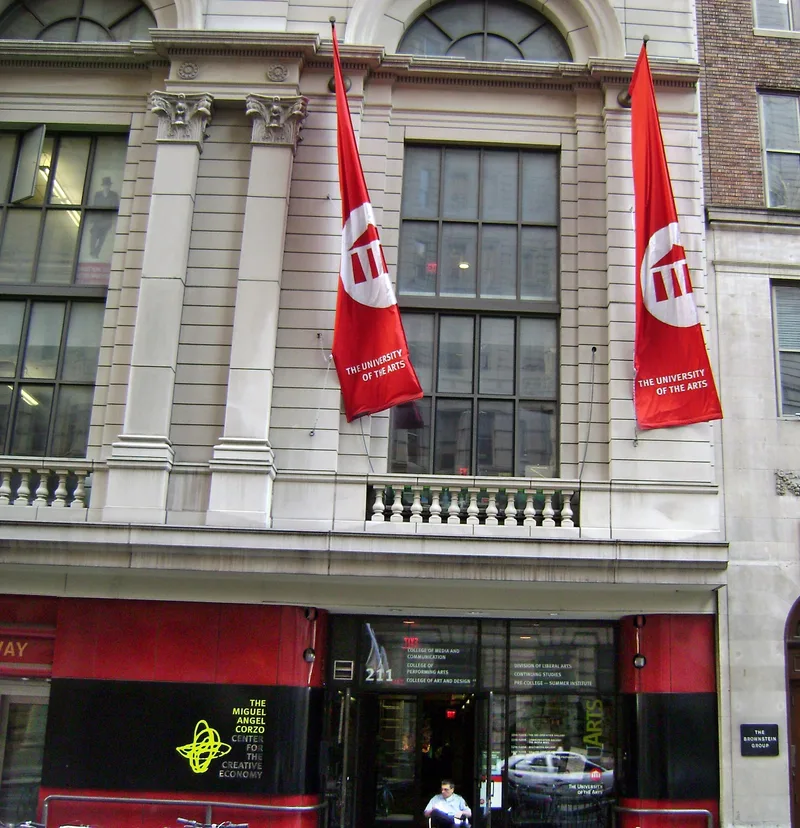

Why it's listed
Built in 1824 on South Broad Street in Philadelphia, this three-story stone building was designed by John Haviland as the Asylum for the Deaf and Dumb. It has a U-shaped plan, a four-column Doric portico and flanking wings, and measures 96 feet across the Broad Street front and 92 feet deep. The planned statues for the niches on the wings were never installed, though each niche was to carry an inscription in the manual alphabet. Haviland's plan reflected the particular needs of the institution rather than copies of ancient models. In 1852 two-story north and south wings were added, and in 1863 a third story was built over the long east-west wings. The building is regarded as a major nineteenth-century Philadelphia work, combining Greek Revival massing with shallow arches derived from the Federal style. It is now occupied by the Philadelphia College of Art, and its exterior remains in good condition.
Significance in brief: The nomination describes the building as a major nineteenth-century Philadelphia building designed by John Haviland. Its Greek Revival composition with a Doric portico and a plan shaped by the needs of the institution, along with its Federal-derived wing arches, are cited as the basis for its importance in architecture and art.
Machine-generated summary. This summary was generated by a language model from the official nomination document and has not been reviewed line by line by an editor. It may contain errors. Check the source document before relying on any detail. Source: nomination document (PDF) · National Archives catalog entry. NRHP reference 71000733, listed May 27, 1971. Summary generated October 2026 (model claude-haiku-5-5, prompt v1.1-2026-10-29, confidence medium).
Key facts
| Address | NW corner of Broad and Pine Sts., Philadelphia |
|---|---|
| County | Philadelphia |
| Listed | May 27, 1971 |
| Reference number | 71000733 |
| Resource type | Building |
| Period of significance | 1824 |
| Architect / builder | John Haviland (architect) |
| Architectural style | Greek Revival |
| Areas of significance | Education, Architecture, Social History, Art |
| Level of significance | National |
| Status (as stated in the nomination) | The building is in excellent condition and contributes to the streetscape of South Broad Street; much of the interior has been altered due to occupancy by the Philadelphia College of Art. |
| Acreage | 0.9 |
| Within district | Broad Street Historic District (Additional Documentation) |
| Coordinates | 39.94623, -75.16561 (NPS GIS) |
What listing means for this property
For a publicly owned building or structure, listing mainly matters when federal funds, permits or licences are involved: projects then go through Section 106 review so effects on the property are considered. Listing also strengthens applications for preservation grants and, for leased income-producing uses, can enable the federal rehabilitation tax credit.
General information, not legal or tax advice. Rules change; confirm with your State Historic Preservation Office or a qualified adviser.
Sources and further reading
- National Park Service, National Register of Historic Places database (snapshot May 2026), reference 71000733.
- Nomination form (PDF, National Archives) — catalog entry
- Wikipedia article (used for cross-checking only; text not reproduced here)
- Wikidata Q1068615
- This listing as JSON
Last updated October 2026. Found an error? See the editorial policy for how to report it.