Chestnut Hill Historic District

Why it's listed
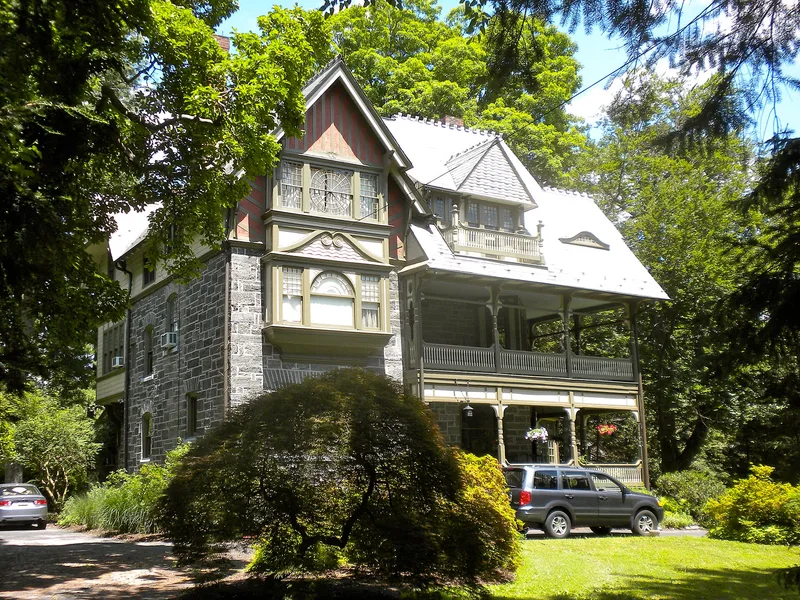
Chestnut Hill is a residential neighborhood in northwest Philadelphia with more than 2,600 buildings, most of them single-family houses of two or three stories. Settlement began in the early 1700s along Germantown Pike and Bethlehem Pike, and the arrival of the Philadelphia, Germantown and Norristown Railroad in 1854 turned the village into a summer retreat. Later, the Pennsylvania Railroad extension in 1884 prompted Henry Howard Houston's planned western section, and Dr. George Woodward's work from 1904 added courtyard housing and landscaped streets. Local Wissahickon schist stone is the common material throughout, and many houses are set into the land along the Wissahickon and Cresheim valleys. The district is listed for its architecture, its wide range of styles by leading Philadelphia architects, and its planning, which followed the natural contours of the land. Much of the surrounding valley was later preserved as parkland.
Machine-generated summary. This summary was generated by a language model from the official nomination document and has not been reviewed line by line by an editor. It may contain errors. Check the source document before relying on any detail. Source: nomination document (PDF) · catalog entry. Generated October 2026 (model claude-haiku-5-5, prompt v1.1-2026-10-29).
| Period of significance | 1700-1935 |
|---|---|
| Areas of significance | Community Planning and Development, Landscape Architecture, Commerce, Architecture, Social History |
| Acreage | 1920 |
| Boundary source | NPS cultural-resource GIS polygon |
| Full listing page | Chestnut Hill Historic District (property record) |
What listing means for this property
This is a historic district. Buildings within its boundary are either contributing (they add to the district's significance) or non-contributing. Owners of contributing income-producing buildings can claim the 20% federal rehabilitation tax credit; homeowners should look at state credits. National Register districts impose no design review by themselves; a local historic district ordinance, if one exists, does (the difference explained).
General information, not legal or tax advice. Rules change; confirm with your State Historic Preservation Office or a qualified adviser.