Lincoln Park

Why it's listed
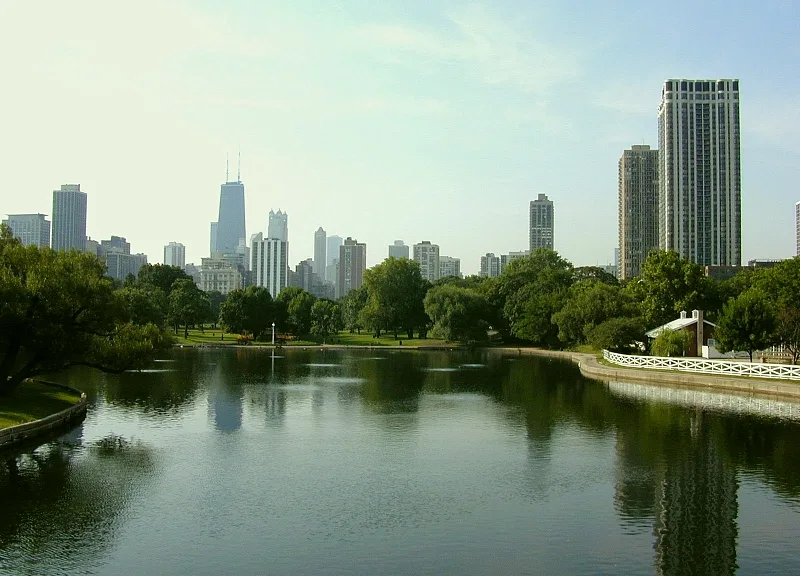
Lincoln Park is a 1,208-acre lakefront park along more than six miles of Chicago's shoreline, running from Ohio Street to Ardmore Avenue. It started in 1860 as sixty acres of unused cemetery land that had never had burials. About a quarter of the present park was original lakeshore, and the rest was created from landfill. The park grew in nine stages between 1860 and 1957. Its first landscape, designed by Swain Nelson in 1865, followed the natural ridges and swales with winding drives, paths and a chain of artificial lakes. Olaf Benson later extended that naturalistic approach across a 250-acre park. Surviving features include the Couch Tomb, a remnant of the City Cemetery, the South Pond, the Hans Christian Andersen monument, the Prairie style Cafe Brauer designed by Perkins, Fellows and Hamilton, Carlson Cottage and the Lincoln Park Conservatory. The park was listed as a district because it brings together the work of many designers and still conveys its layered historic character.
Machine-generated summary. This summary was generated by a language model from the official nomination document and has not been reviewed line by line by an editor. It may contain errors. Check the source document before relying on any detail. Source: nomination document (PDF) · catalog entry. Generated October 2026 (model claude-sonnet-5-5, prompt v1.0-2026-10-29).
| Styles | Colonial Revival; Prairie School; Art Deco |
|---|---|
| Areas of significance | Entertainment/Recreation, Social History, Architecture, Landscape Architecture |
| Acreage | 1208 |
| Boundary source | NPS cultural-resource GIS polygon |
| Full listing page | Lincoln Park (property record) |
What listing means for this property
This is a historic district. Buildings within its boundary are either contributing (they add to the district's significance) or non-contributing. Owners of contributing income-producing buildings can claim the 20% federal rehabilitation tax credit; homeowners should look at state credits. National Register districts impose no design review by themselves; a local historic district ordinance, if one exists, does (the difference explained).
General information, not legal or tax advice. Rules change; confirm with your State Historic Preservation Office or a qualified adviser.