Cincinnati Zoo Historic Structures
Also known as: See Also: Cincinnati Zoo District

Why it's listed
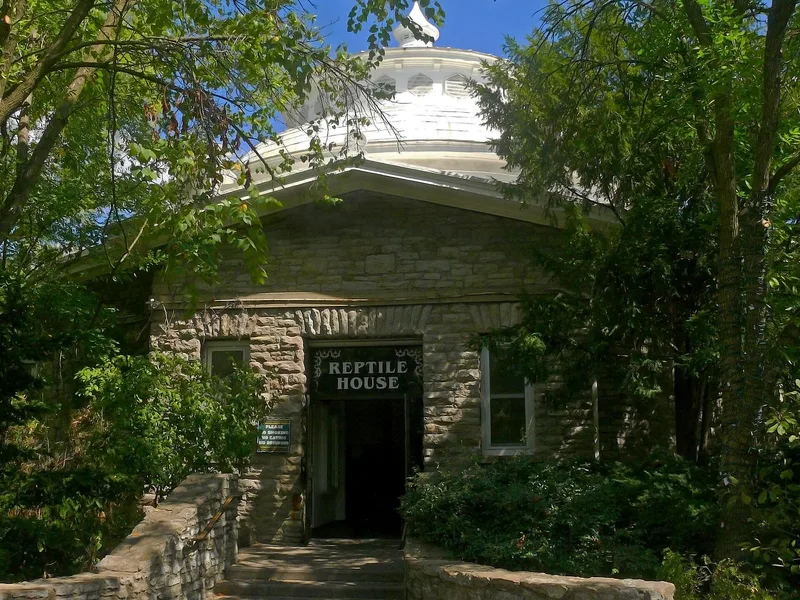
Three of the Cincinnati Zoo's oldest buildings survive on its grounds along Vine Street. The round stone Monkey House, now used as the Reptile House, has a 60-foot diameter and a two-stage dome. The concrete Herbivore House, built in 1902, resembles an East Indian temple, with five domes and large animal enclosures along its long walls. The third structure is the central pavilion of the Aviary, a Japanese-style complex finished before 1880. Its six smaller units were demolished in 1974-75, and the pavilion was moved about 50 feet and restored. It was the last home of Martha, the last passenger pigeon, who died in 1914, and it now serves as a memorial and endangered species exhibit. The buildings are valued as rare surviving early zoo architecture with functional designs. They stand within a zoo that opened in 1875 and is the second oldest in the United States.
Significance in brief: They are the Cincinnati Zoo's earliest surviving buildings and are notable examples of early zoo architecture, a type of which few remain in the United States. Their designs provide good light and space for the animals they house. The zoo itself, opened in 1875, is the second oldest in the country and became known for breeding rare species and as the home of Martha, the last passenger pigeon.
Machine-generated summary. This summary was generated by a language model from the official nomination document and has not been reviewed line by line by an editor. It may contain errors. Check the source document before relying on any detail. Source: nomination document (PDF) · National Archives catalog entry. NRHP reference 87000905, listed February 27, 1987. Summary generated October 2026 (model claude-sonnet-5-5, prompt v1.0-2026-10-29, confidence medium).
Key facts
| Address | 3400 Vine St., Cincinnati |
|---|---|
| County | Hamilton County |
| Listed | February 27, 1987 |
| Reference number | 87000905 |
| Resource type | Building |
| Period of significance | 1800-1899, 1900- |
| Architect / builder | Aviary: James McLaughlin; Monkey House: probably James McLaughlin; Herbivore House: unknown |
| Areas of significance | Entertainment/Recreation |
| Level of significance | National |
| National Historic Landmark | Yes, designated February 27, 1987 |
| Status (as stated in the nomination) | Occupied and in use; the Herbivore House still serves its original function, the Monkey House is now the Reptile House, and the Aviary pavilion was moved about 50 feet and restored as an endangered species exhibit. |
| Acreage | 0.9 |
| Coordinates | 39.14420, -84.50917 (NPS GIS) |
What listing means for this property
National Register listing is honorary: it recognises significance and does not restrict what a private owner may do without federal money or permits. It unlocks the 20% federal rehabilitation tax credit for income-producing buildings, state credits in many states, and Section 106 review when federal agencies are involved. See what listing means in practice.
General information, not legal or tax advice. Rules change; confirm with your State Historic Preservation Office or a qualified adviser.
Sources and further reading
- National Park Service, National Register of Historic Places database (snapshot May 2026), reference 87000905.
- Nomination form (PDF, National Archives) — catalog entry
- Wikipedia article (used for cross-checking only; text not reproduced here)
- Wikidata Q5120335
- This listing as JSON
Last updated October 2026. Found an error? See the editorial policy for how to report it.