West 67th Street Artists' Colony Historic District

Why it's listed
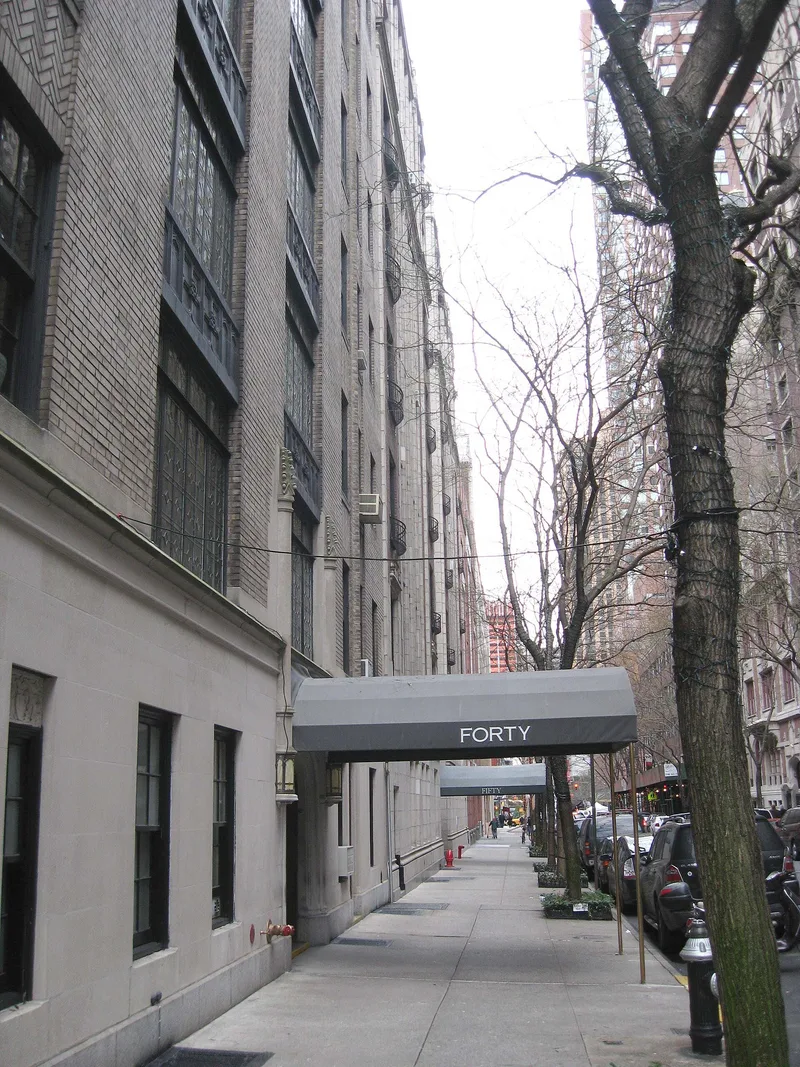
Eight buildings on West 67th Street, between Central Park West and Columbus Avenue, form a compact enclave built for artists and their admirers between 1901 and 1929. Painter Henry W. Ranger helped inspire the first, the Sixty-Seventh Street Studios, which combined two-story, north-lit studios with duplex living areas, financed by artists as a cooperative. Later buildings, including the Atelier Building, Central Park Studios, Colonial Studios and the Hotel Des Artistes, followed that model, and the cooperative form of ownership gained popularity as a result. Dark brick, limestone and terra-cotta facades with Neo-Gothic ornament unify the street, and several architects worked on more than one building. The Swiss House, an institutional building by John E. Scharsmith, and two later apartment houses, Nos. 40 and 50, complement the studios. The group is regarded as the only significant concentration of artists' studio apartments in Manhattan. One later apartment house at No. 17 does not contribute to the district.
Significance in brief: It is described as the only significant concentration of artists' studio apartments in Manhattan. Most buildings were planned and financed by artists as cooperatives with two-story north-facing studios, and their success helped popularize cooperative ownership. The buildings are also tied together by dark brick, limestone and terra-cotta facades with Neo-Gothic detail, designed largely by the same architects.
Machine-generated summary. This summary was generated by a language model from the official nomination document and has not been reviewed line by line by an editor. It may contain errors. Check the source document before relying on any detail. Source: nomination document (PDF) · National Archives catalog entry. NRHP reference 85001522, listed July 11, 1985. Summary generated October 2026 (model claude-sonnet-5-5, prompt v1.0-2026-10-29, confidence medium).
Key facts
| Address | 1--39 and 40--50 W. 67th St., New York |
|---|---|
| County | Manhattan |
| Listed | July 11, 1985 |
| Reference number | 85001522 |
| Resource type | District |
| Period of significance | 1901-1929 |
| Architect / builder | Various; including George Mort Pollard, Simonson, Pollard & Steinam, Sturgis & Simonson, John E. Scharsmith, Pollard & Steinam, Rosario Candela, Shape & Bready |
| Architectural style | Neo-Gothic, with one Renaissance-detailed building (Colonial Studios) |
| Areas of significance | Art, Architecture |
| Level of significance | Local |
| Status (as stated in the nomination) | Contributing buildings are described as well maintained and retaining original exterior and interior features; the Swiss House is now a home for working women. One non-contributing intrusion at No. 17. |
| Acreage | 2 |
| Within district | Upper East Side Historic District |
| Coordinates | 40.76619, -73.96998 (NPS GIS) |
What listing means for this property
This is a historic district. Buildings within its boundary are either contributing (they add to the district's significance) or non-contributing. Owners of contributing income-producing buildings can claim the 20% federal rehabilitation tax credit; homeowners should look at state credits. National Register districts impose no design review by themselves; a local historic district ordinance, if one exists, does (the difference explained).
General information, not legal or tax advice. Rules change; confirm with your State Historic Preservation Office or a qualified adviser.
Sources and further reading
- National Park Service, National Register of Historic Places database (snapshot May 2026), reference 85001522.
- Nomination form (PDF, National Archives) — catalog entry
- Wikipedia article (used for cross-checking only; text not reproduced here)
- Wikidata Q45196195
- This listing as JSON
Last updated October 2026. Found an error? See the editorial policy for how to report it.