Upper East Side Historic District

Why it's listed
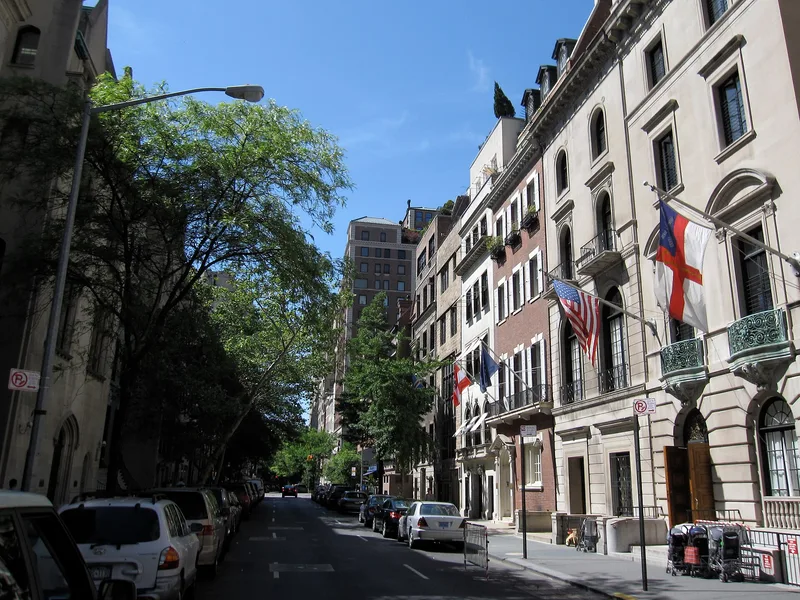
Stretching east from Central Park between 59th and 79th Streets, this Manhattan district takes in fifty-seven blocks and 1,044 buildings. Low-scale rowhouses fill the cross streets, some dating from the 1870s and 1880s and many from the early 1900s, while the avenues carry tall apartment houses, institutions and commercial buildings. The earliest surviving house, at 129 East 70th Street, dates from 1862-63. Brownstone rows in Italianate, neo-Grec and Queen Anne styles gave way to Beaux-Arts and neo-Renaissance mansions by architects such as Richard H. Hunt, Delano & Aldrich and McKim, Mead & White. Clubs, churches, stables and the Seventh Regiment Armory add variety, and luxury apartment houses rose mainly in the 1920s. Madison Avenue's rowhouses were converted to shops with storefronts added from 1904 onward. The district was listed because it records the architectural development of this part of the city from the later nineteenth century to the mid-twentieth century, and it retains a strong sense of place. Ninety-two buildings, including several modern designs, are noted as non-contributing.
Machine-generated summary. This summary was generated by a language model from the official nomination document and has not been reviewed line by line by an editor. It may contain errors. Check the source document before relying on any detail. Source: nomination document (PDF) · catalog entry. Generated October 2026 (model claude-sonnet-5-5, prompt v1.0-2026-10-29).
| Styles | Mixed: Italianate, neo-Grec, Queen Anne, Beaux-Arts, neo-Renaissance, neo-Georgian, neo-Federal, Art Deco and Modern |
|---|---|
| Areas of significance | Architecture |
| Acreage | 147 |
| Boundary source | NPS cultural-resource GIS polygon |
| Full listing page | Upper East Side Historic District (property record) |
What listing means for this property
This is a historic district. Buildings within its boundary are either contributing (they add to the district's significance) or non-contributing. Owners of contributing income-producing buildings can claim the 20% federal rehabilitation tax credit; homeowners should look at state credits. National Register districts impose no design review by themselves; a local historic district ordinance, if one exists, does (the difference explained).
General information, not legal or tax advice. Rules change; confirm with your State Historic Preservation Office or a qualified adviser.