Hotel Albert
Also known as: Hotel St. Stephen; The Albert Apartment Corporation, Building A, B, C, D

Why it's listed
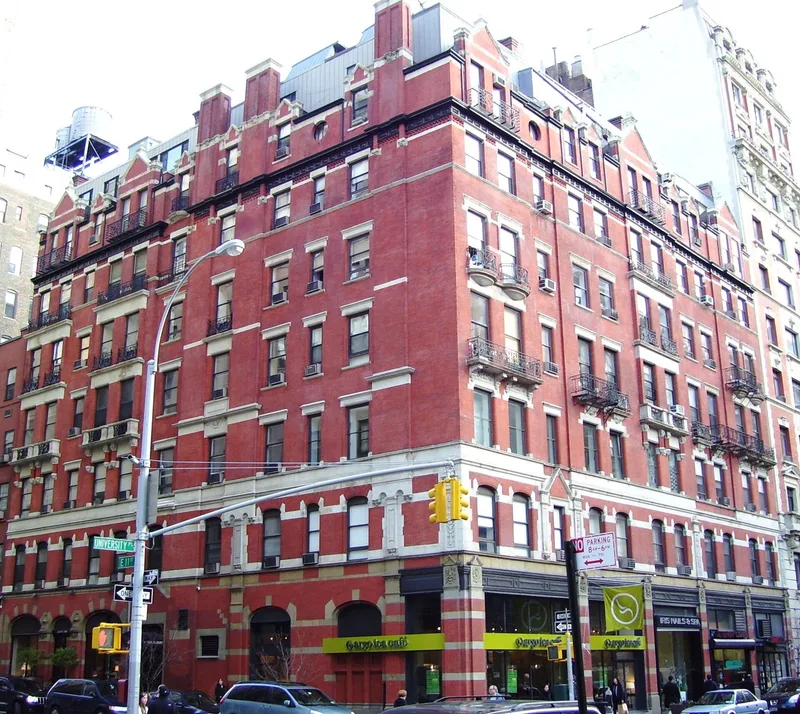
Occupying the University Place blockfront between East 10th and East 11th streets in Greenwich Village, this complex combines four buildings erected between 1875 and 1924. The earliest, the former Hotel St. Stephen, was assembled from three row houses to designs by James Irving Howard. Next came the eight-story Albert Apartments by Henry Hardenbergh, built in 1881-82 in red brick, brownstone and Nova Scotia stone and converted to a hotel by 1887. A twelve-story addition by Buchman & Fox followed in 1903-04, and a six-story wing by William L. Bottomley with Sugarman & Hess was completed in 1922-24. Beyond its architecture, the Albert served as a lodging place for writers, painters, political radicals and, in the 1960s, rock musicians, including those who wrote well-known songs there. Its exteriors remain largely intact, although interiors have been reworked and the St. Stephen's façade was replaced in the 1920s. The complex became a cooperative apartment building in the 1970s.
Significance in brief: The nomination argues architectural significance under Criterion C for an early apartment house designed by Henry Hardenbergh, with additions by Buchman & Fox and William L. Bottomley. It also argues significance under Criterion A in art, performing arts and literature, citing the Albert's century-long role as a home to writers, artists, political radicals and, in the 1960s, rock musicians.
Machine-generated summary. This summary was generated by a language model from the official nomination document and has not been reviewed line by line by an editor. It may contain errors. Check the source document before relying on any detail. Source: nomination document (PDF) · National Archives catalog entry. NRHP reference 12000329, listed June 13, 2012. Summary generated October 2026 (model claude-sonnet-5-5, prompt v1.0-2026-10-29, confidence high).
Key facts
| Address | 23 E. 10th St., Manhattan |
|---|---|
| County | Manhattan |
| Listed | June 13, 2012 |
| Reference number | 12000329 |
| Resource type | Building |
| Period of significance | 1875 - c.1970 |
| Architect / builder | James Irving Howard (Building D, 1875/76); Henry Hardenbergh (Building C, 1881/82); Buchman & Fox (Building B, 1903/04); William L. Bottomley (Building A, 1922-24) |
| Architectural style | Late Victorian/Renaissance; Late 19th & 20th Century Revivals/French Renaissance; Classical Revival |
| Criteria |
|
| Areas of significance | Architecture, Performing Arts, Literature, Art |
| Level of significance | Local |
| Status (as stated in the nomination) | Converted to a co-op apartment complex in the 1970s; exteriors of the Albert and its two additions survive largely intact, while interiors have been reconfigured and the former Hotel St. Stephen lost its original façade in the 1920s. |
| Acreage | 0.6 |
| Coordinates | 40.73490, -73.99276 (NPS GIS) |
What listing means for this property
For an income-producing building, listing (individually or as a contributing building in a district) is the gateway to the 20% federal rehabilitation tax credit on qualified rehabilitation costs, often stackable with state credits. Work claiming the credit must follow the Secretary of the Interior's Standards and be approved in advance.
Listing does not restrict a private owner acting without federal money or permits; where federal funding or licensing is involved, Section 106 review applies.
General information, not legal or tax advice. Rules change; confirm with your State Historic Preservation Office or a qualified adviser.
Sources and further reading
- National Park Service, National Register of Historic Places database (snapshot May 2026), reference 12000329.
- Nomination form (PDF, National Archives) — catalog entry
- Wikipedia article (used for cross-checking only; text not reproduced here)
- Wikidata Q5903295
- This listing as JSON
Last updated October 2026. Found an error? See the editorial policy for how to report it.