Main Street/Market Square Historic District

Why it's listed
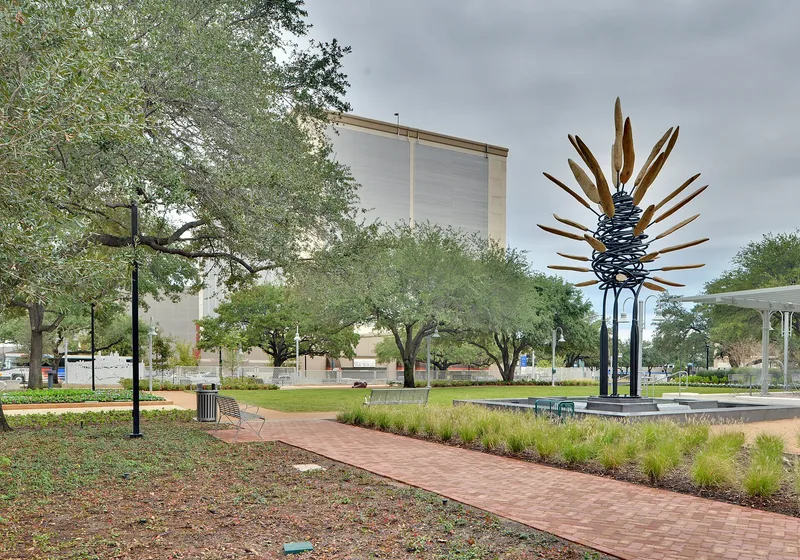
This twelve-block area of downtown Houston lies on the south bank of Buffalo Bayou, centered on Main Street. It contains fifty-two contributing buildings and one structure, the 1913 Main Street Viaduct, a reinforced concrete arch bridge that was the longest span in Texas when built. Twenty-four of the buildings date from 1858 to 1900, and the rest from 1901 to 1935. Styles run from modest brick stores to ornate Victorian commercial buildings, Beaux Arts banks and office towers, and early 1930s Moderne storefronts. The district also includes Allen's Landing, Houston's earliest steamboat landing, and Market Square, site of the city markets and city halls from 1839 to 1939. The area served as the city's commercial, financial, retail and entertainment center until banks and shops moved south in the mid-twentieth century. Demolition for parking lots followed, but restoration of several buildings and creation of parks at both historic sites have since taken place. Twenty buildings are classed as non-contributing.
Machine-generated summary. This summary was generated by a language model from the official nomination document and has not been reviewed line by line by an editor. It may contain errors. Check the source document before relying on any detail. Source: nomination document (PDF) · catalog entry. Generated October 2026 (model claude-sonnet-5-5, prompt v1.0-2026-10-29).
| Styles | Mix of mid-19th-century brick commercial, High Victorian, Victorian Gothic, Beaux Arts, Renaissance Revival and Moderne |
|---|---|
| Areas of significance | Commerce, Transportation, Architecture |
| Acreage | 35 |
| Boundary source | NPS cultural-resource GIS polygon |
| Full listing page | Main Street/Market Square Historic District (property record) |
What listing means for this property
This is a historic district. Buildings within its boundary are either contributing (they add to the district's significance) or non-contributing. Owners of contributing income-producing buildings can claim the 20% federal rehabilitation tax credit; homeowners should look at state credits. National Register districts impose no design review by themselves; a local historic district ordinance, if one exists, does (the difference explained).
General information, not legal or tax advice. Rules change; confirm with your State Historic Preservation Office or a qualified adviser.