Lowell National Historical Park

Why it's listed
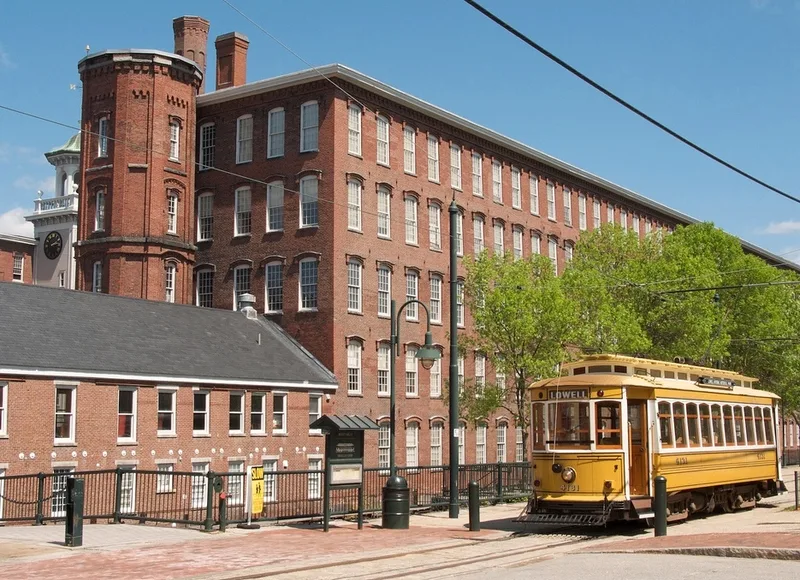
Lowell National Historical Park preserves the core of a nineteenth-century planned industrial city in Massachusetts. Authorized by Congress in 1978, it takes an unusual approach: the federal government owns few buildings, and preservation relies on other public agencies and private owners. The 134-acre park takes in the 5.6-mile power canal system, part of the downtown business district and three major mill complexes. Its listed properties include the Boott Mill, with its surviving 1835 mills and clock tower, the 1848 Moody Street Feeder Gatehouse, the Kirk Street Agents' House built for mill corporation agents, Old City Hall, and later mill buildings such as the Lowell Manufacturing and Suffolk companies. The nomination holds that Lowell was not the birthplace of American industrialization, but the place where technology, water power, finance, labor and industrial organization came together on an unprecedented scale. Its surviving canals, mills, housing and streetscapes show the economic, technological and social effects of that change, from early success through decline to revival.
Machine-generated summary. This summary was generated by a language model from the official nomination document and has not been reviewed line by line by an editor. It may contain errors. Check the source document before relying on any detail. Source: nomination document (PDF) · catalog entry. Generated October 2026 (model claude-sonnet-5-5, prompt v1.0-2026-10-29).
| Period of significance | 1800 - present |
|---|---|
| Areas of significance | Industry, Community Planning and Development, Architecture, Social History |
| Acreage | 137.1 |
| Boundary source | NPS cultural-resource GIS polygon |
| Full listing page | Lowell National Historical Park (property record) |
What listing means for this property
This is a historic district. Buildings within its boundary are either contributing (they add to the district's significance) or non-contributing. Owners of contributing income-producing buildings can claim the 20% federal rehabilitation tax credit; homeowners should look at state credits. National Register districts impose no design review by themselves; a local historic district ordinance, if one exists, does (the difference explained).
General information, not legal or tax advice. Rules change; confirm with your State Historic Preservation Office or a qualified adviser.