Wharf Area Historic District (Boundary Increase)
Also known as: See Also; Wharf Area Historic District

Why it's listed
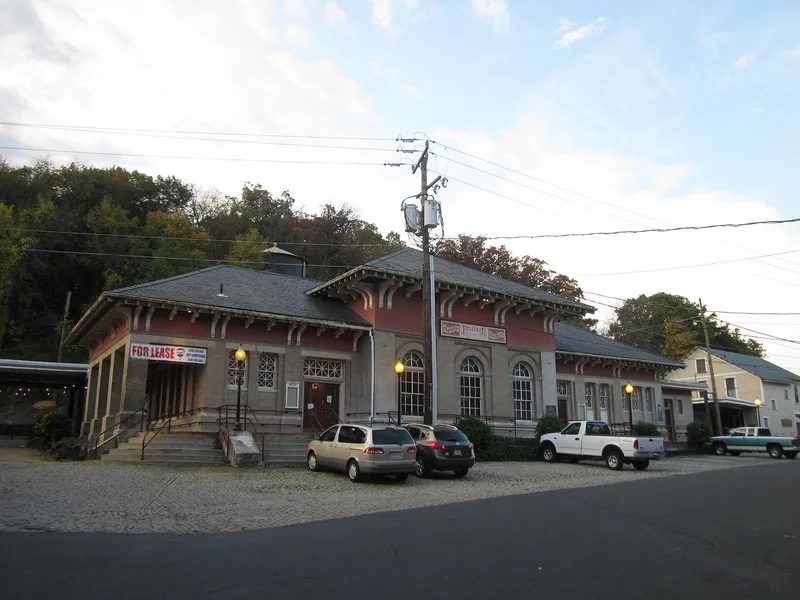
Located against the base of Sears Hill in Staunton, the Wharf Area is a small district of warehouses and commercial buildings gathered around Middlebrook Avenue and South Augusta Street. Brick warehouses from the late nineteenth century line one side of a trapezoidal open space facing the Chesapeake and Ohio Railroad passenger station, built in 1902, and its freight depot. Nearby are the Greek Revival former American Hotel, built around 1854, the Italianate Burns Building of 1874, cast-iron storefronts, a cast-iron footbridge, a railroad water tower and the four-story White Star Mills. The area grew after the Virginia Central Railroad reached Staunton in 1852, serving commission merchants, wholesalers, hotels and rail passengers. During the Civil War it held arsenals and supply warehouses. The district was listed as a well-preserved example of a turn-of-the-century warehouse and commercial area, with a boundary increase adding the mills, grain bins, footbridge and railroad tower.
Significance in brief: The district is described as an unusually picturesque and well-preserved example of a turn-of-the-century warehouse and commercial district. Its buildings reflect Staunton's growth after the railroad arrived in 1852. The area was important to commerce, trade and rail travel in the city.
Machine-generated summary. This summary was generated by a language model from the official nomination document and has not been reviewed line by line by an editor. It may contain errors. Check the source document before relying on any detail. Source: nomination document (PDF) · National Archives catalog entry. NRHP reference 82004605, listed July 19, 1982. Summary generated October 2026 (model claude-sonnet-5-5, prompt v1.0-2026-10-29, confidence medium).
Key facts
| Address | Boundary extended on E to Lewis Creek, Staunton (Independent City) |
|---|---|
| County | Staunton |
| Listed | July 19, 1982 |
| Reference number | 82004605 |
| Resource type | District |
| Architectural style | Greek Revival, Italianate, Queen Anne and Bungaloid buildings, mostly late-nineteenth century commercial and warehouse architecture |
| Areas of significance | Industry, Community Planning and Development, Commerce, Transportation, Architecture |
| Level of significance | State |
| Status (as stated in the nomination) | Condition marked good and unaltered; the building at 115-117 South Augusta Street was demolished in 1979 and is now a vacant lot. The former American Hotel is used as a warehouse. |
| Acreage | 7 |
| Within district | Wharf Area Historic District |
| Coordinates | 38.14746, -79.07250 (NPS GIS) |
What listing means for this property
This is a historic district. Buildings within its boundary are either contributing (they add to the district's significance) or non-contributing. Owners of contributing income-producing buildings can claim the 20% federal rehabilitation tax credit; homeowners should look at state credits. National Register districts impose no design review by themselves; a local historic district ordinance, if one exists, does (the difference explained).
General information, not legal or tax advice. Rules change; confirm with your State Historic Preservation Office or a qualified adviser.
Sources and further reading
- National Park Service, National Register of Historic Places database (snapshot May 2026), reference 82004605.
- Nomination form (PDF, National Archives) — catalog entry
- Wikipedia article (used for cross-checking only; text not reproduced here)
- Wikidata Q16903187
- This listing as JSON
Last updated October 2026. Found an error? See the editorial policy for how to report it.