Wharf Area Historic District

Why it's listed
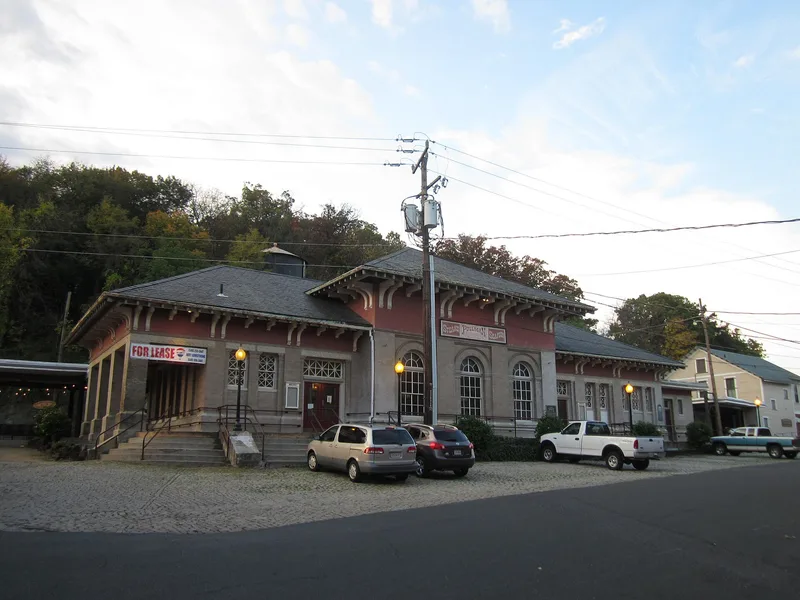
Tucked against the base of Sears Hill in Staunton, the Wharf Area is a small district of warehouses and commercial buildings along Middlebrook Avenue and part of South Augusta Street. Its brick warehouses, some plain and others richly corbeled, face a railroad passenger station built in 1902 and a freight depot. Landmarks include the Greek Revival American Hotel of about 1854, the Italianate Burns Building of 1874, the Erskine Building of 1904, and the four-story White Star Mills. Some Belgian block and brick paving survives. The district grew after the Virginia Central Railroad reached Staunton in 1852, which cut the cost of goods and opened Tidewater markets to Augusta County farmers. During the Civil War, arsenals and supply warehouses stood near the tracks. Commission merchants, wholesalers, saloons and liveries later gave the area its character. It was listed as a well-preserved example of a turn-of-the-century warehouse and commercial district.
Machine-generated summary. This summary was generated by a language model from the official nomination document and has not been reviewed line by line by an editor. It may contain errors. Check the source document before relying on any detail. Source: nomination document (PDF) · catalog entry. Generated October 2026 (model claude-sonnet-5-5, prompt v1.0-2026-10-29).
| Styles | Mixed late-nineteenth and early-twentieth century commercial architecture, including Greek Revival, Italianate, Queen Anne and Bungaloid examples |
|---|---|
| Areas of significance | Industry, Community Planning and Development, Commerce, Transportation, Architecture |
| Acreage | 9.9 |
| Boundary source | NPS cultural-resource GIS polygon |
| Full listing page | Wharf Area Historic District (property record) |
What listing means for this property
This is a historic district. Buildings within its boundary are either contributing (they add to the district's significance) or non-contributing. Owners of contributing income-producing buildings can claim the 20% federal rehabilitation tax credit; homeowners should look at state credits. National Register districts impose no design review by themselves; a local historic district ordinance, if one exists, does (the difference explained).
General information, not legal or tax advice. Rules change; confirm with your State Historic Preservation Office or a qualified adviser.