Union Canal Tunnel
Also known as: Old Tunnel; Old Canal Tunnel

Why it's listed
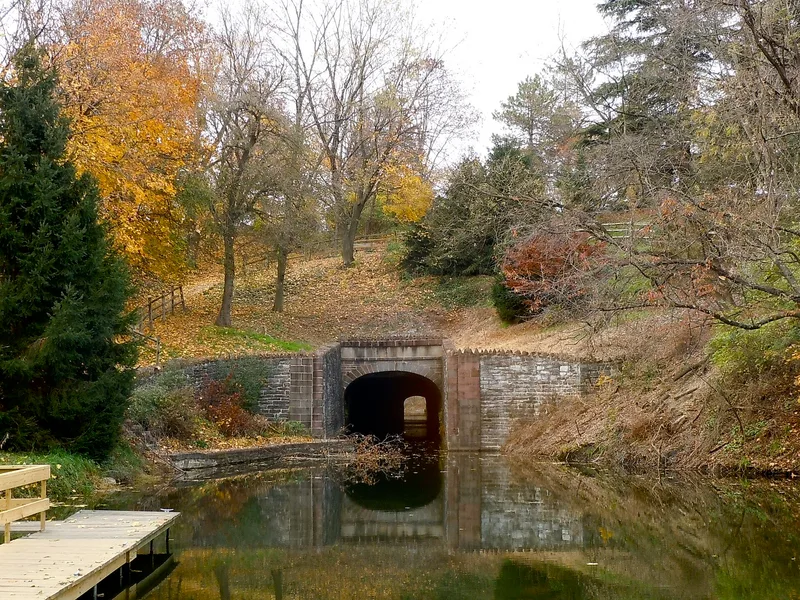
Cut through solid slate and limestone beneath Pansy Hill on the northwest edge of Lebanon, this canal tunnel was built between fall 1825 and spring 1827 for the Union Canal, which linked the Susquehanna River at Middletown with the Schuylkill River at Reading. Chief Engineer Canvass White directed the work, with Simeon Guilford as assistant engineer in charge and John B. Ives as contractor. Workers dug by hand and used gunpowder, leaving no timbering except for working scaffolds. The original tunnel measured 729 feet long, 18 feet wide and 15 feet high. Around 1853 the canal was enlarged, the tunnel was shortened to 600 feet and its height was raised three feet to accommodate barges of 50 tons. The tunnel served as a freight and passenger route for 52 years until the canal was sold at a sheriff's sale in 1884. It is regarded as the oldest surviving canal tunnel in the country, and it was recognized as a National Historic Civil Engineering Landmark in 1970.
Significance in brief: The nomination argues the tunnel is the oldest existing tunnel in the United States and a significant engineering work, cut by hand and blasting through rock for a canal that linked the Susquehanna and Schuylkill rivers. It also cites its role in carrying freight and passengers and its association with local engineers and civic figures.
Machine-generated summary. This summary was generated by a language model from the official nomination document and has not been reviewed line by line by an editor. It may contain errors. Check the source document before relying on any detail. Source: nomination document (PDF) · National Archives catalog entry. NRHP reference 74001792, listed October 1, 1974. Summary generated October 2026 (model claude-haiku-5-5, prompt v1.1-2026-10-29, confidence medium).
Key facts
| Address | W of Lebanon off PA 72, Lebanon |
|---|---|
| County | Lebanon County |
| Listed | October 1, 1974 |
| Reference number | 74001792 |
| Resource type | Structure |
| Period of significance | 1826-1827 |
| Architect / builder | Canvass White (chief engineer); Simeon Guilford (assistant engineer in charge); John B. Ives (contractor) |
| Criteria |
|
| Areas of significance | Transportation, Engineering, Commerce |
| Level of significance | National, State |
| National Historic Landmark | Yes, designated April 19, 1994 |
| Status (as stated in the nomination) | Shortened to 600 feet and enlarged around 1853; designated a National Historic Civil Engineering Landmark in 1970. |
| Acreage | 8.7 |
| Coordinates | 40.34974, -76.46141 (NPS GIS) |
What listing means for this property
National Register listing is honorary: it recognises significance and does not restrict what a private owner may do without federal money or permits. It unlocks the 20% federal rehabilitation tax credit for income-producing buildings, state credits in many states, and Section 106 review when federal agencies are involved. See what listing means in practice.
General information, not legal or tax advice. Rules change; confirm with your State Historic Preservation Office or a qualified adviser.
Sources and further reading
- National Park Service, National Register of Historic Places database (snapshot May 2026), reference 74001792.
- Nomination form (PDF, National Archives) — catalog entry
- Wikidata Q105715875
- This listing as JSON
Last updated October 2026. Found an error? See the editorial policy for how to report it.