Butler House

Why it's listed
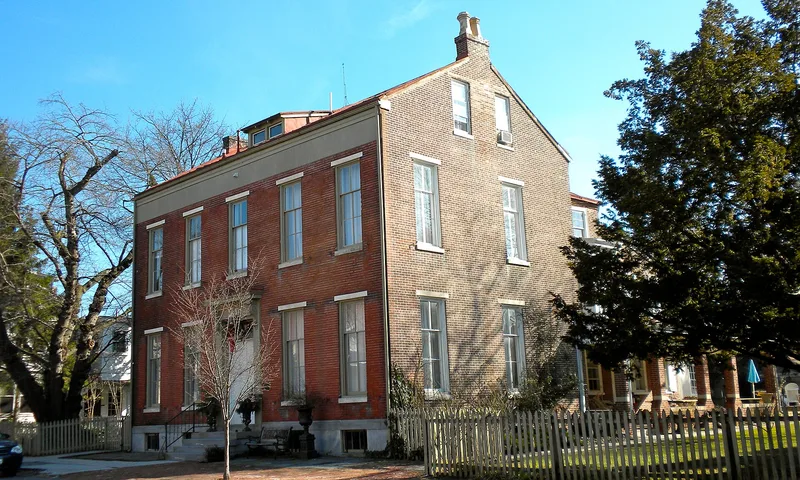
A three-story house at 228 West Miner Street in West Chester is described as essentially Federal in style, with later Victorian fireplace work. Its interior features include plaster ceiling molding in several rooms, ornamental medallions in the parlor and living room, and a mahogany stairway rising three flights. Thomas Stalker Butler moved in with his wife, Maud Darlington, in 1885, and the deed was formally transferred to him in 1893. He was a judge in Chester County before winning election to Congress in 1896, where he served from 1897 until his death in 1928. He chaired the Naval Affairs Committee from the 66th Congress onward and is credited with pressing for steel warships, earning him the title father of the steel navy. The house hosted visiting figures including President Taft, Speaker Joseph Cannon and Vice President Charles Fairbanks. His son Smedley Darlington Butler grew up there and later became a prominent Marine Corps officer.
Significance in brief: The nomination argues the house is architecturally significant as one of the few fine Federal style examples in the area, with plaster ceiling molding and medallions. It is also historically significant as the home of Congressman Thomas Stalker Butler, who served 32 years and chaired the Naval Affairs Committee, and it is linked to military history through his son Smedley Darlington Butler.
Machine-generated summary. This summary was generated by a language model from the official nomination document and has not been reviewed line by line by an editor. It may contain errors. Check the source document before relying on any detail. Source: nomination document (PDF) · National Archives catalog entry. NRHP reference 80003470, listed July 23, 1980. Summary generated October 2026 (model claude-haiku-5-5, prompt v1.1-2026-10-29, confidence medium).
Key facts
| Address | 228 W. Miner St., West Chester |
|---|---|
| County | Chester County |
| Listed | July 23, 1980 |
| Reference number | 80003470 |
| Resource type | Building |
| Period of significance | 1800-1899 |
| Architectural style | Federal |
| Criteria |
|
| Areas of significance | Military, Politics/Government, Architecture |
| Level of significance | Local |
| Acreage | 0.4 |
| Coordinates | 39.94958, -75.59679 (NPS GIS) |
What listing means for this property
National Register listing is honorary for a privately owned home: it does not by itself restrict what an owner may do with their own money, and it does not require public access. Restrictions come from local landmark or historic-district ordinances, which are separate (how they differ).
Owner-occupied houses are not eligible for the 20% federal rehabilitation tax credit, which applies to income-producing buildings, but many states offer credits for homeowners. Listing also opens the door to preservation easements and to buying a plaque. Start with what listing means for homeowners, renovating a listed house and selling one.
General information, not legal or tax advice. Rules change; confirm with your State Historic Preservation Office or a qualified adviser.
Sources and further reading
- National Park Service, National Register of Historic Places database (snapshot May 2026), reference 80003470.
- Nomination form (PDF, National Archives) — catalog entry
- Wikipedia article (used for cross-checking only; text not reproduced here)
- Wikidata Q5002622
- This listing as JSON
Last updated October 2026. Found an error? See the editorial policy for how to report it.