Pendleton, George Hunt, House

Why it's listed
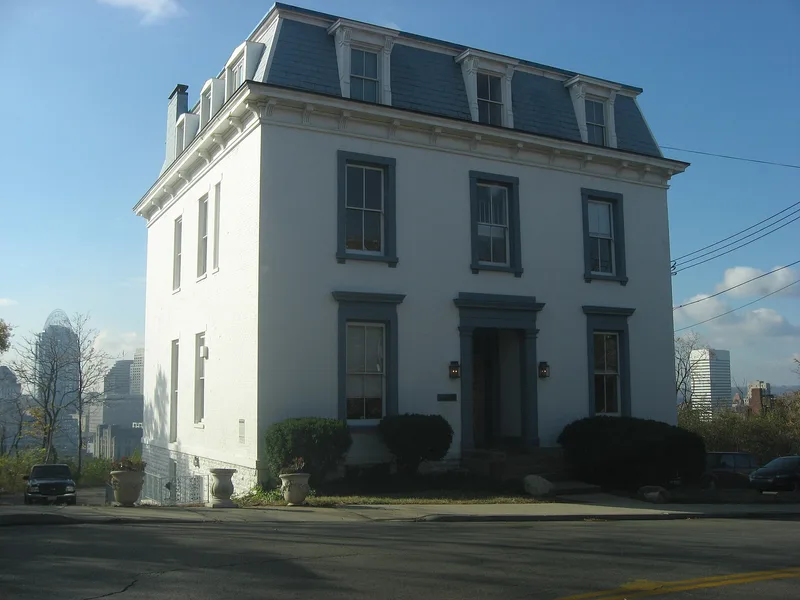
Perched on the side of Liberty Hill in Cincinnati, this three-story brick house was built in 1879 in Victorian styling, with a mansard roof, a covered and recessed entrance, and tall windows across a three-bay front. It looks out toward the city and northern Kentucky. Its importance comes from George Hunt Pendleton, a lawyer and Ohio senator who ran for vice president in 1864 and later sponsored the Pendleton Act of 1883. That law created competitive federal employment and ended much of the spoils system. The nomination says a Senate sub-committee completed revisions of the draft bill in one room of the 24-room house in 1882, and that the U.S. Civil Service Commission met there during 1883-1884, its first two years. Pendleton also lived in the house for several months in 1879. The building later served as a nine-unit tenement and fell into disrepair before being renovated for offices and upper-level apartments.
Significance in brief: The house is linked to Senator George Hunt Pendleton, author of the 1883 Pendleton Act, the foundation of the federal civil service system. A Senate sub-committee finished revisions of the draft bill in one of its rooms in 1882. The U.S. Civil Service Commission also met there in its first two years, 1883-1884.
Machine-generated summary. This summary was generated by a language model from the official nomination document and has not been reviewed line by line by an editor. It may contain errors. Check the source document before relying on any detail. Source: nomination document (PDF) · National Archives catalog entry. NRHP reference 66000611, listed October 15, 1966. Summary generated October 2026 (model claude-sonnet-5-5, prompt v1.0-2026-10-29, confidence medium).
Key facts
| Address | 559 E. Liberty St., Cincinnati |
|---|---|
| County | Hamilton County |
| Listed | October 15, 1966 |
| Reference number | 66000611 |
| Resource type | Building |
| Architectural style | Victorian with mansard roof |
| Areas of significance | Military, Politics/Government |
| Level of significance | National |
| National Historic Landmark | Yes, designated January 29, 1964 |
| Status (as stated in the nomination) | Described as in good condition but altered. It was once a tenement, then renovated without concern for authentic restoration, and is now used as offices with apartments on the upper level. |
| Acreage | 0.9 |
| Within district | Prospect Hill Historic District |
| Coordinates | 39.11204, -84.50442 (NPS GIS) |
What listing means for this property
National Register listing is honorary for a privately owned home: it does not by itself restrict what an owner may do with their own money, and it does not require public access. Restrictions come from local landmark or historic-district ordinances, which are separate (how they differ).
Owner-occupied houses are not eligible for the 20% federal rehabilitation tax credit, which applies to income-producing buildings, but many states offer credits for homeowners. Listing also opens the door to preservation easements and to buying a plaque. Start with what listing means for homeowners, renovating a listed house and selling one.
General information, not legal or tax advice. Rules change; confirm with your State Historic Preservation Office or a qualified adviser.
Sources and further reading
- National Park Service, National Register of Historic Places database (snapshot May 2026), reference 66000611.
- Nomination form (PDF, National Archives) — catalog entry
- Wikipedia article (used for cross-checking only; text not reproduced here)
- Wikidata Q5540861
- This listing as JSON
Last updated October 2026. Found an error? See the editorial policy for how to report it.