Paramount Studios Complex
Also known as: Astoria Studio; Army Pictorial Center; Famous Players Lasky Co
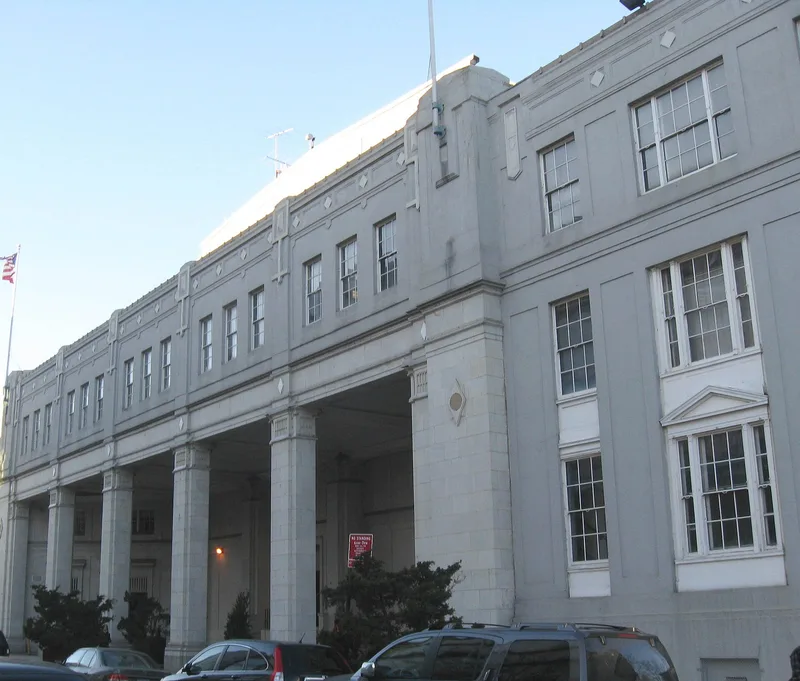

Why it's listed
Astoria's Paramount Studios Complex in Queens is a group of nine film-related buildings put up between 1918 and 1966. The largest, Building Number 1, was designed by the Fleischman Construction Company and built of reinforced concrete with terra cotta facing. It wraps around a Main Stage about 120 feet wide and 127 feet long, reputed to be among the largest sound stages in the world. The Famous Players Lasky Corporation built the studio as its eastern production base, and more than 110 silent features were made there between 1921 and 1927. Sound pictures followed from 1929, until Paramount moved its operations to California in 1932. In 1942 the Army took over the site as the Army Pictorial Center, which turned out about 300 films a year until 1970, including the "Why We Fight" series. Independent productions returned in the mid-1970s. The complex was listed for its role in the history of American filmmaking.
Significance in brief: The nomination argues the studio is nationally significant for its contribution to the film industry, as the major studio in New York when the city was the nation's motion picture capital. It produced silent and early sound features for Paramount. From 1942 to 1970 it served as the Army Pictorial Center, one of the world's largest film producers.
Machine-generated summary. This summary was generated by a language model from the official nomination document and has not been reviewed line by line by an editor. It may contain errors. Check the source document before relying on any detail. Source: nomination document (PDF) · National Archives catalog entry. NRHP reference 78001897, listed November 14, 1978. Summary generated October 2026 (model claude-sonnet-5-5, prompt v1.0-2026-10-29, confidence medium).
Key facts
| Address | 35th Ave., 35th, 36th, and 37th Sts., New York |
|---|---|
| County | Queens |
| Listed | November 14, 1978 |
| Reference number | 78001897 |
| Resource type | District |
| Period of significance | 1918-1966 |
| Architect / builder | various; Building Number 1 designed by the Fleischman Construction Company of New York |
| Architectural style | Building Number 1 is described as vaguely Classical with Art Deco details |
| Areas of significance | Communications, Performing Arts |
| Level of significance | National |
| Status (as stated in the nomination) | Marked occupied and in altered condition on the form. The studio is described as once again used for independent film and television production and managed by a not-for-profit foundation since 1977. Some buildings are called intrusions. |
| Acreage | 5 |
| Coordinates | 40.75708, -73.92437 (NPS GIS) |
What listing means for this property
This is a historic district. Buildings within its boundary are either contributing (they add to the district's significance) or non-contributing. Owners of contributing income-producing buildings can claim the 20% federal rehabilitation tax credit; homeowners should look at state credits. National Register districts impose no design review by themselves; a local historic district ordinance, if one exists, does (the difference explained).
General information, not legal or tax advice. Rules change; confirm with your State Historic Preservation Office or a qualified adviser.
Sources and further reading
- National Park Service, National Register of Historic Places database (snapshot May 2026), reference 78001897.
- Nomination form (PDF, National Archives) — catalog entry
- Wikipedia article (used for cross-checking only; text not reproduced here)
- Wikidata Q3194285
- This listing as JSON
Last updated October 2026. Found an error? See the editorial policy for how to report it.