Old Stone House of Brooklyn, The

Why it's listed
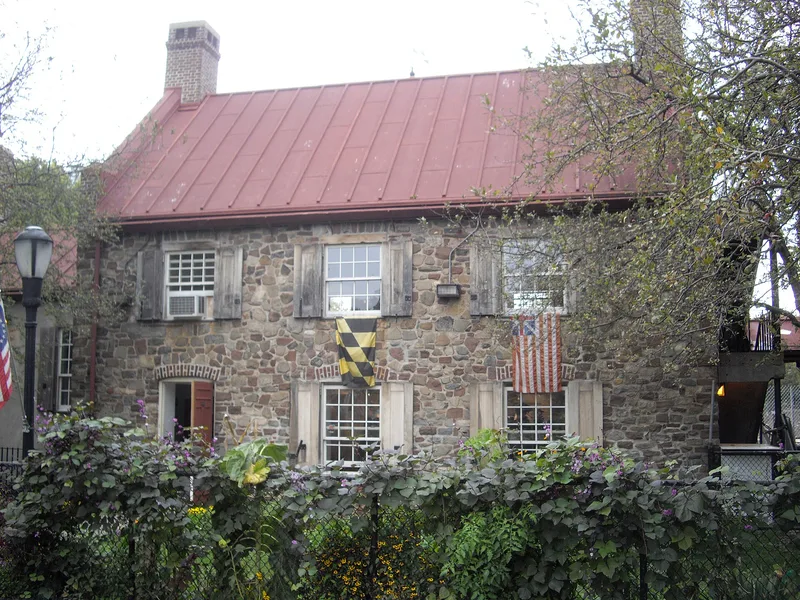
Set in the middle of Washington Park, a heavily urbanized part of Park Slope, this stone and brick building was constructed in 1935 by the New York City Parks Department. It was built as a comfort station for James J. Byrne Park, one of five Model Playgrounds created by relief workers during the Great Depression. The design drew on the colonial appearance of the Vechte-Cortelyou House, a 17th-century structure that played a tactical role in the August 1776 Battle of Long Island and was later buried and lost. The new building borrowed features such as diapered brickwork, stepped gables and iron 1699 numerals, and it stands about 250 feet from the original site. It is not an exact copy and is not nominated as a reconstruction. Its importance lies in what it represents: local commitment to commemorating Brooklyn's colonial and Revolutionary War past. Today it serves as a museum, gallery and community space.
Significance in brief: The building is significant as an early twentieth-century commemorative of the Vechte-Cortelyou House and the 1776 Battle of Long Island. It expresses local patriotic sentiment and decades of preservation and commemoration efforts. It is not nominated as a reconstruction or for a direct link to the battle.
Machine-generated summary. This summary was generated by a language model from the official nomination document and has not been reviewed line by line by an editor. It may contain errors. Check the source document before relying on any detail. Source: nomination document (PDF) · National Archives catalog entry. NRHP reference 12000797, listed September 19, 2012. Summary generated October 2026 (model claude-sonnet-5-5, prompt v1.0-2026-10-29, confidence high).
Key facts
| Address | 3rd St. at 5th Ave., Brooklyn |
|---|---|
| County | Brooklyn |
| Listed | September 19, 2012 |
| Reference number | 12000797 |
| Resource type | Building |
| Period of significance | 1935 |
| Architectural style | Colonial Revival |
| Criteria |
|
| Areas of significance | Social History |
| Level of significance | Local |
| Status (as stated in the nomination) | Currently used as a museum, exhibit gallery, community center and educational space within a city park. |
| Acreage | 0.9 |
| Coordinates | 40.67503, -73.98416 (NPS GIS) |
What listing means for this property
National Register listing is honorary for a privately owned home: it does not by itself restrict what an owner may do with their own money, and it does not require public access. Restrictions come from local landmark or historic-district ordinances, which are separate (how they differ).
Owner-occupied houses are not eligible for the 20% federal rehabilitation tax credit, which applies to income-producing buildings, but many states offer credits for homeowners. Listing also opens the door to preservation easements and to buying a plaque. Start with what listing means for homeowners, renovating a listed house and selling one.
General information, not legal or tax advice. Rules change; confirm with your State Historic Preservation Office or a qualified adviser.
Sources and further reading
- National Park Service, National Register of Historic Places database (snapshot May 2026), reference 12000797.
- Nomination form (PDF, National Archives) — catalog entry
- Wikipedia article (used for cross-checking only; text not reproduced here)
- Wikidata Q7085115
- This listing as JSON
Last updated October 2026. Found an error? See the editorial policy for how to report it.