Manning Manse

Why it's listed
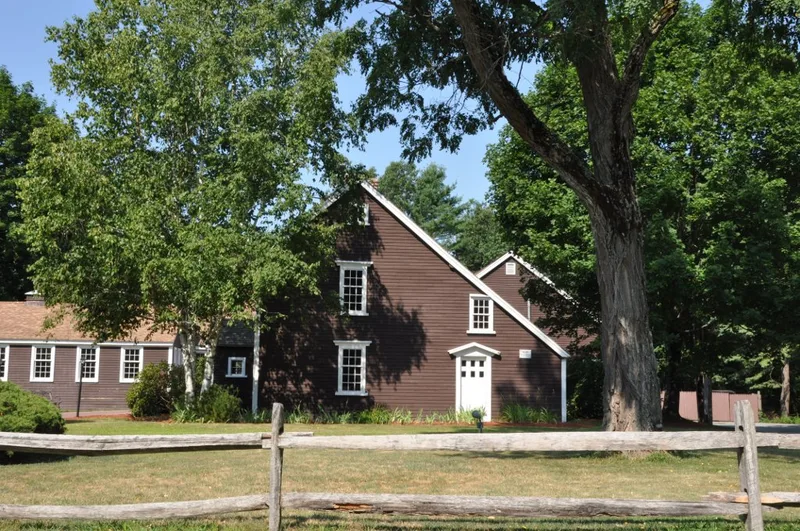
Built around 1696 by Samuel Manning, this two-and-a-half-story timber-framed house on Chelmsford Road in Billerica is an example of plain, sturdy late 17th-century colonial building. It has projecting timber window frames, a lean-to, a large central chimney and panelled interiors. It was probably the first farmstead settled west of the Concord River, and it served as a tavern from 1752 into the early 1800s. William Manning, author of The Key of Liberty (1798), lived there. After decades of decay in the late 19th century, landscape architect Warren H. Manning leased the house in 1899 and carried out a well-documented restoration, then assembled the open land that became Manning State Forest around it. The family association later furnished the house with family pieces and leased it as a tea room and then a restaurant to pay for upkeep. The grounds may also hold archaeological remains, including a Revolutionary War saltpeter house foundation.
Significance in brief: The nomination argues the house is significant for its role in Billerica's development, as probably the first farmstead settled west of the Concord River. It is also tied to landscape architect Warren H. Manning, who restored it, and to William Manning, author of The Key of Liberty. It is further valued as an early effort to preserve and restore a 17th-century family homestead.
Machine-generated summary. This summary was generated by a language model from the official nomination document and has not been reviewed line by line by an editor. It may contain errors. Check the source document before relying on any detail. Source: nomination document (PDF) · National Archives catalog entry. NRHP reference 82001912, listed August 11, 1982. Summary generated October 2026 (model claude-sonnet-5-5, prompt v1.0-2026-10-29, confidence high).
Key facts
| Address | 56 Chelmsford Rd., Billerica |
|---|---|
| County | Middlesex County |
| Listed | August 11, 1982 |
| Reference number | 82001912 |
| Resource type | Building |
| Period of significance | 1696 |
| Architect / builder | Samuel Manning |
| Architectural style | Plain, substantial colonial architecture of the late 17th century |
| Criteria |
|
| Areas of significance | Landscape Architecture, Architecture, Social History |
| Level of significance | Local |
| Status (as stated in the nomination) | Occupied; the Manning Association leases the building as a restaurant, which continues to operate. It was restored 1899-1912, with later additions. |
| Acreage | 3.9 |
| Coordinates | 42.58441, -71.30148 (NPS GIS) |
What listing means for this property
National Register listing is honorary: it recognises significance and does not restrict what a private owner may do without federal money or permits. It unlocks the 20% federal rehabilitation tax credit for income-producing buildings, state credits in many states, and Section 106 review when federal agencies are involved. See what listing means in practice.
General information, not legal or tax advice. Rules change; confirm with your State Historic Preservation Office or a qualified adviser.
Sources and further reading
- National Park Service, National Register of Historic Places database (snapshot May 2026), reference 82001912.
- Nomination form (PDF, National Archives) — catalog entry
- Wikipedia article (used for cross-checking only; text not reproduced here)
- Wikidata Q6750872
- This listing as JSON
Last updated October 2026. Found an error? See the editorial policy for how to report it.