Chelmsford Center Historic District

Why it's listed
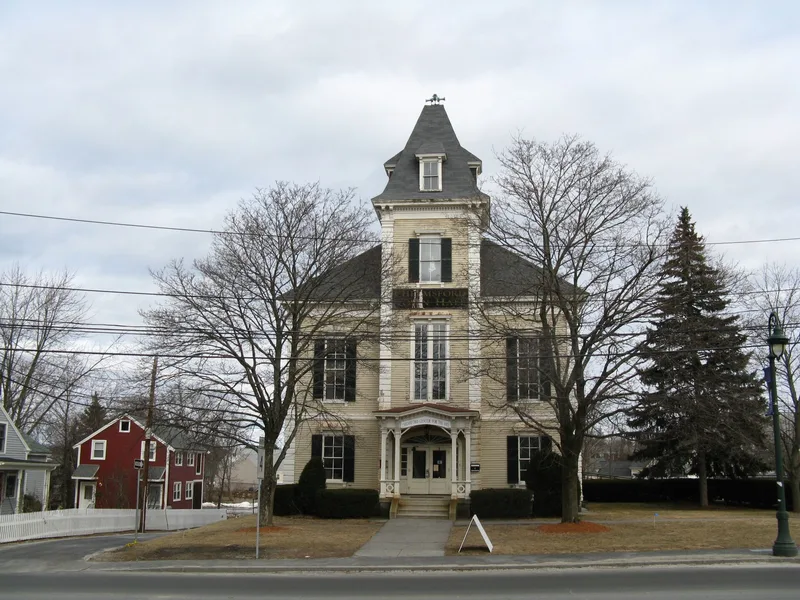
Chelmsford Center is a village core of about 35 acres arranged around a triangular common where six roads meet. It was the site of the town's original settlement and has remained its civic and commercial hub. Of 42 structures, most are wood-frame buildings from the mid to late nineteenth century, and only five buildings and three additions are considered intrusions. Public buildings around the common include the Town Hall, a fire station, the 1802 schoolhouse and the 1842 Greek Revival First Parish Unitarian Church, which grew from the town's first meetinghouse of 1659-60. The district also contains a Revolutionary War memorial, a large burying ground with graves dating from 1690, and houses in Georgian, Federal, Italianate, Queen Anne and Colonial Revival styles. Local associations include the 1794 Hezekiah Packard House, where the town's first social library was founded and where a town history was written in 1820. The area has stayed largely unchanged despite rapid population growth.
Significance in brief: The district has been the functional center of Chelmsford since the town's settlement in the seventeenth century. Its range of architectural styles documents the town's economic and social growth in the eighteenth and especially nineteenth centuries. It also keeps the character of a New England village, with few intrusions, and has several buildings with notable local associations.
Machine-generated summary. This summary was generated by a language model from the official nomination document and has not been reviewed line by line by an editor. It may contain errors. Check the source document before relying on any detail. Source: nomination document (PDF) · National Archives catalog entry. NRHP reference 80000646, listed February 20, 1980. Summary generated October 2026 (model claude-sonnet-5-5, prompt v1.0-2026-10-29, confidence medium).
Key facts
| Address | MA 4, MA 110 and MA 27, Chelmsford |
|---|---|
| County | Middlesex County |
| Listed | February 20, 1980 |
| Reference number | 80000646 |
| Resource type | District |
| Period of significance | 1700-1799, 1800-1899, 1900- |
| Architectural style | Mixed: Georgian, Federal, Greek Revival, Italianate, Gothic Revival, Queen Anne, Colonial Revival |
| Areas of significance | Architecture |
| Level of significance | Local |
| Status (as stated in the nomination) | Condition is marked excellent. Only five buildings and three additions are considered intrusions. The district is also protected as a local historic district. |
| Acreage | 35 |
| Coordinates | 42.59821, -71.35328 (NPS GIS) |
What listing means for this property
This is a historic district. Buildings within its boundary are either contributing (they add to the district's significance) or non-contributing. Owners of contributing income-producing buildings can claim the 20% federal rehabilitation tax credit; homeowners should look at state credits. National Register districts impose no design review by themselves; a local historic district ordinance, if one exists, does (the difference explained).
General information, not legal or tax advice. Rules change; confirm with your State Historic Preservation Office or a qualified adviser.
Sources and further reading
- National Park Service, National Register of Historic Places database (snapshot May 2026), reference 80000646.
- Nomination form (PDF, National Archives) — catalog entry
- Wikipedia article (used for cross-checking only; text not reproduced here)
- Wikidata Q5089953
- This listing as JSON
Last updated October 2026. Found an error? See the editorial policy for how to report it.