Cranesville Historic District
Also known as: Craneville Historic District

Why it's listed
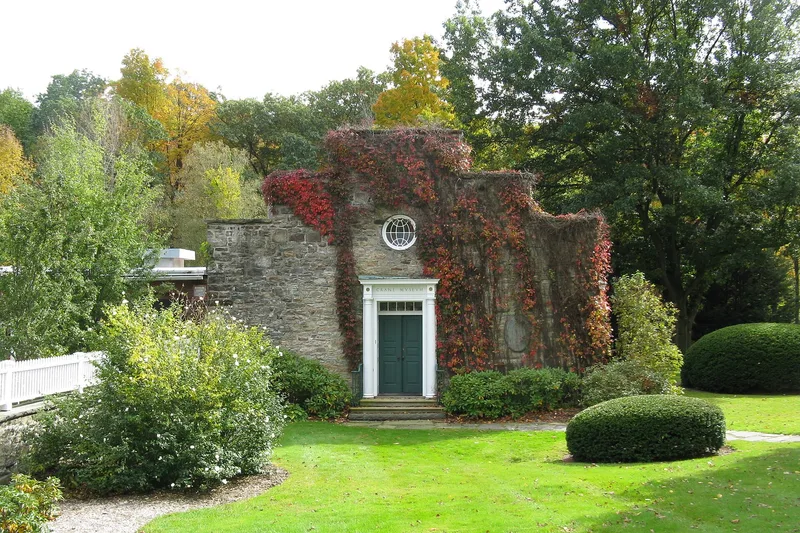
Cranesville is a 154-acre district on the western edge of Dalton, Massachusetts, beside the Pittsfield line and the East Branch of the Housatonic River. Main Street, South Street and Park Avenue form its framework. Two Crane & Co. paper mills, the Bay State Mill of 1877 and the Pioneer Mill of 1893, sit on sites tied to papermaking since the early 1800s, and both have been expanded over time. The Crane Museum, a National Historic Landmark housed in the 1844 Stone Mill rag room, lies within the boundary. Despite two centuries of industry, the area looks mainly residential. Crane family houses and estates, such as Sugar Hill and the Zenas Crane House, front Main Street with broad lawns. The family built or bought more than 100 houses for employees and rented them for generations, which kept the housing stock in very good condition. Styles range from Greek Revival to Colonial Revival, reflecting a company town shaped by one family.
Significance in brief: The district reflects roughly two centuries of papermaking by the Crane family and the way the family chose to live close to its mills and workers. Its predominantly residential character, its Crane estates and its company-built rental housing document the development of a paper-industry community. The text names 1955 as the end of the period of significance.
Machine-generated summary. This summary was generated by a language model from the official nomination document and has not been reviewed line by line by an editor. It may contain errors. Check the source document before relying on any detail. Source: nomination document (PDF) · National Archives catalog entry. NRHP reference 05001208, listed November 9, 2005. Summary generated October 2026 (model claude-sonnet-5-5, prompt v1.0-2026-10-29, confidence medium).
Key facts
| Address | N and S of Main St., W of Park Ave., Dalton |
|---|---|
| County | Berkshire County |
| Listed | November 9, 2005 |
| Reference number | 05001208 |
| Resource type | District |
| Architectural style | Federal, Greek Revival, Italianate, Eastlake, Queen Anne, Colonial Revival, Classical Revival, Tudor Revival, contemporary |
| Areas of significance | Architecture, Community Planning and Development, Industry |
| Level of significance | Local |
| Status (as stated in the nomination) | Mills remain in use by Crane & Co. though altered; the Bay State Mill generators and turbines are inoperable, the Pioneer Mill turbines and generators have been removed, and the Zenas Crane, Jr. 'Willowbrook' estate has been razed. |
| Acreage | 154 |
| Coordinates | 42.47297, -73.18046 (NPS GIS) |
What listing means for this property
This is a historic district. Buildings within its boundary are either contributing (they add to the district's significance) or non-contributing. Owners of contributing income-producing buildings can claim the 20% federal rehabilitation tax credit; homeowners should look at state credits. National Register districts impose no design review by themselves; a local historic district ordinance, if one exists, does (the difference explained).
General information, not legal or tax advice. Rules change; confirm with your State Historic Preservation Office or a qualified adviser.
Sources and further reading
- National Park Service, National Register of Historic Places database (snapshot May 2026), reference 05001208.
- Nomination form (PDF, National Archives) — catalog entry
- Wikipedia article (used for cross-checking only; text not reproduced here)
- Wikidata Q5182078
- This listing as JSON
Last updated October 2026. Found an error? See the editorial policy for how to report it.