Society Hill Historic District

Why it's listed
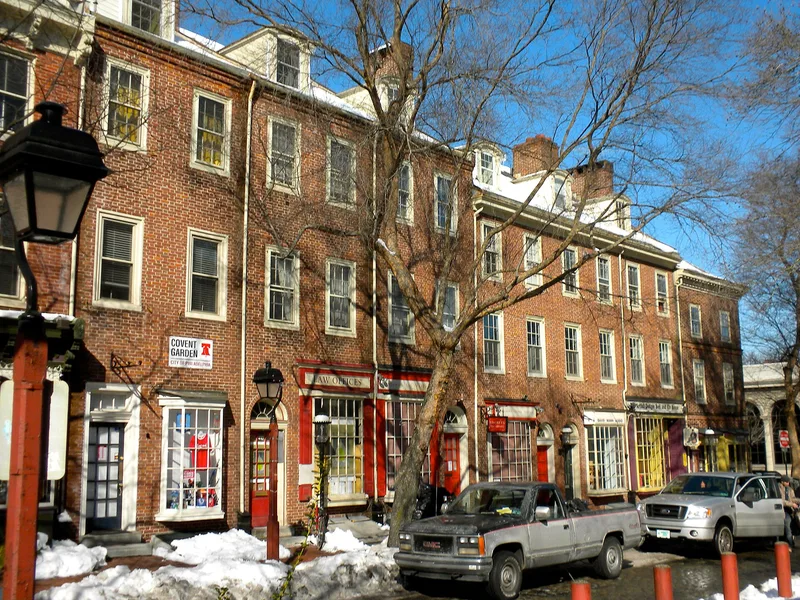
Society Hill is the oldest part of Philadelphia, laid out in 1682 by surveyor Thomas Holme for William Penn. The name comes from the Free Society of Traders, which bought 20,000 acres from Penn. The district covers about 150 acres and contains more than 575 certified eighteenth and nineteenth century commercial, residential and religious buildings. Typical early houses are red brick in Flemish bond with wooden trim and marble or moulded brick belt courses. Landmarks include Head House and New Market, St. Peter's Church, Old St. Mary's, Mother Bethel A.M.E. Church, the Powel House and the Hill-Physick House. Nearly all buildings were restored or rehabilitated under the Washington Square East Redevelopment Project, the first large-scale urban renewal effort to plan for preservation. The project removed a wholesale produce market and added three apartment towers designed by I. M. Pei and many contemporary town houses. The district was recognized for how successfully new construction was related to the old.
Machine-generated summary. This summary was generated by a language model from the official nomination document and has not been reviewed line by line by an editor. It may contain errors. Check the source document before relying on any detail. Source: nomination document (PDF) · catalog entry. Generated October 2026 (model claude-sonnet-5-5, prompt v1.0-2026-10-29).
| Styles | Georgian and Federal |
|---|---|
| Areas of significance | Architecture |
| Acreage | 135 |
| Boundary source | NPS cultural-resource GIS polygon |
| Full listing page | Society Hill Historic District (property record) |
What listing means for this property
This is a historic district. Buildings within its boundary are either contributing (they add to the district's significance) or non-contributing. Owners of contributing income-producing buildings can claim the 20% federal rehabilitation tax credit; homeowners should look at state credits. National Register districts impose no design review by themselves; a local historic district ordinance, if one exists, does (the difference explained).
General information, not legal or tax advice. Rules change; confirm with your State Historic Preservation Office or a qualified adviser.