Fayetteville Downtown Historic District

Why it's listed
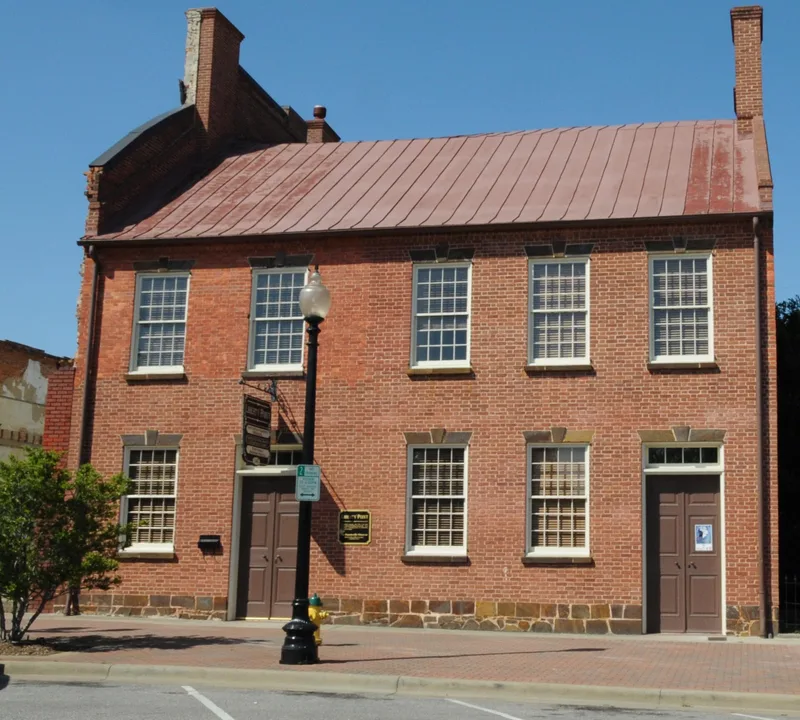
Fayetteville's downtown historic district covers about 59 acres of the city's original business center, laid out around the Market House under a 1783 street plan. Hay, Person, Green and Gillespie Streets radiate from the central square. The district holds 150 principal resources, most of them contributing, including stores, civic buildings, churches, warehouses, railroad stations, a few houses and Cross Creek Cemetery. Its oldest buildings include the 1788 Cool Spring Tavern and the ca. 1791 Liberty Point Store. Churches such as First Presbyterian, designed by A.J. Davis in 1832, and Evans Metropolitan AME Zion, built in 1893 by African American artisans, mark the city's rebuilding after the Great Fire of 1831. Later landmarks include the 1911 post office, the 1924 courthouse, the 1926 ten-story bank building and Moderne storefronts on Hay Street. The district was listed for its role in the city's community development and for the range of architecture from 1786 to 1949.
Machine-generated summary. This summary was generated by a language model from the official nomination document and has not been reviewed line by line by an editor. It may contain errors. Check the source document before relying on any detail. Source: nomination document (PDF) · catalog entry. Generated October 2026 (model claude-sonnet-5-5, prompt v1.0-2026-10-29).
| Period of significance | 1786-1949 |
|---|---|
| Styles | Commercial style, Neoclassical Revival, Queen Anne, Gothic Revival, Colonial Revival, Renaissance Revival, Craftsman, Greek Revival, Federal, Federal Revival, Italianate |
| Areas of significance | Community Planning and Development, Architecture |
| Acreage | 59 |
| Boundary source | NPS cultural-resource GIS polygon |
| Full listing page | Fayetteville Downtown Historic District (property record) |
What listing means for this property
This is a historic district. Buildings within its boundary are either contributing (they add to the district's significance) or non-contributing. Owners of contributing income-producing buildings can claim the 20% federal rehabilitation tax credit; homeowners should look at state credits. National Register districts impose no design review by themselves; a local historic district ordinance, if one exists, does (the difference explained).
General information, not legal or tax advice. Rules change; confirm with your State Historic Preservation Office or a qualified adviser.