Park Avenue Historic District

Why it's listed
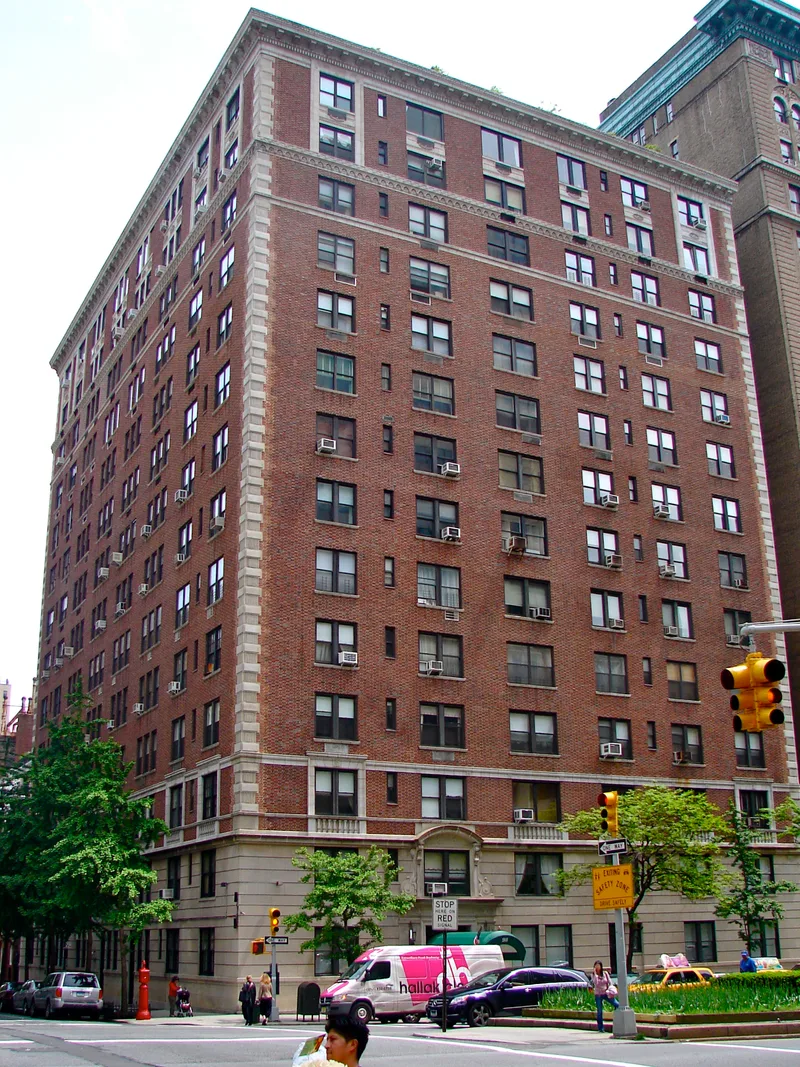
Park Avenue between 79th and 96th Streets forms a linear historic district in Manhattan's Upper East Side and Carnegie Hill neighborhoods. Most of its buildings are 12 to 18-story masonry apartment houses from the 1910s and 1920s, built to the building line and clad in brick with stone and terra cotta trim. Their designs draw on Italian Renaissance, Georgian, Jacobethan, Art Deco and Moderne styles. Architects represented include Delano & Aldrich, Emery Roth, J.E.R. Carpenter, Rosario Candela and George F. Pelham. The district also contains older and different buildings: row houses from 1856, a tenement from about 1895, the Lewis Morris and Reginald DeKoven houses, the George F. Baker complex, St. Ignatius Loyola Church and Park Avenue Christian Church. Planted median malls cover the railroad tracks that run north from Grand Central Terminal and have changed little since mid-century. The streetscape closely resembles its appearance around 1930. The period of significance runs from 1856 to 1961, and 70 buildings and the malls contribute to the district.
Machine-generated summary. This summary was generated by a language model from the official nomination document and has not been reviewed line by line by an editor. It may contain errors. Check the source document before relying on any detail. Source: nomination document (PDF) · catalog entry. Generated October 2026 (model claude-sonnet-5-5, prompt v1.0-2026-10-29).
| Period of significance | 1856-1961 |
|---|---|
| Styles | Late Nineteenth & Twentieth Century Revivals (Italian Renaissance, Late Gothic Revival, Jacobethan, Georgian, English Renaissance Revival); Late Victorian (Queen Anne, neo-Grec); Modern Movement (Moderne, Art Deco) |
| Areas of significance | Architecture, Community Planning and Development |
| Acreage | 41.3 |
| Boundary source | NPS cultural-resource GIS polygon |
| Full listing page | Park Avenue Historic District (property record) |
What listing means for this property
This is a historic district. Buildings within its boundary are either contributing (they add to the district's significance) or non-contributing. Owners of contributing income-producing buildings can claim the 20% federal rehabilitation tax credit; homeowners should look at state credits. National Register districts impose no design review by themselves; a local historic district ordinance, if one exists, does (the difference explained).
General information, not legal or tax advice. Rules change; confirm with your State Historic Preservation Office or a qualified adviser.