International Hotel

Why it's listed
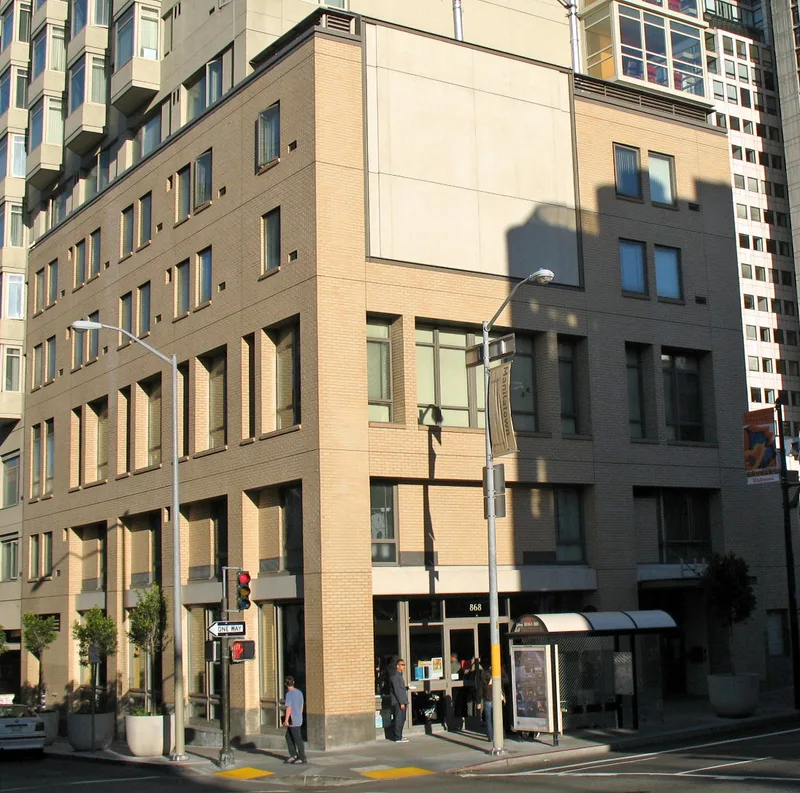
Located at 848 Kearny Street in San Francisco, the International Hotel is a three-story red brick building, roughly 120 by 100 feet, first built in 1874 with 146 rooms. The 1906 earthquake did little harm, but the fire caused heavy damage, and the hotel was rebuilt in 1907 using parts of the basement, entryway and ground floor. Its symmetrical facades combine a central pavilion with stone balconies, brick quoins and a modillioned cornice in a restrained classical manner. Its importance lies in later use. During the early and mid twentieth century it housed Filipino workers, students and merchant seamen at a time when discriminatory laws limited where they could live and own property, and it anchored the Manilatown neighborhood. From about 1954 the basement held the "hungry i" nightclub, an early stage for many noted entertainers. After eviction notices in 1968, elderly Filipino and Chinese tenants and supporters fought for nine years to keep the building from demolition.
Significance in brief: The nomination argues the hotel became the social and cultural center of San Francisco's Filipino community, in the Kearny/Jackson area known as Manilatown. Its basement also housed the "hungry i" nightclub, where many well-known entertainers began their careers. A long tenant struggle against eviction beginning in 1968 added to its symbolic importance.
Machine-generated summary. This summary was generated by a language model from the official nomination document and has not been reviewed line by line by an editor. It may contain errors. Check the source document before relying on any detail. Source: nomination document (PDF) · National Archives catalog entry. NRHP reference 77000333, listed June 15, 1977. Summary generated October 2026 (model claude-sonnet-5-5, prompt v1.0-2026-10-29, confidence medium).
Key facts
| Address | 848 Kearny St., San Francisco |
|---|---|
| County | San Francisco |
| Listed | June 15, 1977 |
| Reference number | 77000333 |
| Resource type | Building |
| Period of significance | 1900- |
| Architect / builder | unknown |
| Architectural style | Adaptation of Italian Renaissance palace design, or restrained Beaux Arts classical, of the late 19th or early 20th century |
| Areas of significance | Pacific-Islander, Social History |
| Level of significance | Local |
| Status (as stated in the nomination) | Listed as occupied, private ownership, in fair condition and unaltered; the form notes apparent lack of maintenance and an ownership/eviction dispute. |
| Acreage | 0.3 |
| Coordinates | 37.78535, -122.42190 (NPS GIS) |
What listing means for this property
For an income-producing building, listing (individually or as a contributing building in a district) is the gateway to the 20% federal rehabilitation tax credit on qualified rehabilitation costs, often stackable with state credits. Work claiming the credit must follow the Secretary of the Interior's Standards and be approved in advance.
Listing does not restrict a private owner acting without federal money or permits; where federal funding or licensing is involved, Section 106 review applies.
General information, not legal or tax advice. Rules change; confirm with your State Historic Preservation Office or a qualified adviser.
Sources and further reading
- National Park Service, National Register of Historic Places database (snapshot May 2026), reference 77000333.
- Nomination form (PDF, National Archives) — catalog entry
- Wikipedia article (used for cross-checking only; text not reproduced here)
- Wikidata Q6050970
- This listing as JSON
Last updated October 2026. Found an error? See the editorial policy for how to report it.