Somerville Hotel
Also known as: Dunbar Hotel; Dunbar Hotel Black Cultural and Historical Muse

Why it's listed
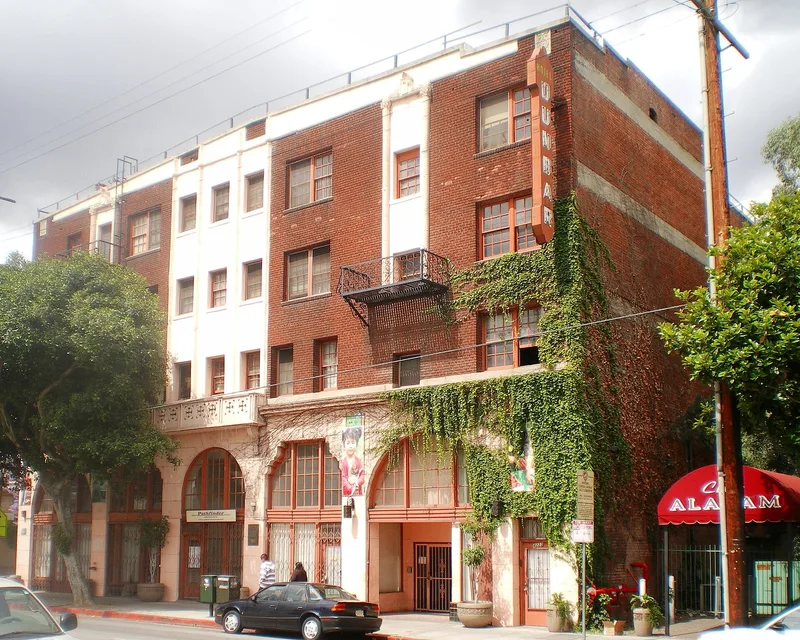
Opened in June 1928 at Central Avenue and 41st Street, this four-story Los Angeles building began as the Hotel Somerville, built by Dr. John Alexander Somerville, a Black dentist and community leader, and his wife, Dr. Vada Jetmore Somerville. Black contractors, laborers and craftsmen constructed it, and members of the Black community owned and financed it. Its Spanish Revival design included arched ground-floor bays, balconies, a patio with a tile fountain and a mezzanine lobby; the balconies and parapet were later removed for seismic reasons. The hotel was described as the first built in America expressly for Black guests, and it hosted the first West Coast national NAACP convention in 1928. Musicians, athletes, writers and civic leaders stayed or performed there. Lucius Lomax bought it in the early 1930s and renamed it the Dunbar Hotel. The city designated it a historic-cultural monument in 1974, and plans called for a Black history museum and cultural center.
Significance in brief: It is described as the first hotel built in America expressly for Black people, financed, owned and built by members of the Black community at a time when lodging was hard to find. It hosted prominent Black entertainers, athletes, politicians and businesspeople, and the first West Coast national NAACP convention in 1928. The Los Angeles Cultural Heritage Board named it a historic-cultural monument in 1974.
Machine-generated summary. This summary was generated by a language model from the official nomination document and has not been reviewed line by line by an editor. It may contain errors. Check the source document before relying on any detail. Source: nomination document (PDF) · National Archives catalog entry. NRHP reference 76000491, listed January 17, 1976. Summary generated October 2026 (model claude-sonnet-5-5, prompt v1.0-2026-10-29, confidence medium).
Key facts
| Address | 4225 S. Central Ave., Los Angeles |
|---|---|
| County | Los Angeles County |
| Listed | January 17, 1976 |
| Reference number | 76000491 |
| Resource type | Building |
| Period of significance | 1928 (construction) |
| Architectural style | Spanish Revival, with Mission Revival elements |
| Areas of significance | Black, Social History |
| Level of significance | State |
| Status (as stated in the nomination) | No longer operating as a hotel; most offices vacant, though a barber shop, bar and shoeshine stand still operate on the ground floor. Owners plan a Black museum and cultural center. |
| Acreage | 0.3 |
| Coordinates | 34.00685, -118.25674 (NPS GIS) |
What listing means for this property
For an income-producing building, listing (individually or as a contributing building in a district) is the gateway to the 20% federal rehabilitation tax credit on qualified rehabilitation costs, often stackable with state credits. Work claiming the credit must follow the Secretary of the Interior's Standards and be approved in advance.
Listing does not restrict a private owner acting without federal money or permits; where federal funding or licensing is involved, Section 106 review applies.
General information, not legal or tax advice. Rules change; confirm with your State Historic Preservation Office or a qualified adviser.
Sources and further reading
- National Park Service, National Register of Historic Places database (snapshot May 2026), reference 76000491.
- Nomination form (PDF, National Archives) — catalog entry
- Wikipedia article (used for cross-checking only; text not reproduced here)
- Wikidata Q5314148
- This listing as JSON
Last updated October 2026. Found an error? See the editorial policy for how to report it.