Merchants Square and Resort Historic District
Also known as: File No. 137-5027

Why it's listed
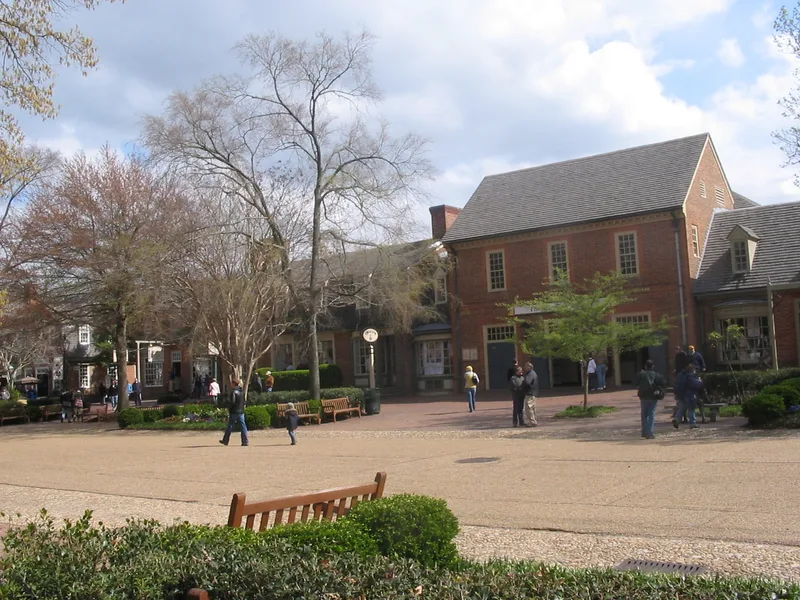
Merchants Square and the adjoining resort area form a 49-acre district along the west and south edges of Colonial Williamsburg's Historic Area in Virginia. Built mostly between 1928 and 1956, the shops, hotels, gardens and pools carried out John D. Rockefeller, Jr.'s plan for a restored colonial town with services for residents and visitors. Perry, Shaw and Hepburn and the Colonial Williamsburg Foundation's architects designed the Colonial Revival buildings, using varied setbacks, roof forms and materials so the new construction would not overwhelm the restored buildings nearby. The district includes the Williamsburg Inn, Williamsburg Lodge, Craft House, the Goodwin Building, the former Abby Aldrich Rockefeller Folk Art Museum and landscapes by Arthur Shurcliff and Alden Hopkins. It also holds the c. 1760-70 Byrd House. Later additions, such as buildings by Quinlan Terry, were designed to complement the original vision. The district was listed for its architecture, planning, recreation and social history.
Significance in brief: The district is significant for carrying out John D. Rockefeller, Jr.'s vision of a restored colonial town, with a shopping area and a visitor-oriented resort designed to support the Historic Area. Its Colonial Revival architecture, planning, landscape design and the role of Rockefeller and Rev. W. A. R. Goodwin are cited as reasons. It is also tied to entertainment, recreation and social history, including family vacation travel before and after World War II.
Machine-generated summary. This summary was generated by a language model from the official nomination document and has not been reviewed line by line by an editor. It may contain errors. Check the source document before relying on any detail. Source: nomination document (PDF) · National Archives catalog entry. NRHP reference 06000365, listed May 3, 2006. Summary generated October 2026 (model claude-sonnet-5-5, prompt v1.0-2026-10-29, confidence medium).
Key facts
| Address | Boundary St., Duke of Gloucester St., S. England St., Francis St., Henry St. Prince George St., Williamsburg (Independent City) |
|---|---|
| County | Williamsburg |
| Listed | May 3, 2006 |
| Reference number | 06000365 |
| Resource type | District |
| Period of significance | 1927-1956 |
| Architect / builder | Perry, Shaw and Hepburn; Gilbert Stanley Underwood; Arthur A. Shurcliff; Alden Hopkins; Charles M. Robinson; Singleton P. Moorehead; Washington Reed; Spencer and Lee; Carlton Abbott; Kevin Roche John Dinkeloo and Associates; Quinlan Terry (Erith and Terry); Glavé & Holmes; Colonial Williamsburg Foundation staff architects |
| Architectural style | Colonial, Colonial Revival |
| Criteria |
|
| Areas of significance | Architecture, Community Planning and Development, Entertainment/Recreation, Social History |
| Level of significance | National |
| Status (as stated in the nomination) | Merchants Square and the resort buildings remain in use as shops, restaurants, a theater, offices and hotels; the district has 24 contributing and 7 non-contributing resources. |
| Acreage | 49 |
| Within district | Williamsburg Historic District |
| Coordinates | 37.27307, -76.70132 (NPS GIS) |
What listing means for this property
This is a historic district. Buildings within its boundary are either contributing (they add to the district's significance) or non-contributing. Owners of contributing income-producing buildings can claim the 20% federal rehabilitation tax credit; homeowners should look at state credits. National Register districts impose no design review by themselves; a local historic district ordinance, if one exists, does (the difference explained).
General information, not legal or tax advice. Rules change; confirm with your State Historic Preservation Office or a qualified adviser.
Sources and further reading
- National Park Service, National Register of Historic Places database (snapshot May 2026), reference 06000365.
- Nomination form (PDF, National Archives) — catalog entry
- Wikipedia article (used for cross-checking only; text not reproduced here)
- Wikidata Q6818443
- This listing as JSON
Last updated October 2026. Found an error? See the editorial policy for how to report it.