Masonic Temple

Why it's listed
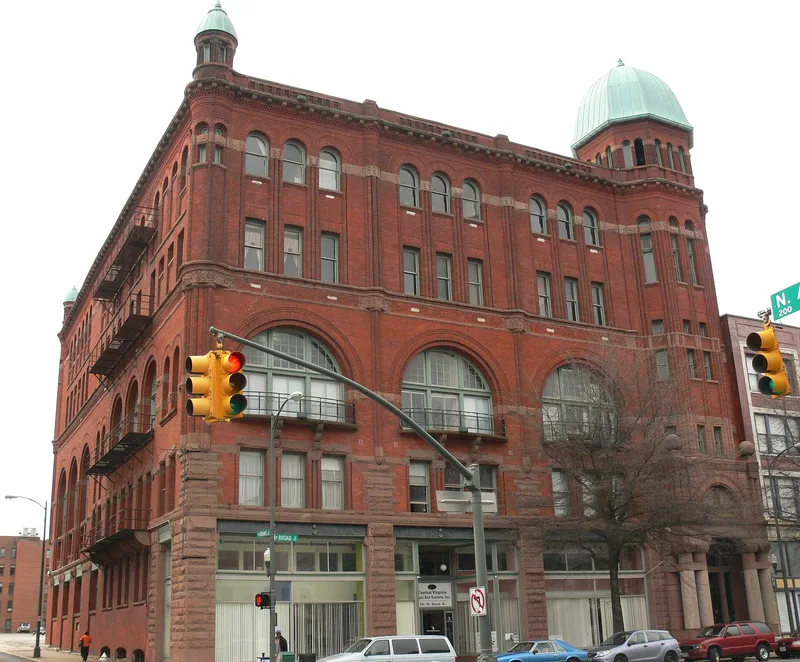
Rising five stories at the corner of Adams and Broad Streets in Richmond, this brick and brownstone building was designed by Baltimore architect Jackson C. Gott and constructed between 1888 and 1893. Virginia's Masons built it as a mixed-use structure: a department store occupied the first floor, public rooms the second and third, and Masonic lodge rooms the top two floors. Its Richardson Romanesque design expresses these functions through arcaded tiers, string courses and varied window sizes. The structure combines iron columns, steel girders and wooden joists. The nomination describes it as the largest and most impressive example of the style in Virginia and the largest building the state's Masons erected in the 19th century. It hosted balls, concerts and banquets, including a 1905 dinner for President Theodore Roosevelt. The Masons left in 1971-72, and the Richmond Foundation for the Arts acquired it in 1982 for use as an art center. The exterior remains well preserved, though interiors have been redecorated.
Significance in brief: The nomination calls it Virginia's largest and most impressive example of American Romanesque, in the manner of H. H. Richardson. It was the largest building erected by Virginia's Masons in the 19th century. It combined a department store, public rooms and Masonic lodge rooms, and hosted a 1905 banquet for Theodore Roosevelt.
Machine-generated summary. This summary was generated by a language model from the official nomination document and has not been reviewed line by line by an editor. It may contain errors. Check the source document before relying on any detail. Source: nomination document (PDF) · National Archives catalog entry. NRHP reference 83003305, listed February 10, 1983. Summary generated October 2026 (model claude-sonnet-5-5, prompt v1.0-2026-10-29, confidence medium).
Key facts
| Address | 101-107 W. Broad St., Richmond (Independent City) |
|---|---|
| County | Richmond (city and county) |
| Listed | February 10, 1983 |
| Reference number | 83003305 |
| Resource type | Building |
| Period of significance | 1800-1899 |
| Architect / builder | Jackson C. Gott FAIA |
| Architectural style | Richardson Romanesque (American Romanesque) |
| Areas of significance | Architecture, Social History |
| Level of significance | State |
| Status (as stated in the nomination) | Vacated by the Masons in 1971-72 and little used afterward; acquired in 1982 by the Richmond Foundation for the Arts for conversion to an art center. Form marks it unoccupied. Exterior exceptionally well preserved; interior rooms redecorated. |
| Acreage | 0.3 |
| Within district | Grace Street Commercial Historic District (Boundary Increase) |
| Coordinates | 37.54618, -77.44342 (NPS GIS) |
What listing means for this property
Religious properties are listed for their architectural or historical significance, not their religious use. Listing is honorary and does not restrict the congregation's use of the building. The federal rehabilitation credit is generally unavailable unless part of the building is income-producing; some state programmes and preservation grants do cover religious buildings. Federal funding or permits trigger Section 106 review.
Noted as vacant in the nomination. Nomination documents can be decades old; current status may differ. If you are considering buying an empty listed property, read the due-diligence checklist.
General information, not legal or tax advice. Rules change; confirm with your State Historic Preservation Office or a qualified adviser.
Sources and further reading
- National Park Service, National Register of Historic Places database (snapshot May 2026), reference 83003305.
- Nomination form (PDF, National Archives) — catalog entry
- Wikipedia article (used for cross-checking only; text not reproduced here)
- Wikidata Q6783756
- This listing as JSON
Last updated October 2026. Found an error? See the editorial policy for how to report it.