Union Station

Why it's listed
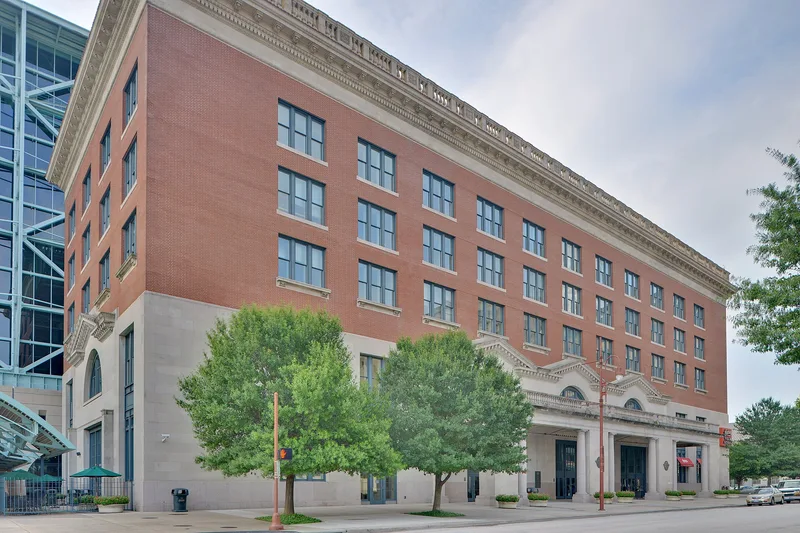
Union Station is a large railway terminal at 501 Crawford Street in Houston, built in Neo-Classical Revival style to a design by the New York firm Warren and Wetmore, who also designed Grand Central Station. Construction began in December 1909 and the building was dedicated on March 2, 1911. It began as a three-story structure with a hip roof. Two stories were added in 1912 along with a flat roof, giving the building its present form. The waiting room featured fluted columns, marble walls and walnut woodwork, and the station housed a Harvey House restaurant. It was created by a group of railways organized as the Houston Belt and Terminal Railway to replace many small depots. Opening day drew thousands of visitors, and local leaders saw it as a sign of the city's future. Passenger traffic declined, and the last train left in 1970. The building is notable as the only remaining train station and one of the few downtown buildings of its era.
Significance in brief: It was designed by the same firm that designed New York's Grand Central Station. It is one of the few buildings of its era left downtown and the city's only train station. It symbolized Houston's confidence in its future and its role as the largest railroad center in Texas and the Southwest.
Machine-generated summary. This summary was generated by a language model from the official nomination document and has not been reviewed line by line by an editor. It may contain errors. Check the source document before relying on any detail. Source: nomination document (PDF) · National Archives catalog entry. NRHP reference 77001448, listed November 10, 1977. Summary generated October 2026 (model claude-sonnet-5-5, prompt v1.0-2026-10-29, confidence medium).
Key facts
| Address | 501 Crawford St., Houston |
|---|---|
| County | Harris County |
| Listed | November 10, 1977 |
| Reference number | 77001448 |
| Resource type | Building |
| Period of significance | 1911 |
| Architect / builder | Warren and Wetmore (architects); American Construction Co. (builder) |
| Architectural style | Neo-Classical Revival |
| Areas of significance | Transportation, Architecture |
| Level of significance | State |
| Status (as stated in the nomination) | Passenger service ended in 1970 when the last train moved to the Amtrak station. The old station area was converted to office space still occupied by railroads, and the city was planning to acquire the building for a transportation center. |
| Acreage | 1 |
| Coordinates | 29.75726, -95.35663 (NPS GIS) |
What listing means for this property
For an income-producing building, listing (individually or as a contributing building in a district) is the gateway to the 20% federal rehabilitation tax credit on qualified rehabilitation costs, often stackable with state credits. Work claiming the credit must follow the Secretary of the Interior's Standards and be approved in advance.
Listing does not restrict a private owner acting without federal money or permits; where federal funding or licensing is involved, Section 106 review applies.
General information, not legal or tax advice. Rules change; confirm with your State Historic Preservation Office or a qualified adviser.
Sources and further reading
- National Park Service, National Register of Historic Places database (snapshot May 2026), reference 77001448.
- Nomination form (PDF, National Archives) — catalog entry
- Wikipedia article (used for cross-checking only; text not reproduced here)
- Wikidata Q16902348
- This listing as JSON
Last updated October 2026. Found an error? See the editorial policy for how to report it.