Race Street Friends Meetinghouse
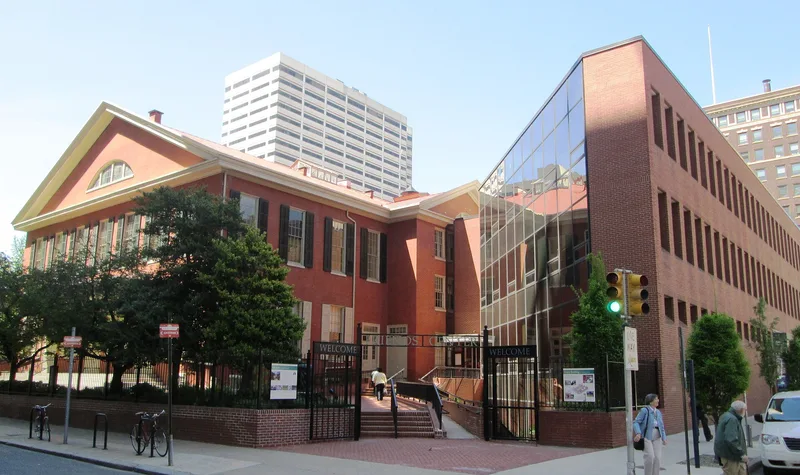

Why it's listed
Built in 1856 and occupied in 1857, the Race Street Meetinghouse is a brick Quaker meetinghouse in Philadelphia, Pennsylvania, set on a lot at Race and Cherry Streets. Its two meeting rooms were built for the Men's and Women's Yearly Meetings of the Hicksite branch, and its interior includes a wide central hall with a broad staircase. The building served as the site of the Hicksite Yearly Meeting from 1857 to 1955, when the Hicksite and Orthodox factions reconciled. Its significance rests on the role of women within the congregation. Quaker women here held positions in church government, joined joint committees, and in 1924 Jane Rushmore became the first woman to serve as clerk of the combined Philadelphia Yearly Meeting. The meetinghouse is also linked to Lucretia Mott, who spoke here on abolition and women's medical education, and to Hannah Clothier Hull, a peace activist. In 1914, the Yearly Meeting endorsed federal women's suffrage and lobbied senators for it.
Significance in brief: The nomination argues that the meetinghouse was central to the Hicksite Yearly Meeting and to women's leadership in Quaker governance. It cites the building's association with Lucretia Mott and Hannah Clothier Hull, and claims that the Race Street women were the only official religious body in the United States to actively support women's suffrage. It also points to the role of its women in abolition and peace activism.
Machine-generated summary. This summary was generated by a language model from the official nomination document and has not been reviewed line by line by an editor. It may contain errors. Check the source document before relying on any detail. Source: nomination document (PDF) · National Archives catalog entry. NRHP reference 93001610, listed November 4, 1993. Summary generated October 2026 (model claude-haiku-5-5, prompt v1.1-2026-10-29, confidence medium).
Key facts
| Address | 1515 Cherry St., Philadelphia |
|---|---|
| County | Philadelphia |
| Listed | November 4, 1993 |
| Reference number | 93001610 |
| Resource type | Building |
| Period of significance | 1857-1924 |
| Architect / builder | George Chandlee; Nathan Smedley; William Eyre |
| Architectural style | Quaker Plain Style |
| Criteria |
|
| Areas of significance | Religion, Social History |
| Level of significance | National |
| National Historic Landmark | Yes, designated November 4, 1993 |
| Status (as stated in the nomination) | The building is still used as a meetinghouse for the Central Philadelphia Monthly Meeting and maintains a high degree of integrity. |
| Acreage | 0.9 |
| Coordinates | 39.95583, -75.16517 (NPS GIS) |
What listing means for this property
Religious properties are listed for their architectural or historical significance, not their religious use. Listing is honorary and does not restrict the congregation's use of the building. The federal rehabilitation credit is generally unavailable unless part of the building is income-producing; some state programmes and preservation grants do cover religious buildings. Federal funding or permits trigger Section 106 review.
General information, not legal or tax advice. Rules change; confirm with your State Historic Preservation Office or a qualified adviser.
Sources and further reading
- National Park Service, National Register of Historic Places database (snapshot May 2026), reference 93001610.
- Nomination form (PDF, National Archives) — catalog entry
- Wikipedia article (used for cross-checking only; text not reproduced here)
- Wikidata Q7278921
- This listing as JSON
Last updated October 2026. Found an error? See the editorial policy for how to report it.