George, Henry, Birthplace

Why it's listed
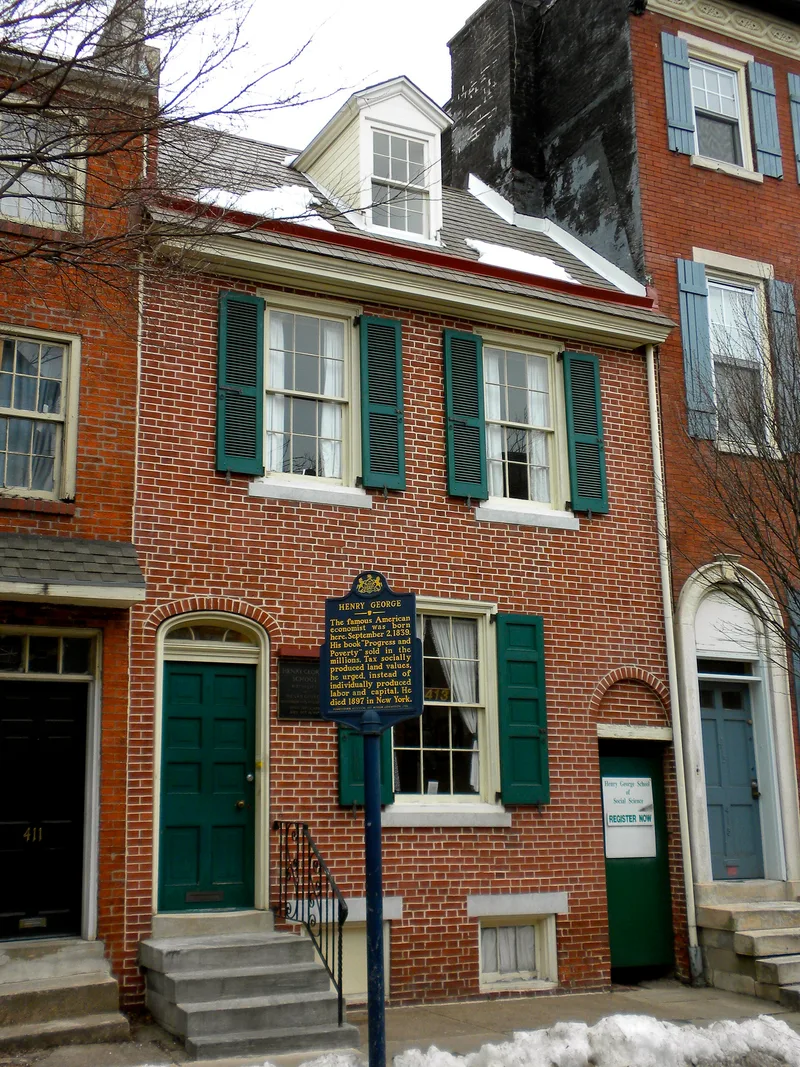
Built between 1801 and 1808 by the small builder Edward Harlin, this three-story brick row house on South Tenth Street in Philadelphia was a modest dwelling of Flemish bond brickwork with a connecting stairhall called the piazza. Economist and social reformer Henry George was born on the second floor front chamber in 1839 and lived there until he was about ten. The house is valued as the only surviving example of a poor man's Philadelphia row house from its period to have been studied through detailed measured drawings and documentary research. Such simple dwellings are seldom preserved. George is remembered for Progress and Poverty, which proposed taxing the unearned rent of land as a remedy for economic depression. Alterations in the late nineteenth and early twentieth centuries changed the front elevation, but the back building and piazza survive largely unchanged.
Significance in brief: The nomination argues the house is significant for its association with Henry George, journalist, social reformer and political economist, who was born there in 1839 and lived there for ten years. It also argues the house is a rare surviving example of a modest Philadelphia row house of its period, documented in measured drawings accepted by the Historic American Buildings Survey.
Machine-generated summary. This summary was generated by a language model from the official nomination document and has not been reviewed line by line by an editor. It may contain errors. Check the source document before relying on any detail. Source: nomination document (PDF) · National Archives catalog entry. NRHP reference 83002268, listed April 1, 1983. Summary generated October 2026 (model claude-haiku-5-5, prompt v1.1-2026-10-29, confidence medium).
Key facts
| Address | 413 S. Tenth St., Philadelphia |
|---|---|
| County | Philadelphia |
| Listed | April 1, 1983 |
| Reference number | 83002268 |
| Resource type | Building |
| Period of significance | 1801-1808 |
| Architect / builder | Edward Harlin (builder) |
| Areas of significance | Economics, Politics/Government, Philosophy, Social History |
| Level of significance | National |
| Status (as stated in the nomination) | The front house has been altered, including a mansard roof and a bay window added in the late 19th or early 20th century, while the back building and piazza remain much as originally built. |
| Acreage | 0.1 |
| Coordinates | 39.94390, -75.15799 (NPS GIS) |
What listing means for this property
National Register listing is honorary: it recognises significance and does not restrict what a private owner may do without federal money or permits. It unlocks the 20% federal rehabilitation tax credit for income-producing buildings, state credits in many states, and Section 106 review when federal agencies are involved. See what listing means in practice.
General information, not legal or tax advice. Rules change; confirm with your State Historic Preservation Office or a qualified adviser.
Sources and further reading
- National Park Service, National Register of Historic Places database (snapshot May 2026), reference 83002268.
- Nomination form (PDF, National Archives) — catalog entry
- Wikipedia article (used for cross-checking only; text not reproduced here)
- Wikidata Q5721864
- This listing as JSON
Last updated October 2026. Found an error? See the editorial policy for how to report it.