Plymouth Friends Meetinghouse
Also known as: See Also:Plymouth Meeting Historic District

Why it's listed
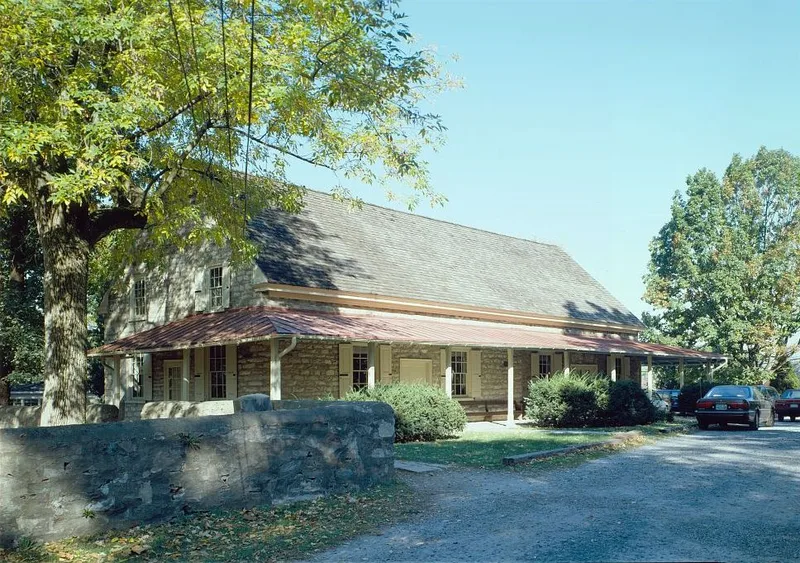
Built of native limestone in the Colonial style, the Plymouth Meeting Friends Meetinghouse stands on land first bought from William Penn in 1686 and conveyed in a deed dated October 6, 1704. The present building is probably dated to 1708. An eastern school wing was added in 1780, replacing an earlier log schoolhouse on the premises, and the meeting ran what is described as the first school in the township, which continues to operate. A fire in 1867 damaged the interior, but the original walls survived and the interior was rebuilt largely as before, with a porch added across the front. During the Revolutionary War the building served as a hospital and gathering place for George Washington's troops. A clock by David Rittenhouse, who attended the school, remains in use in the meetinghouse. Before the Civil War it was also a centre of Underground Railroad activity.
Significance in brief: The nomination argues the meetinghouse is significant for its role in education, as the first school in the township, and for its association with the Revolutionary War, when it was used as a hospital and gathering place for George Washington's troops. It also cites its role in the antislavery movement and its association with David Rittenhouse and Thomas Hovenden. Its 18th-century construction and continued use are presented as the basis for its architectural interest.
Machine-generated summary. This summary was generated by a language model from the official nomination document and has not been reviewed line by line by an editor. It may contain errors. Check the source document before relying on any detail. Source: nomination document (PDF) · National Archives catalog entry. NRHP reference 71000714, listed February 18, 1971. Summary generated October 2026 (model claude-haiku-5-5, prompt v1.1-2026-10-29, confidence medium).
Key facts
| Address | Corner of Germantown and Butler Pikes, Plymouth Meeting |
|---|---|
| County | Montgomery County |
| Listed | February 18, 1971 |
| Reference number | 71000714 |
| Resource type | Building |
| Period of significance | 1708-1867 |
| Architectural style | Colonial |
| Criteria |
|
| Areas of significance | Education, Religion |
| Level of significance | State |
| Status (as stated in the nomination) | Interior damaged by fire in 1867 and rebuilt much as the original; a porch was added across the front at that time; a rear wing added in 1945 is used as a social room. |
| Acreage | 5 |
| Within district | Plymouth Meeting Historic District |
| Coordinates | 40.10233, -75.27968 (NPS GIS) |
What listing means for this property
Religious properties are listed for their architectural or historical significance, not their religious use. Listing is honorary and does not restrict the congregation's use of the building. The federal rehabilitation credit is generally unavailable unless part of the building is income-producing; some state programmes and preservation grants do cover religious buildings. Federal funding or permits trigger Section 106 review.
General information, not legal or tax advice. Rules change; confirm with your State Historic Preservation Office or a qualified adviser.
Sources and further reading
- National Park Service, National Register of Historic Places database (snapshot May 2026), reference 71000714.
- Nomination form (PDF, National Archives) — catalog entry
- Wikipedia article (used for cross-checking only; text not reproduced here)
- Wikidata Q7205805
- This listing as JSON
Last updated October 2026. Found an error? See the editorial policy for how to report it.