Woodmont
Also known as: The Mount of the House of Lord

Why it's listed
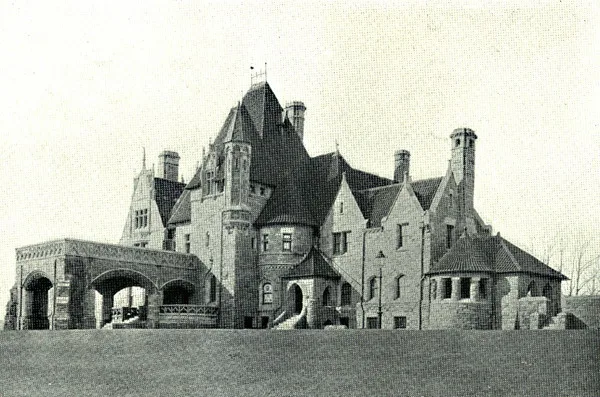
Built in the French chateau style on a bluff above the Schuylkill River, Woodmont was designed by William Lightfoot Price and constructed between 1892 and 1895 for Alan Wood Jr., a partner in the family iron and steel business. The house is built of local schist with Indiana limestone trim and has a tiled roof, copper dormers and a great hall rising more than fifty feet, with a carved limestone fireplace. Price drew on Biltmore, George W. Vanderbilt's house in Asheville, North Carolina, which was then under construction, but adapted the design to local stone and a more private scale. The house is regarded as one of the finest examples of its style in the country. The estate also served as the headquarters of the Peace Mission movement from 1952, when it was bought by the Palace Mission. Father Divine's followers used the house as a base for the movement, which was known for feeding and employing people during the Depression and for its integrated congregations.
Significance in brief: The nomination argues the house is among the finest and best-preserved chateau-style houses in the country, and that it reflects the wealth of America's industrial elite and the Wood family's iron business. It also cites the estate's later role as headquarters of the Peace Mission movement led by Father and Mother Divine, which began in 1952.
Machine-generated summary. This summary was generated by a language model from the official nomination document and has not been reviewed line by line by an editor. It may contain errors. Check the source document before relying on any detail. Source: nomination document (PDF) · National Archives catalog entry. NRHP reference 98001192, listed August 5, 1998. Summary generated October 2026 (model claude-haiku-5-5, prompt v1.1-2026-10-29, confidence medium).
Key facts
| Address | 1622 Spring Mill Rd., Gladwyne |
|---|---|
| County | Montgomery County |
| Listed | August 5, 1998 |
| Reference number | 98001192 |
| Resource type | Building |
| Period of significance | 1892-1895, 1952 |
| Architect / builder | William Lightfoot Price (1861-1916), architect |
| Architectural style | Late 19th and 20th Century Revivals: French Renaissance |
| Criteria |
|
| Areas of significance | Architecture, Social History, Religion |
| Level of significance | National |
| National Historic Landmark | Yes, designated August 5, 1998 |
| Acreage | 64.8 |
| Coordinates | 40.06779, -75.29370 (NPS GIS) |
What listing means for this property
National Register listing is honorary: it recognises significance and does not restrict what a private owner may do without federal money or permits. It unlocks the 20% federal rehabilitation tax credit for income-producing buildings, state credits in many states, and Section 106 review when federal agencies are involved. See what listing means in practice.
General information, not legal or tax advice. Rules change; confirm with your State Historic Preservation Office or a qualified adviser.
Sources and further reading
- National Park Service, National Register of Historic Places database (snapshot May 2026), reference 98001192.
- Nomination form (PDF, National Archives) — catalog entry
- Wikipedia article (used for cross-checking only; text not reproduced here)
- Wikidata Q8033113
- This listing as JSON
Last updated October 2026. Found an error? See the editorial policy for how to report it.