Plymouth Meeting Historic District

Why it's listed
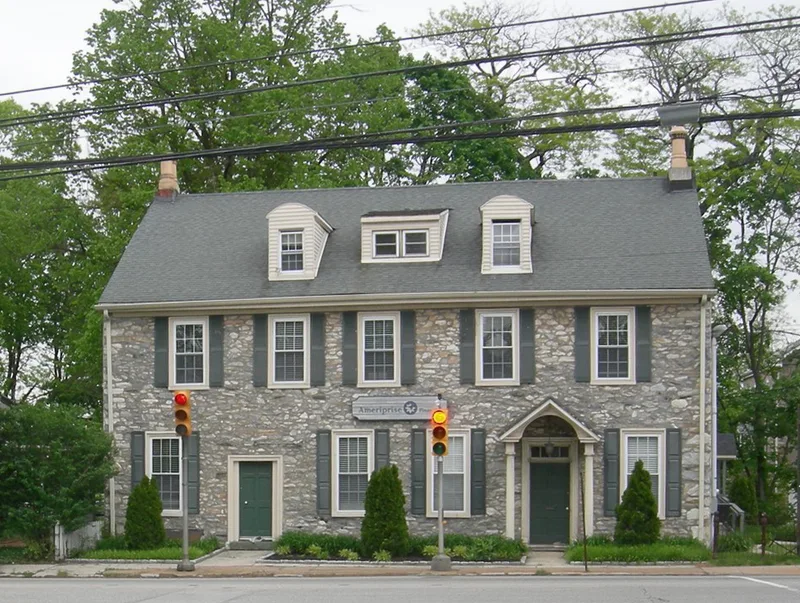
Plymouth Meeting sits at the crossing of the Germantown Pike and the Old Butler Pike in Plymouth and Whitemarsh Townships, Montgomery County, Pennsylvania. It grew from a 600-acre tract set aside by William Penn in 1683 and developed as a Quaker settlement and crossroads town through the 18th century. The road from the village to Philadelphia was laid out in 1687, making it the first official road in what is now Montgomery County. The district contains houses showing English and Welsh Quaker influence, many in largely original condition, along with the Plymouth Friends Meeting House, built around 1708 of native limestone. The Hovenden House and Abolition Hall, where painter Thomas Hovenden had his studio from 1881 to 1895, are also included. Abolition Hall was the site of Quaker-supported meetings on the abolition of slavery. The nomination identifies the village's preserved architecture and its role in local history as the basis for its listing, and notes that highway plans and new housing posed risks to its integrity.
Machine-generated summary. This summary was generated by a language model from the official nomination document and has not been reviewed line by line by an editor. It may contain errors. Check the source document before relying on any detail. Source: nomination document (PDF) · catalog entry. Generated October 2026 (model claude-haiku-5-5, prompt v1.1-2026-10-29).
| Period of significance | 1700-1899 |
|---|---|
| Styles | English and Welsh Quaker influenced; Colonial and Federal |
| Areas of significance | Military, Architecture |
| Acreage | 200 |
| Boundary source | NPS cultural-resource GIS polygon |
| Full listing page | Plymouth Meeting Historic District (property record) |
What listing means for this property
This is a historic district. Buildings within its boundary are either contributing (they add to the district's significance) or non-contributing. Owners of contributing income-producing buildings can claim the 20% federal rehabilitation tax credit; homeowners should look at state credits. National Register districts impose no design review by themselves; a local historic district ordinance, if one exists, does (the difference explained).
General information, not legal or tax advice. Rules change; confirm with your State Historic Preservation Office or a qualified adviser.