Over-the-Rhine Historic District

Why it's listed
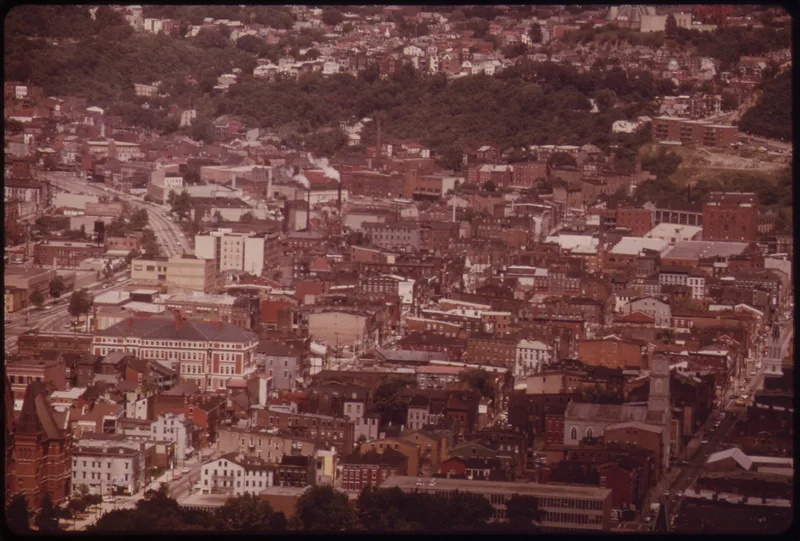
Over-the-Rhine is a dense urban neighborhood of roughly 362.5 acres immediately north of Cincinnati's central business district. Nearly 1,280 buildings stand there, and at one time more than 45,000 people lived in the community. Most are brick row houses, semi-detached houses and mixed commercial/residential buildings from the middle and late nineteenth century, built in simple vernacular, muted Greek Revival, Italianate and Queen Anne styles. Uniform facade lines, similar heights and brick construction create distinctive streetscapes. Although the area is closely tied to German life, its architecture is not uniformly Germanic; a few buildings, such as the Germania Building of 1877 and several Gothic-influenced churches, show that influence. Landmarks include Music Hall, the Hamilton County Memorial Building and churches around Washington Park. Granite alleys, wooden block streets and faded wall advertisements add to the sense of place. The district was listed because it preserves a nineteenth-century ethnic urban community with exceptional integrity, despite some deterioration and intrusions.
Significance in brief: The district is argued to preserve a cohesive nineteenth-century urban community, with consistent scale, brick materials and streetscapes. Its integrity is described as unparalleled in the state, and it is presented as an outstanding symbol of ethnic community life in urban America. Landmarks such as Music Hall, the Germania Building and many churches reflect its German heritage.
Machine-generated summary. This summary was generated by a language model from the official nomination document and has not been reviewed line by line by an editor. It may contain errors. Check the source document before relying on any detail. Source: nomination document (PDF) · National Archives catalog entry. NRHP reference 83001985, listed May 17, 1983. Summary generated October 2026 (model claude-sonnet-5-5, prompt v1.0-2026-10-29, confidence medium).
Key facts
| Address | Roughly bounded by Dorsey, Sycamore, Liberty, Reading, Central Pkwy, McMicken Ave., and Vine Sts., Cincinnati |
|---|---|
| County | Hamilton County |
| Listed | May 17, 1983 |
| Reference number | 83001985 |
| Resource type | District |
| Architect / builder | Hannaford and Proctor (Music Hall); Samuel Hannaford and Sons (Hamilton County Memorial Building, Nast Trinity Methodist Church); Crapsey and Brown (First English Lutheran Church); Heinrich Rattermann (Germania Building) |
| Architectural style | Simple vernacular, muted Greek Revival, Italianate and Queen Anne, with High Victorian Gothic, Romanesque, Beaux Arts and Art Deco landmarks |
| Areas of significance | Industry, Commerce, European, Architecture, Religion, Social History, Performing Arts |
| Level of significance | State |
| Status (as stated in the nomination) | Generally in good condition despite some recent deterioration; many buildings are unaltered, though intrusions such as gas stations and parking lots exist, mainly on major streets. |
| Acreage | 362.5 |
| Within district | Mount Auburn Historic District |
| Coordinates | 39.11702, -84.50888 (NPS GIS) |
What listing means for this property
This is a historic district. Buildings within its boundary are either contributing (they add to the district's significance) or non-contributing. Owners of contributing income-producing buildings can claim the 20% federal rehabilitation tax credit; homeowners should look at state credits. National Register districts impose no design review by themselves; a local historic district ordinance, if one exists, does (the difference explained).
General information, not legal or tax advice. Rules change; confirm with your State Historic Preservation Office or a qualified adviser.
Sources and further reading
- National Park Service, National Register of Historic Places database (snapshot May 2026), reference 83001985.
- Nomination form (PDF, National Archives) — catalog entry
- Wikidata Q49536583
- This listing as JSON
Last updated October 2026. Found an error? See the editorial policy for how to report it.