Mahler and Carolina Trust Buildings
Also known as: McLellan's Dime Store; McCrory's Dime Store
Mahler and Carolina Trust Buildings is a building in Raleigh, Wake County, North Carolina, listed on the National Register of Historic Places on November 29, 2000 (reference number 00000457). The National Park Service records its significance in Commerce and Architecture at the local level.
Facts from the NPS National Register database (); nomination summary October 2026. Last updated . Sources for each fact.

Approximate location: the National Park Service places this pin arbitrarily within the property, not at a surveyed point (stated accuracy ±12 m).
Why it's listed
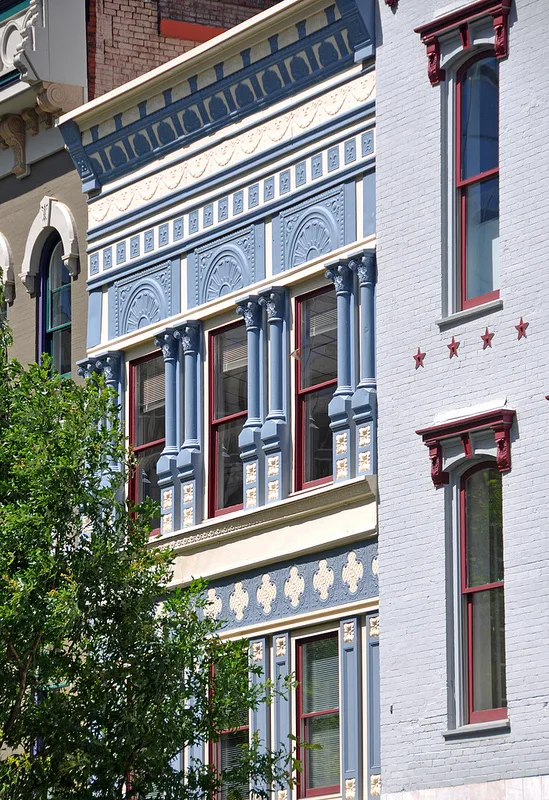
Two neighboring buildings on Raleigh's Fayetteville Street Mall, one raised in 1876 and the other in 1902, together tell the story of the city's main commercial street. The three-story Mahler Building, with a Renaissance Revival facade, housed a jewelry store. The four-story Carolina Trust Building, in Classical Revival style, held banks on the ground floor and about thirty offices above. McLellan's dime store chain bought the Carolina Trust Building in 1928, added a rear wing, took over the Mahler Building in 1933, and built a Martin Street annex around 1952. McCrory's later ran the store. A 1971 metal screen hid the upper facades until 1999, and the upper floors have been unused since the 1950s but keep most of their original plans and finishes. The complex also reflects the 1960 lunch counter sit-ins in Raleigh and the later shift of retail to suburban malls.
Significance in brief: The buildings represent Raleigh's downtown commercial evolution from Reconstruction-era mercantile shops, through early twentieth-century banking and office development, to the Depression-era dime store. They are also architecturally notable for their Renaissance Revival and Classical Revival facades and largely intact upper-floor interiors. The site is also linked to the 1960 Civil Rights sit-ins at Raleigh lunch counters.
Machine-generated summary. This summary was generated by a language model from the official nomination document and has not been reviewed line by line by an editor. It may contain errors. Check the source document before relying on any detail. Source: nomination document (PDF) · National Archives catalog entry. NRHP reference 00000457, listed November 29, 2000. Summary generated October 2026 (model claude-sonnet-5-5, prompt v1.0-2026-10-29, confidence medium).
Key facts
| Official database NPS National Register database, ref. 00000457 , checked | |
|---|---|
| Address | 228-232 Fayetteville St. Mall, Raleigh |
| County | Wake County |
| Listed | November 29, 2000 |
| Reference number | 00000457 |
| Resource type | Building |
| Areas of significance | Commerce, Architecture |
| Level of significance | Local |
| National Historic Landmark | No |
| Acreage | 0.4 |
| Official document, machine-extracted Nomination form (National Archives) , checked | |
| Period of significance | 1876-1950 |
| Architectural style | Renaissance Revival; Classical Revival |
| Criteria |
|
| Status (as stated in the nomination) | Ground floor in use as a McCrory's dime store; upper floors deteriorated and unused since the 1950s, with rehabilitation planned. |
| Official dataset NPS cultural-resource GIS (NRHP locations) | |
| Coordinates | 35.77729, -78.63947 |
| Computed Computed from NPS GIS district boundaries | |
| Within district | Fayetteville Street Historic District |
What listing means for this property
National Register listing is honorary: it recognises significance and does not restrict what a private owner may do without federal money or permits. It unlocks the 20% federal rehabilitation tax credit for income-producing buildings, state credits in many states, and Section 106 review when federal agencies are involved. See what listing means in practice.
General information, not legal or tax advice. Rules change; confirm with your State Historic Preservation Office or a qualified adviser.
Questions about Mahler and Carolina Trust Buildings
When was Mahler and Carolina Trust Buildings added to the National Register of Historic Places?
Mahler and Carolina Trust Buildings was listed on November 29, 2000. Its National Register reference number is 00000457.
Is Mahler and Carolina Trust Buildings a National Historic Landmark?
No. The National Park Service database (snapshot of May 2026) lists Mahler and Carolina Trust Buildings on the National Register but does not record it as a National Historic Landmark.
Where is Mahler and Carolina Trust Buildings?
228-232 Fayetteville St. Mall, Raleigh, Wake County, North Carolina; coordinates 35.77729, -78.63947.
Why is Mahler and Carolina Trust Buildings historically significant?
According to a machine-generated summary of its nomination form: The buildings represent Raleigh's downtown commercial evolution from Reconstruction-era mercantile shops, through early twentieth-century banking and office development, to the Depression-era dime store. They are also architecturally notable for their Renaissance Revival and Classical Revival facades and largely intact upper-floor interiors. The site is also linked to the 1960 Civil Rights sit-ins at Raleigh lunch counters. Check the nomination document before relying on any detail.
Is Mahler and Carolina Trust Buildings in a historic district?
Yes. Its location falls within the Fayetteville Street Historic District, itself listed on the National Register. (Computed from National Park Service boundary data; the district nomination's own list of contributing resources may differ.)
Where can I read the original nomination for Mahler and Carolina Trust Buildings?
The nomination form is a public record held by the National Archives: nomination document (PDF).
Sources and further reading
- National Park Service, National Register of Historic Places database (snapshot May 2026), reference 00000457.
- Nomination form (PDF, National Archives) — catalog entry
- Wikipedia article (used for cross-checking only; text not reproduced here)
- Wikidata Q20679809
- This listing as JSON
Last updated November 2026. Found an error? See the editorial policy for how to report it.