St. Philip's Moravian Church
Also known as: St. Philip's Moravian Church in Salem; See Also:Old Salem His
St. Philip's Moravian Church is a building in Winston-Salem, Forsyth County, North Carolina, listed on the National Register of Historic Places on September 3, 1991 (reference number 91001170). The National Park Service records its significance in Black, Architecture and Religion at the state level.
Facts from the NPS National Register database (); nomination summary October 2026. Last updated . Sources for each fact.

Approximate location: the National Park Service places this pin arbitrarily within the property, not at a surveyed point (stated accuracy ±12 m).
Why it's listed
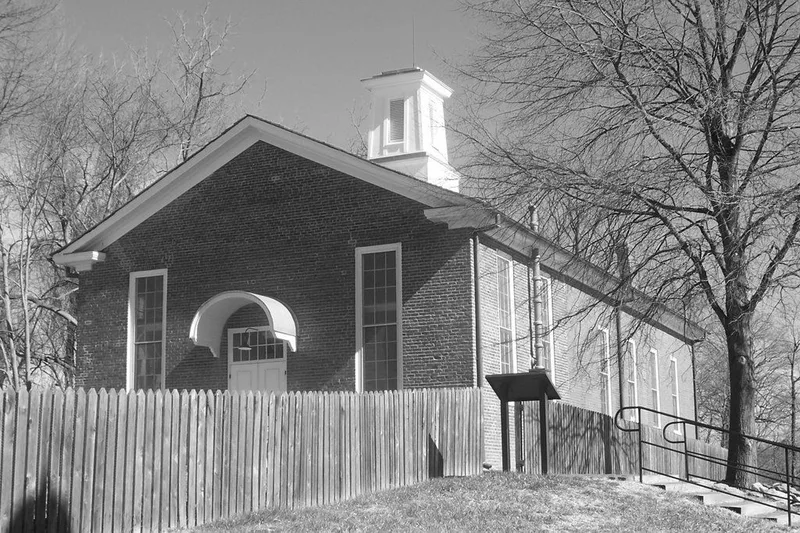
Set back about fifty feet from South Church Street at the southern edge of Old Salem, this red brick church was built in 1861 for a black Moravian congregation. The original block measured forty by sixty feet, with a standing seam tin roof, tall nine-over-nine windows and a small rear apse. In 1890 the congregation added a twenty-four-foot front section containing a central hall, two classrooms and a balcony with a sawnwork fleur-de-lis railing. The interior keeps plaster walls, wainscoting and the marks of the original pews. The congregation grew from a separate black church founded in 1822 and organized in 1823, and it is described as the oldest surviving black church building in Forsyth County and the only known antebellum black church building left in North Carolina. The congregation used the building until 1952 and later moved elsewhere in Winston-Salem. The building has stood unoccupied since then and needs stabilization. Graves from an earlier parish graveyard lie in the front yard.
Significance in brief: It is described as the oldest surviving church building of a black congregation in Forsyth County and the only known antebellum black church building left in North Carolina. It represents one of the oldest continuously existing black congregations in the South. The simple gable-front design was typical of mid-nineteenth-century churches in the county, and it is the only one of its kind to survive.
Machine-generated summary. This summary was generated by a language model from the official nomination document and has not been reviewed line by line by an editor. It may contain errors. Check the source document before relying on any detail. Source: nomination document (PDF) · National Archives catalog entry. NRHP reference 91001170, listed September 3, 1991. Summary generated October 2026 (model claude-sonnet-5-5, prompt v1.0-2026-10-29, confidence high).
Key facts
| Official database NPS National Register database, ref. 91001170 , checked | |
|---|---|
| Address | E side, S. Church St. near Race St., Old Salem, Winston-Salem |
| County | Forsyth County |
| Listed | September 3, 1991 |
| Reference number | 91001170 |
| Resource type | Building |
| Areas of significance | Black, Architecture, Religion |
| Level of significance | State |
| National Historic Landmark | No |
| Acreage | 0.9 |
| Official document, machine-extracted Nomination form (National Archives) , checked | |
| Period of significance | 1861-1940 |
| Architect / builder | Houser, Charles, brickmason; Swink, George, carpenter |
| Architectural style | Greek Revival |
| Criteria |
|
| Status (as stated in the nomination) | Listed as vacant and not in use; the congregation left in the 1950s. The building has suffered water, insect and animal damage, and the northwest corner of the 1890 addition is cracked and sagging. |
| Official dataset NPS cultural-resource GIS (NRHP locations) | |
| Coordinates | 36.08449, -80.24051 |
| Computed Computed from NPS GIS district boundaries | |
| Within district | Old Salem Historic District |
What listing means for this property
Religious properties are listed for their architectural or historical significance, not their religious use. Listing is honorary and does not restrict the congregation's use of the building. The federal rehabilitation credit is generally unavailable unless part of the building is income-producing; some state programmes and preservation grants do cover religious buildings. Federal funding or permits trigger Section 106 review.
Noted as vacant in the nomination. Nomination documents can be decades old; current status may differ. If you are considering buying an empty listed property, read the due-diligence checklist.
General information, not legal or tax advice. Rules change; confirm with your State Historic Preservation Office or a qualified adviser.
Questions about St. Philip's Moravian Church
When was St. Philip's Moravian Church added to the National Register of Historic Places?
St. Philip's Moravian Church was listed on September 3, 1991. Its National Register reference number is 91001170.
Is St. Philip's Moravian Church a National Historic Landmark?
No. The National Park Service database (snapshot of May 2026) lists St. Philip's Moravian Church on the National Register but does not record it as a National Historic Landmark.
Where is St. Philip's Moravian Church?
E side, S. Church St. near Race St., Old Salem, Winston-Salem, Forsyth County, North Carolina; coordinates 36.08449, -80.24051.
Why is St. Philip's Moravian Church historically significant?
According to a machine-generated summary of its nomination form: It is described as the oldest surviving church building of a black congregation in Forsyth County and the only known antebellum black church building left in North Carolina. It represents one of the oldest continuously existing black congregations in the South. The simple gable-front design was typical of mid-nineteenth-century churches in the county, and it is the only one of its kind to survive. Check the nomination document before relying on any detail.
Who designed or built St. Philip's Moravian Church?
The nomination form names Houser, Charles, brickmason; Swink, George, carpenter as architect or builder (extracted by machine from the nomination; check the source document).
Is St. Philip's Moravian Church in a historic district?
Yes. Its location falls within the Old Salem Historic District, itself listed on the National Register. (Computed from National Park Service boundary data; the district nomination's own list of contributing resources may differ.)
Where can I read the original nomination for St. Philip's Moravian Church?
The nomination form is a public record held by the National Archives: nomination document (PDF).
Sources and further reading
- National Park Service, National Register of Historic Places database (snapshot May 2026), reference 91001170.
- Nomination form (PDF, National Archives) — catalog entry
- Wikipedia article (used for cross-checking only; text not reproduced here)
- Wikidata Q7591523
- This listing as JSON
Last updated November 2026. Found an error? See the editorial policy for how to report it.