Old Salem Historic District
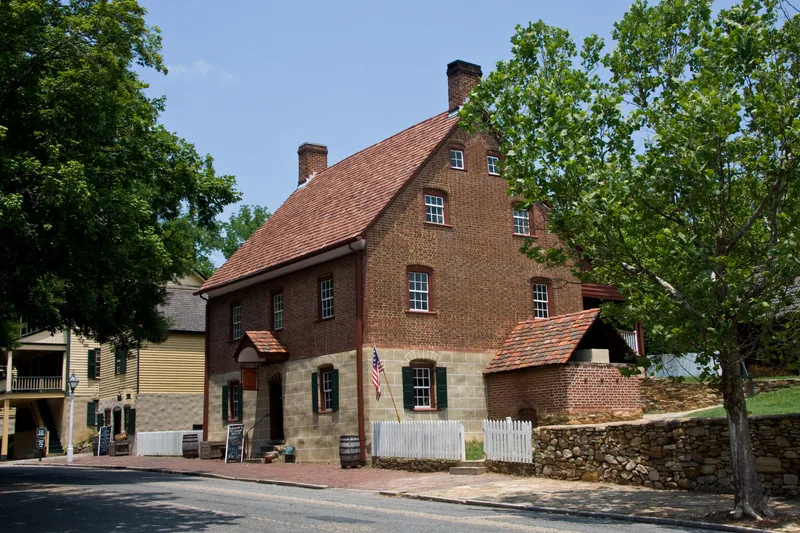
Old Salem Historic District is a historic district in Winston-Salem, Forsyth County, North Carolina, listed on the National Register of Historic Places on November 13, 1966 (reference number 66000591). It is also a National Historic Landmark, designated November 13, 1966. The National Park Service records its significance in Archeology, Black, Exploration/Settlement, Education, Historic - Non-Aboriginal, Community Planning and Development, Industry, Commerce, European, Architecture and Social History at the national level.
Facts from the NPS National Register database (). Last updated . Sources for each fact.

The pin is the National Park Service's center point for the property.
Why it's listed
No readable nomination text is available for this listing yet. The facts below come from the National Park Service database.
Key facts
| Official database NPS National Register database, ref. 66000591 , checked | |
|---|---|
| Address | 600 S. Main St. (Salem College campus and area near Salem Sq.), Winston-Salem |
| County | Forsyth County |
| Listed | November 13, 1966 |
| Reference number | 66000591 |
| Resource type | District |
| Areas of significance | Archeology, Black, Exploration/Settlement, Education, Historic - Non-Aboriginal, Community Planning and Development, Industry, Commerce, European, Architecture, Social History |
| Level of significance | National |
| National Historic Landmark | Yes, designated November 13, 1966 |
| Acreage | 223 |
| Official dataset NPS cultural-resource GIS (NRHP locations) | |
| Coordinates | 36.08683, -80.24109 |
What listing means for this property
This is a historic district. Buildings within its boundary are either contributing (they add to the district's significance) or non-contributing. Owners of contributing income-producing buildings can claim the 20% federal rehabilitation tax credit; homeowners should look at state credits. National Register districts impose no design review by themselves; a local historic district ordinance, if one exists, does (the difference explained).
General information, not legal or tax advice. Rules change; confirm with your State Historic Preservation Office or a qualified adviser.
Sources and further reading
- National Park Service, National Register of Historic Places database (snapshot May 2026), reference 66000591.
- Wikipedia article (used for cross-checking only; text not reproduced here)
- Wikidata Q844445
- This listing as JSON
Last updated November 2026. Found an error? See the editorial policy for how to report it.