Playland Amusement Park

Why it's listed
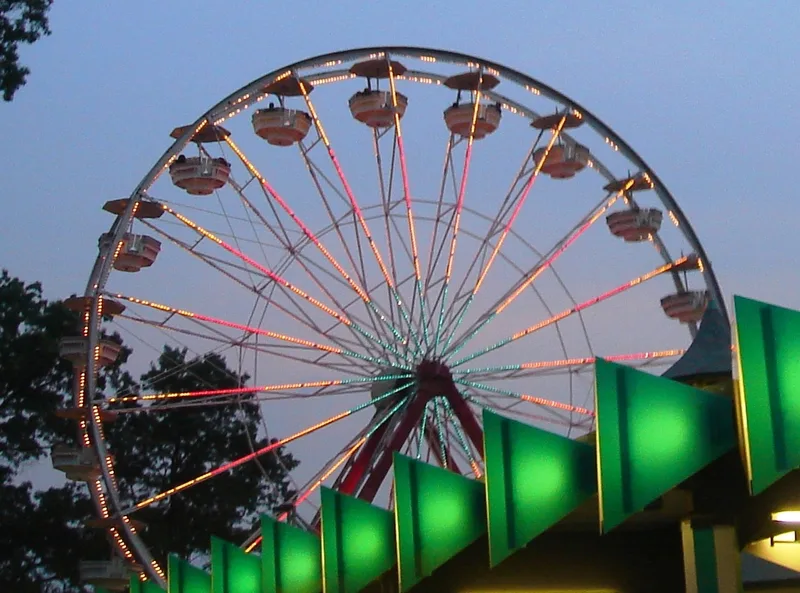
Playland Amusement Park occupies 280 acres on Long Island Sound in Rye, New York. Opened in 1928 by the Westchester County Park Commission, it was the first totally planned amusement park in the country. The architects A. Stewart Walker and Leon Gillette designed most of its main buildings in the Art Deco style, including the Casino, Music Tower, colonnades and administration building, while the Bath House follows Spanish Revival lines. The grounds also hold a freshwater pool, two beaches, an eighty-acre lake and undeveloped wildlife habitat. Three original rides survive: the Carousel, with horses carved by Charles Carmel, the Whip, and the Derby Racer. The Dragon Coaster dates from 1928-29. The park introduced a scrip ticket system in place of cash at the rides. Its basic design and much of its architecture remain largely unchanged after more than fifty years, and it is regarded as the prototype of the modern theme park, which is why it was recognized.
Significance in brief: The nomination argues that Playland was the first totally planned amusement park in America and is the prototype of the contemporary theme park. Its basic plan and much of its Art Deco architecture remain largely intact after more than fifty years. It resulted from the combined work of an enlightened governmental body, the Park Commission, and many creative individuals.
Machine-generated summary. This summary was generated by a language model from the official nomination document and has not been reviewed line by line by an editor. It may contain errors. Check the source document before relying on any detail. Source: nomination document (PDF) · National Archives catalog entry. NRHP reference 80004529, listed July 4, 1980. Summary generated October 2026 (model claude-sonnet-5-5, prompt v1.0-2026-10-29, confidence medium).
Key facts
| Address | Playland Pkwy. and Forest Ave., Rye |
|---|---|
| County | Westchester County |
| Listed | July 4, 1980 |
| Reference number | 80004529 |
| Resource type | District |
| Period of significance | 1900- (specific date 1928) |
| Architect / builder | Walker and Gillette |
| Architectural style | Art Deco (with a Spanish Revival Bath House) |
| Areas of significance | Entertainment/Recreation |
| Level of significance | National |
| National Historic Landmark | Yes, designated February 27, 1987 |
| Status (as stated in the nomination) | Occupied and in use as a county park. The basic plan and main buildings remain largely intact, though some colonnades were damaged by fire and altered, and the Casino interior was renovated in 1973. |
| Acreage | 280 |
| Coordinates | 40.96977, -73.66902 (NPS GIS) |
What listing means for this property
This is a historic district. Buildings within its boundary are either contributing (they add to the district's significance) or non-contributing. Owners of contributing income-producing buildings can claim the 20% federal rehabilitation tax credit; homeowners should look at state credits. National Register districts impose no design review by themselves; a local historic district ordinance, if one exists, does (the difference explained).
General information, not legal or tax advice. Rules change; confirm with your State Historic Preservation Office or a qualified adviser.
Sources and further reading
- National Park Service, National Register of Historic Places database (snapshot May 2026), reference 80004529.
- Nomination form (PDF, National Archives) — catalog entry
- Wikipedia article (used for cross-checking only; text not reproduced here)
- Wikidata Q3392124
- This listing as JSON
Last updated October 2026. Found an error? See the editorial policy for how to report it.