St. James Episcopal Church

Why it's listed
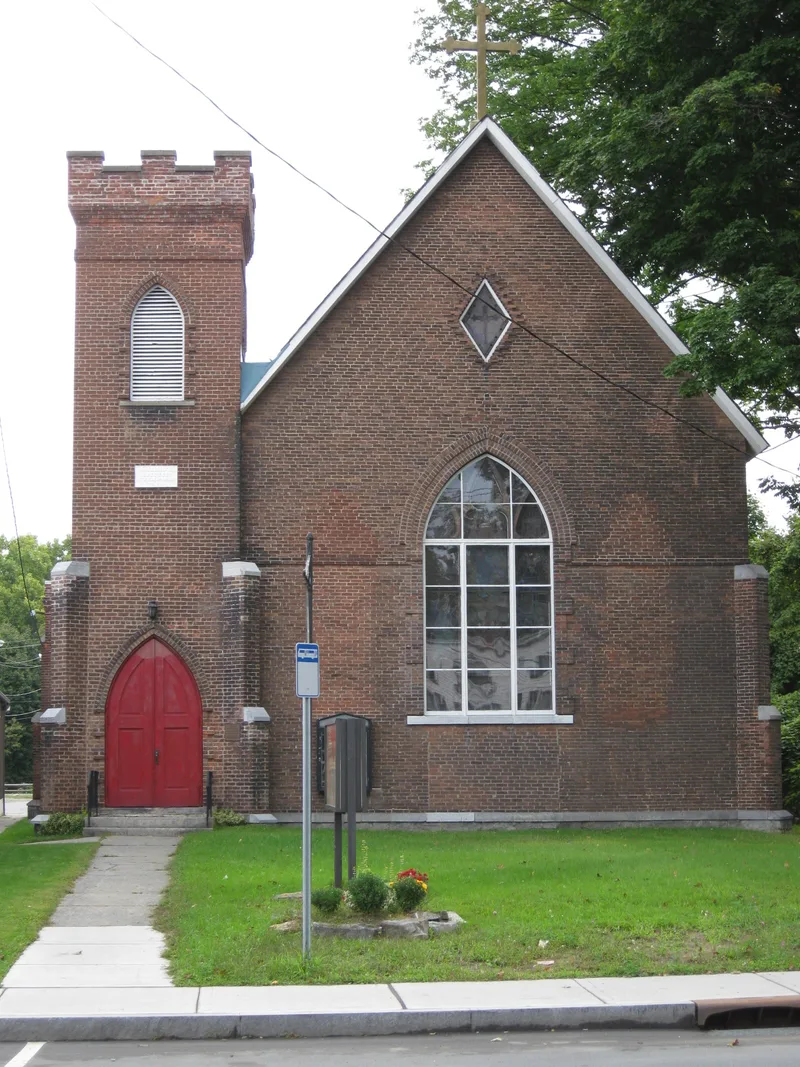
Built in 1846, this brick church at 112 Broadway in Fort Edward follows the English parish church tradition of Gothic Revival design. It has a steep gabled front, slate roof, limestone trim, decorative corbelling, buttressed side walls and tall lancet windows. A castellated side tower was added in 1914-15, when the main entrance moved into it, and a parish hall was built in 1896. Inside, the church keeps its center aisle, molded pews, pointed-arch doorways, scissors trusses, a vaulted mahogany ceiling, stained glass from 1857, an 1853 baptismal font, an 1880 Johnson & Son organ and a "Sittings Free" plaque tied to the original deed, which barred renting or selling pews. Daniel Wing paid off the remaining debt, and the church was consecrated in 1846. A fire in 1933 damaged the parish hall and part of the sanctuary. The church was listed for its architecture and for its long role in the community's social life.
Significance in brief: The nomination argues it is architecturally significant as a largely intact example of mid-to-late 19th century Gothic Revival church architecture in the English parish church tradition. It is historically significant for its integral role in the religious and social life of the Fort Edward community. The interior retains nearly all its historic features and finishes.
Machine-generated summary. This summary was generated by a language model from the official nomination document and has not been reviewed line by line by an editor. It may contain errors. Check the source document before relying on any detail. Source: nomination document (PDF) · National Archives catalog entry. NRHP reference 97001617, listed January 7, 1998. Summary generated October 2026 (model claude-sonnet-5-5, prompt v1.0-2026-10-29, confidence high).
Key facts
| Address | 112 Broadway, Fort Edward |
|---|---|
| County | Washington County |
| Listed | January 7, 1998 |
| Reference number | 97001617 |
| Resource type | Building |
| Period of significance | 1846 - 1947 |
| Architectural style | Mid-19th Century/Gothic Revival |
| Criteria |
|
| Areas of significance | Social History, Architecture |
| Level of significance | Local |
| Status (as stated in the nomination) | Still an active congregation and used as a church; the form says it remains involved in community support efforts. |
| Acreage | 0.9 |
| Coordinates | 43.26719, -73.58458 (NPS GIS) |
What listing means for this property
Religious properties are listed for their architectural or historical significance, not their religious use. Listing is honorary and does not restrict the congregation's use of the building. The federal rehabilitation credit is generally unavailable unless part of the building is income-producing; some state programmes and preservation grants do cover religious buildings. Federal funding or permits trigger Section 106 review.
General information, not legal or tax advice. Rules change; confirm with your State Historic Preservation Office or a qualified adviser.
Sources and further reading
- National Park Service, National Register of Historic Places database (snapshot May 2026), reference 97001617.
- Nomination form (PDF, National Archives) — catalog entry
- Wikipedia article (used for cross-checking only; text not reproduced here)
- Wikidata Q7588475
- This listing as JSON
Last updated October 2026. Found an error? See the editorial policy for how to report it.