Briar Patch Road Historic District

Why it's listed
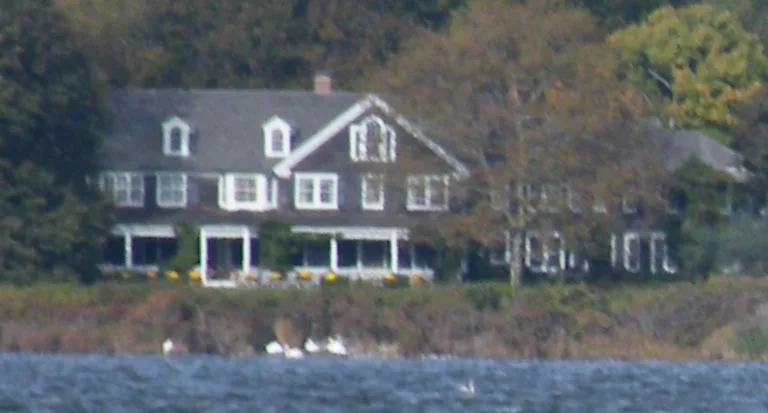
Briar Patch Road is a narrow, unpaved lane running west toward Georgica Pond in the village of East Hampton. Along it sits a small group of seven contributing buildings, six houses and a garage, built between 1897 and 1932. Artists drawn to the area's wooded, private setting built many of them as seasonal retreats. Early residents included painters Robert and Amanda Sewell, sculptor John Heywood Roudebush, playwright Augustus Thomas and New York architect James Lawrence Aspinwall. Most buildings are shingled frame houses. Several, including the Roudebush and Aspinwall houses, have modified saltbox forms recalling East Hampton's eighteenth-century architecture. The 1897 Howard Ogden Wood House is a Shingle style example. The last major house, built in 1931-1932 for surgeon Shephard Krech and designed by Arthur C. Jackson, is a fine Colonial Revival mansion. Other East Hampton artists' properties exist elsewhere, but this is the only surviving concentration still in its historic setting.
Significance in brief: The district is significant as an enclave of late nineteenth and early twentieth century houses and studios developed by members of East Hampton's art community. Its secluded wooded setting beside Georgica Pond attracted painters, sculptors and other artists, and the houses show Shingle, Colonial Revival and local eighteenth-century vernacular influences. It is the only surviving concentration of buildings from this artists' era that remains in its historic setting.
Machine-generated summary. This summary was generated by a language model from the official nomination document and has not been reviewed line by line by an editor. It may contain errors. Check the source document before relying on any detail. Source: nomination document (PDF) · National Archives catalog entry. NRHP reference 88001029, listed July 21, 1988. Summary generated October 2026 (model claude-sonnet-5-5, prompt v1.0-2026-10-29, confidence medium).
Key facts
| Address | End of Briar Patch Rd. along Georgica Pond, East Hampton |
|---|---|
| County | Suffolk County |
| Listed | July 21, 1988 |
| Reference number | 88001029 |
| Resource type | District |
| Architect / builder | Arthur C. Jackson (Shephard Krech House); James Lawrence Aspinwall possibly designed several of the houses |
| Architectural style | Shingle style, Colonial Revival, and designs recalling East Hampton's eighteenth-century vernacular traditions |
| Areas of significance | Architecture |
| Level of significance | Local |
| Status (as stated in the nomination) | The Simmons house was severely damaged by fire around 1985 and was excluded from the district. The Sewell house was demolished in 1930. The Abbott Servants' House is now a private residence. |
| Acreage | 30 |
| Coordinates | 40.94248, -72.22729 (NPS GIS) |
What listing means for this property
This is a historic district. Buildings within its boundary are either contributing (they add to the district's significance) or non-contributing. Owners of contributing income-producing buildings can claim the 20% federal rehabilitation tax credit; homeowners should look at state credits. National Register districts impose no design review by themselves; a local historic district ordinance, if one exists, does (the difference explained).
General information, not legal or tax advice. Rules change; confirm with your State Historic Preservation Office or a qualified adviser.
Sources and further reading
- National Park Service, National Register of Historic Places database (snapshot May 2026), reference 88001029.
- Nomination form (PDF, National Archives) — catalog entry
- Wikipedia article (used for cross-checking only; text not reproduced here)
- Wikidata Q4965775
- This listing as JSON
Last updated October 2026. Found an error? See the editorial policy for how to report it.