Onderdonk House
Also known as: Haring House; Onderdonck House; Arie Smith-Onderdonk House

Why it's listed
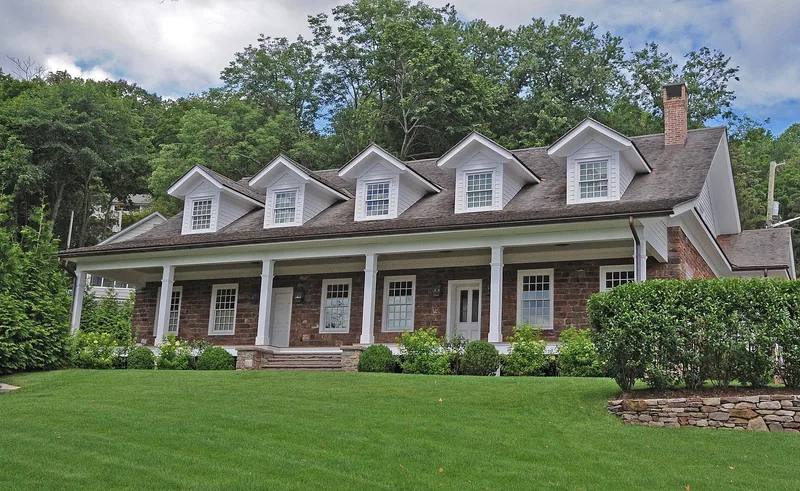
Close to the west bank of the Hudson River in Piermont, this sandstone house began as a c. 1737 dwelling built by the Onderdonk family. It was substantially reworked c. 1810 into a five-bay, center-passage house with a three-bay wing, and updated again c. 1867 with Picturesque interior finishes such as heavily moulded doors, casings and mantels. Some earlier fabric survives, including hand-hewn beams from the first house and a Federal-style mantel. The property also holds a c. 1840 frame house, a well, a non-contributing garage and a bronze plaque placed in 1958. The Onderdonks came to the area partly for sandstone quarrying. Family tradition says the house was struck by cannon fire from the H.M.S. Vulture in 1777. A plaque marks the 1783 landing and meeting of George Washington and British General Guy Carleton nearby. The house is listed for its architecture and its role in settlement, with a period of significance from c. 1737 to c. 1870. It is currently vacant.
Significance in brief: The nomination cites the house for its architecture, showing 18th-century, Federal-period and mid-19th-century Picturesque work in one building. It is also significant for exploration/settlement, as an Onderdonk family farmhouse tied to sandstone quarrying, and for Revolutionary War associations including the 1783 Washington-Carleton meeting.
Machine-generated summary. This summary was generated by a language model from the official nomination document and has not been reviewed line by line by an editor. It may contain errors. Check the source document before relying on any detail. Source: nomination document (PDF) · National Archives catalog entry. NRHP reference 06000890, listed September 28, 2006. Summary generated October 2026 (model claude-sonnet-5-5, prompt v1.0-2026-10-29, confidence medium).
Key facts
| Address | 748 Piermont Ave., Piermont |
|---|---|
| County | Rockland County |
| Listed | September 28, 2006 |
| Reference number | 06000890 |
| Resource type | Building |
| Period of significance | c. 1737- c. 1870 |
| Architectural style | Colonial; Early Republic: Federal; Mid 19th Century: Picturesque |
| Criteria |
|
| Areas of significance | Architecture, Exploration/Settlement |
| Level of significance | Local |
| Status (as stated in the nomination) | Current function is listed as vacant. |
| Acreage | 0.7 |
| Coordinates | 41.04766, -73.91867 (NPS GIS) |
What listing means for this property
National Register listing is honorary for a privately owned home: it does not by itself restrict what an owner may do with their own money, and it does not require public access. Restrictions come from local landmark or historic-district ordinances, which are separate (how they differ).
Owner-occupied houses are not eligible for the 20% federal rehabilitation tax credit, which applies to income-producing buildings, but many states offer credits for homeowners. Listing also opens the door to preservation easements and to buying a plaque. Start with what listing means for homeowners, renovating a listed house and selling one.
Noted as vacant in the nomination. Nomination documents can be decades old; current status may differ. If you are considering buying an empty listed property, read the due-diligence checklist.
General information, not legal or tax advice. Rules change; confirm with your State Historic Preservation Office or a qualified adviser.
Sources and further reading
- National Park Service, National Register of Historic Places database (snapshot May 2026), reference 06000890.
- Nomination form (PDF, National Archives) — catalog entry
- Wikipedia article (used for cross-checking only; text not reproduced here)
- Wikidata Q7092167
- This listing as JSON
Last updated October 2026. Found an error? See the editorial policy for how to report it.